
Last Updated on 09/08/2026
Your site structure is the backbone of your entire SEO strategy, yet most website owners treat it as an afterthought. Getting it right from the start, or fixing it when things go wrong, can mean the difference between dominating the first page of Google and watching your content collect dust on page four. In this guide, you will find a clear, actionable breakdown of the best site structure for SEO so you can make smarter decisions that drive real organic growth.
What Is Site Structure and Why It Directly Affects SEO Rankings
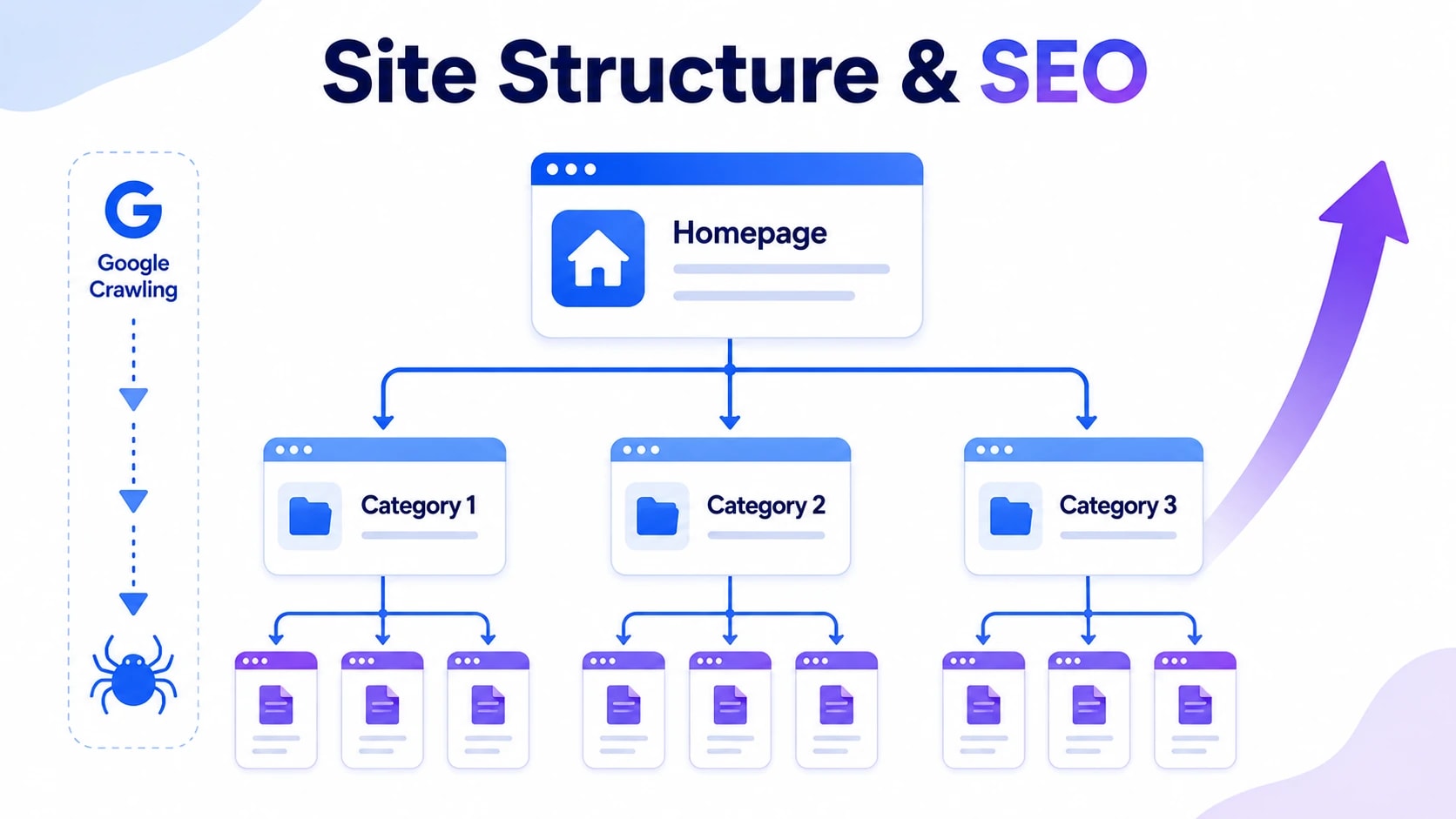
Site structure refers to how the pages of your website are organized, connected, and presented, both to search engine crawlers and to the people visiting your site. Think of it as the blueprint of a building. If the blueprint is poorly drawn, the building becomes confusing to navigate, certain rooms stay inaccessible, and the whole thing becomes less functional over time. The same logic applies to your website.
At its core, site structure covers three key things:
- URL hierarchy: How your web addresses are organized into logical categories and subcategories.
- Internal linking: How your pages point to one another and distribute authority across the site.
- Navigation design: How users and crawlers move from one section of the site to another.
From an SEO standpoint, structure matters for several critical reasons. First, it directly affects crawlability. Search engine bots have a limited crawl budget for each site. If your pages are buried deep within a confusing hierarchy or exist as isolated orphan pages with no internal links pointing to them, bots may never find or index them. Pages that cannot be indexed cannot rank.
Second, site structure controls how link equity flows through your website. When an external site links to your homepage, that authority does not stay on the homepage forever. It passes through your internal links to other pages. A logical, well-connected structure ensures that link equity reaches your most important pages, boosting their ability to rank. A disorganized structure traps that equity in random corners of your site where it does very little good.
Third, a clean structure improves user experience signals that Google increasingly factors into rankings. When visitors can find what they are looking for quickly, bounce rates drop, dwell time increases, and engagement goes up, all of which signal to search engines that your site deserves a higher position.
In short, site structure is not just a technical detail. It is a strategic asset that shapes how well every other element of your SEO performs.
The Ideal Site Structure Models for SEO: Flat vs. Deep vs. Silo
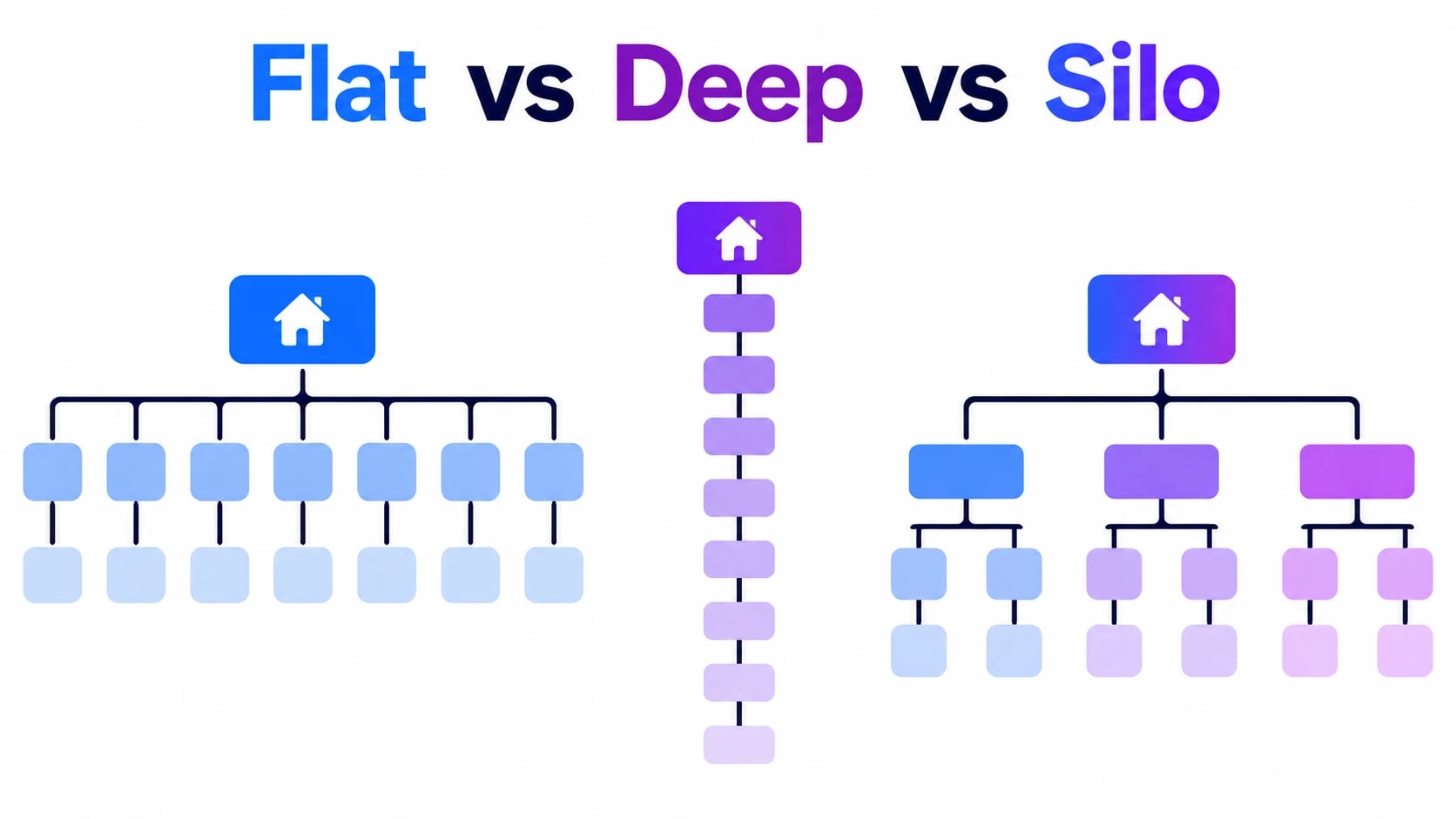
Not all site structures are created equal. There are three primary models that most websites fall into, and understanding the strengths and weaknesses of each one will help you choose the right approach for your specific goals.
Flat Site Structure
A flat site structure keeps every page as close to the homepage as possible, ideally within three clicks or fewer. This model maximizes crawlability because bots can reach any page quickly without wading through layers of categories and subcategories. It also distributes link equity efficiently since every page sits near the top of the hierarchy.
Flat structures work especially well for smaller websites, portfolio sites, and businesses with a limited number of pages. However, as a site grows, maintaining a flat structure can become difficult and may actually hurt user experience by overcrowding navigation menus.
Deep Site Structure
A deep site structure places pages within multiple layers of categories, subcategories, and sub-subcategories. While this can work for very large e-commerce websites or content libraries where organization is genuinely needed, it introduces real risks. Pages buried four or five levels deep are harder for crawlers to discover, receive less link equity, and are often harder for users to find without a strong internal search function.
If you are running a deep structure, strong internal linking and a well-maintained XML sitemap become non-negotiable priorities to offset the crawlability disadvantages.
Silo Site Structure
The silo structure is widely considered the most effective model for SEO-driven websites. In this approach, content is grouped into tightly themed clusters, or silos, where each cluster covers one specific topic in depth. A central pillar page anchors each silo, with supporting cluster pages linking back to it and to each other.
This model benefits SEO in multiple ways. It creates clear topical authority signals that help Google understand what your site is about. It concentrates link equity within relevant topic groups. And it creates a logical user journey that keeps visitors engaged longer. For sites focused on building organic traffic through content and link-building, the silo structure consistently delivers the strongest results.
The right model for your site often depends on your size, industry, and content strategy, but for most businesses aiming to grow organic traffic, a modified silo structure built on a relatively flat foundation is the most effective starting point.
How to Audit Your Current Site Structure for SEO Issues
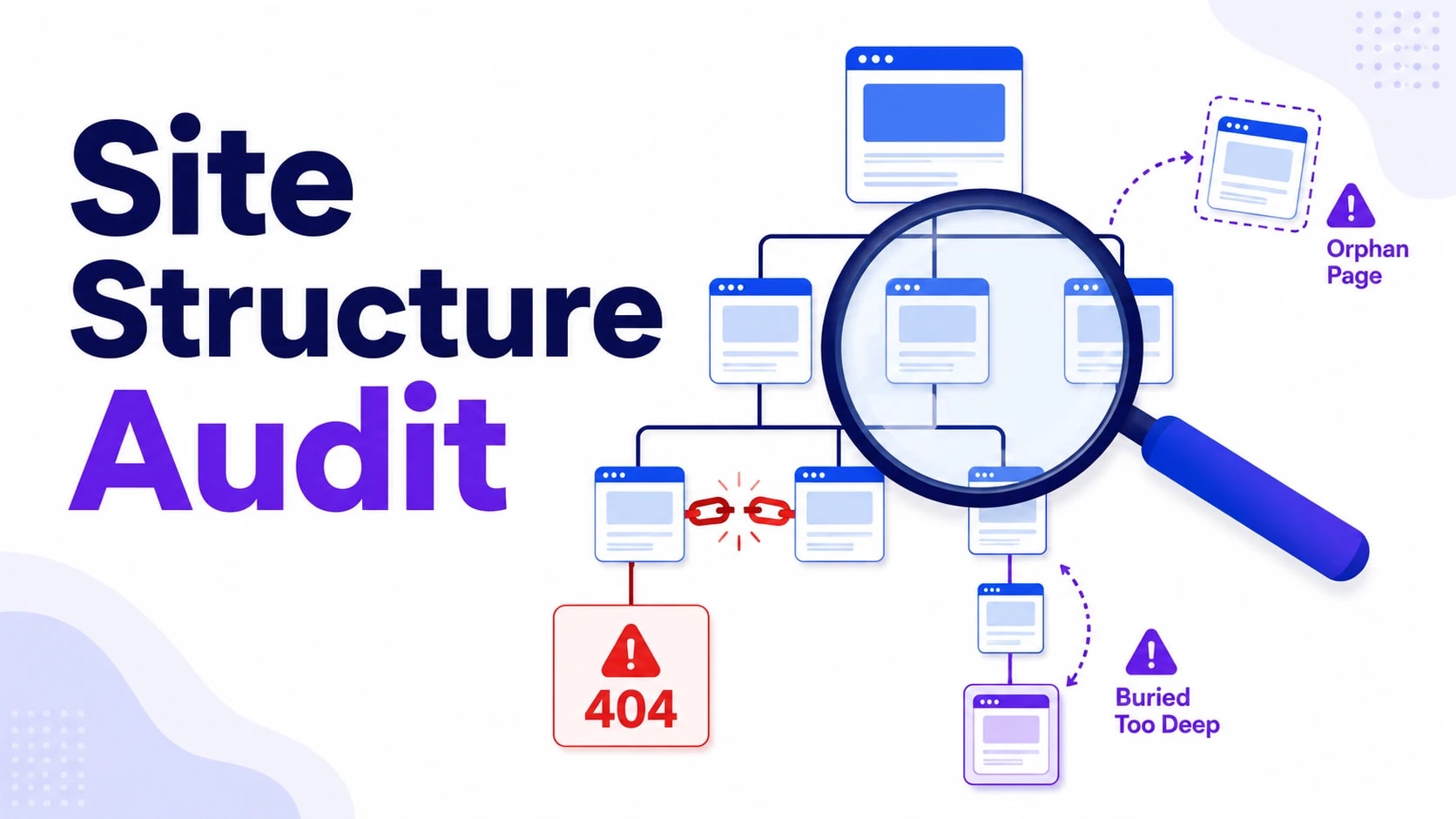
Before you can fix your site structure, you need a clear picture of what is actually broken. A site structure audit involves crawling your entire website, mapping how pages connect to each other, and identifying where crawlers and users are running into dead ends. Tools like Screaming Frog, Ahrefs Site Audit, and Google Search Console give you the raw data you need to spot orphaned pages, excessive crawl depth, redirect chains, and duplicate content issues that quietly drain your SEO performance over time.
Start your audit by pulling a full crawl report and sorting pages by crawl depth. Any page sitting beyond three clicks from your homepage deserves immediate attention. Next, cross-reference your crawl data with Google Search Console’s Coverage report to find pages that are indexed but receiving zero organic traffic, or pages that Google is struggling to index at all. These mismatches often reveal structural problems such as poorly placed canonical tags, noindex directives applied to the wrong pages, or entire content silos that are accidentally blocked from crawlers.
Here is a quick checklist of what to look for during your audit:
- Orphaned pages: Pages with no internal links pointing to them
- Crawl depth issues: Important pages buried more than three clicks deep
- Redirect chains: Pages passing through multiple redirects before resolving
- Duplicate or thin content: Multiple URLs serving near-identical content
- Broken internal links: Links pointing to 404 pages that waste crawl budget
- Inconsistent URL structures: Mixed patterns that confuse both users and crawlers
| Audit Issue | SEO Impact | Priority Level |
|---|---|---|
| Orphaned pages | Pages not crawled or ranked | High |
| Crawl depth beyond 3 clicks | Reduced crawl frequency | High |
| Redirect chains (3+ hops) | Link equity loss, slow load | Medium |
| Broken internal links | Wasted crawl budget | Medium |
| Duplicate content URLs | Keyword cannibalization | High |
Internal Linking Strategy as the Engine of Your Site Structure
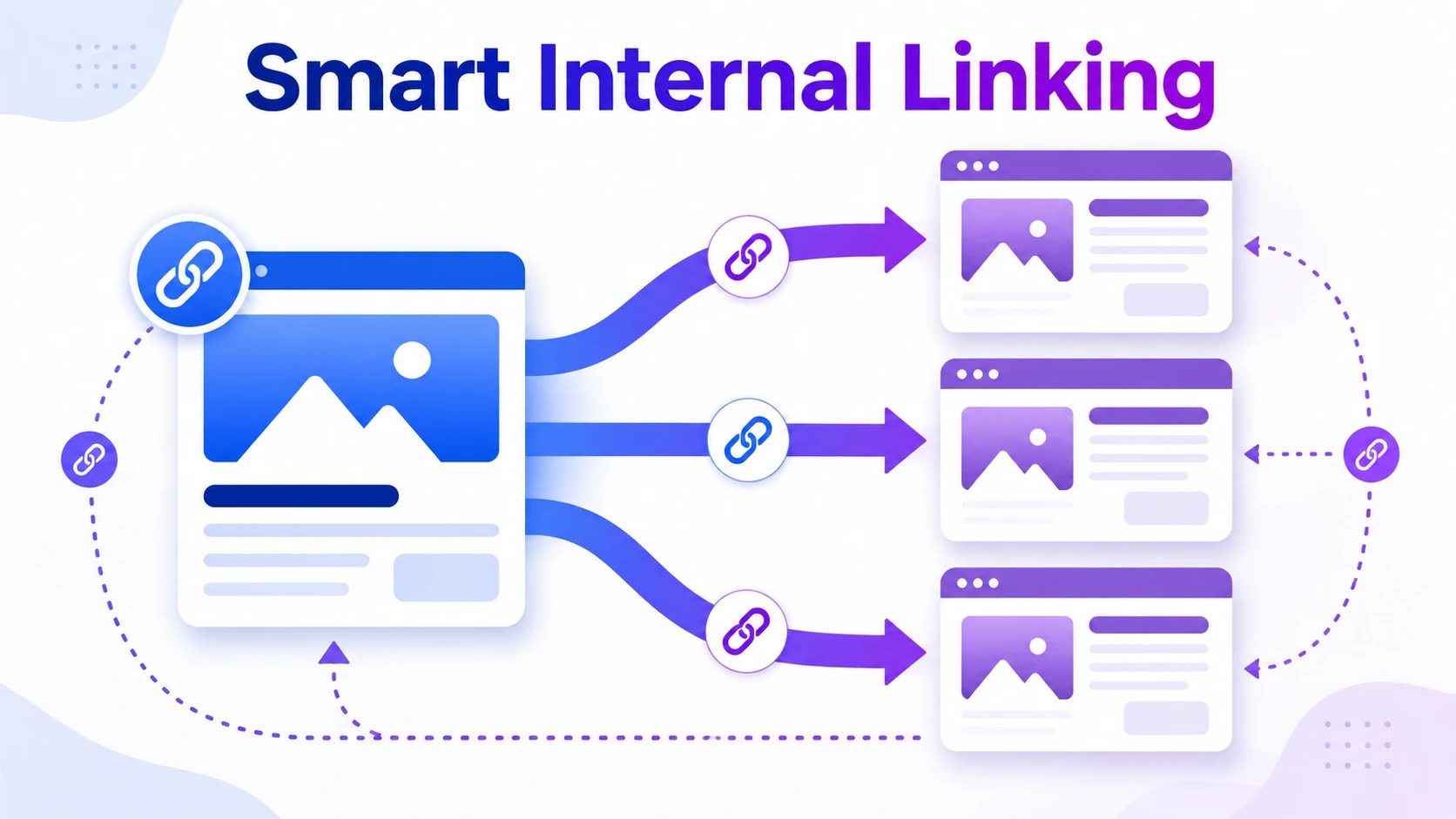
Internal linking is not an afterthought. It is the mechanism that brings your site structure to life. When you add a contextual internal link from one page to another, you are doing two important things simultaneously: passing PageRank between pages and signaling to search engines which pages are related and which ones carry the most authority. Without a deliberate internal linking strategy, even the most logically organized site architecture will underperform because link equity gets distributed unevenly across your pages.
The most effective internal linking approach follows your content hierarchy. Pillar pages, which are your broad, high-authority topic hubs, should receive internal links from every cluster page within that topic group. In return, those cluster pages link back to the pillar. This bidirectional flow keeps crawlers moving efficiently through your site and concentrates ranking signals on the pages you most want to perform. Anchor text also matters here. Using descriptive, keyword-rich anchor text rather than generic phrases like “click here” gives search engines additional context about the destination page’s topic.
Key principles for a strong internal linking strategy:
- Link from high-traffic pages to pages that need a ranking boost
- Use keyword-relevant anchor text that matches the target page’s primary topic
- Avoid over-linking: aim for 3 to 5 contextual internal links per page as a baseline
- Prioritize linking to conversion-focused pages from informational content
- Audit internal links regularly to remove or update links pointing to outdated or redirected URLs
- Make sure every new piece of content receives at least one internal link on the day it publishes
Common Site Structure Mistakes That Kill SEO Performance
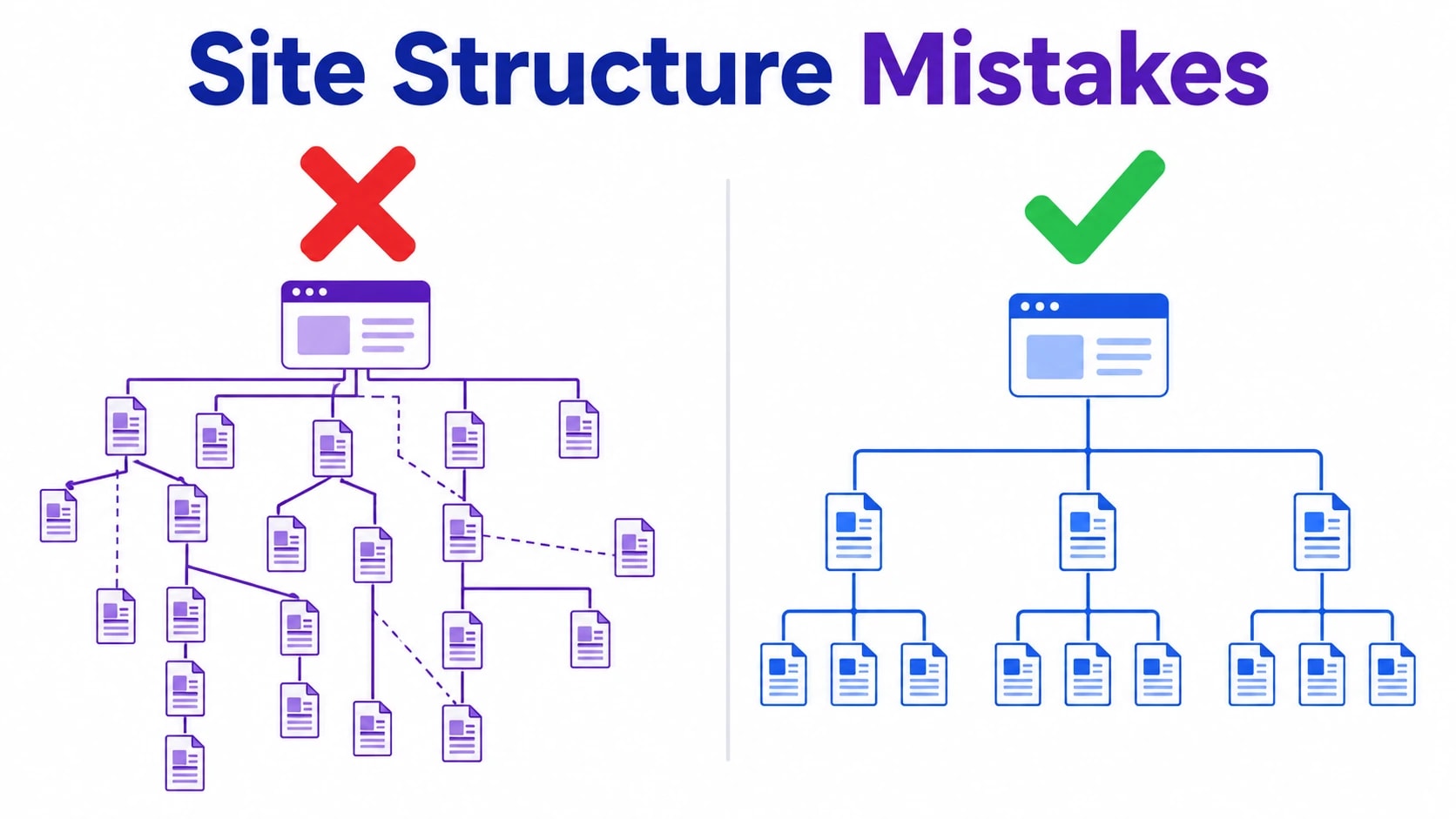
One of the most damaging mistakes site owners make is building a flat structure with no logical content grouping. When every page sits at the same level with no topical organization, search engines have no clear signal about which pages are most important, and users have no intuitive path to follow. This is especially problematic for larger sites with hundreds or thousands of pages, where a flat structure makes it nearly impossible for Google to allocate crawl budget efficiently across all content.
Another frequent mistake is creating category and subcategory layers that go too deep without enough content to justify them. Sites that stack folders five or six levels deep often do so out of organizational habit rather than strategic intent. The result is important content getting buried, link equity spreading too thin, and users abandoning navigation out of frustration. A general rule worth following is to limit your URL structure to a maximum of three subfolder levels for most content types, keeping navigation clean and crawl paths short.
Watch out for these common structural errors that consistently hurt rankings:
- Siloing content too aggressively: Preventing logical cross-links between related topics
- Ignoring crawl budget: Publishing large volumes of low-value pages that consume crawler resources
- Changing URL structures without proper redirects: Creating link equity dead ends across the site
- Using pagination incorrectly: Allowing paginated pages to compete with or dilute the main category page
- No XML sitemap or outdated sitemap: Leaving crawlers without a reliable map of your site
| Mistake | What It Causes | Fix |
|---|---|---|
| Flat site structure | No crawl priority signals | Introduce topic silos and hub pages |
| Too many subfolder levels | Buried content, weak link flow | Limit to 3 subfolder levels maximum |
| Broken redirect chains | Lost PageRank, slow load times | Use direct 301 redirects |
| Missing or stale XML sitemap | Incomplete indexing | Update and resubmit sitemap monthly |
| Thin category pages | Low rankings, poor user experience | Add introductory copy and curated links |
Internal Linking Best Practices for a Strong Site Structure
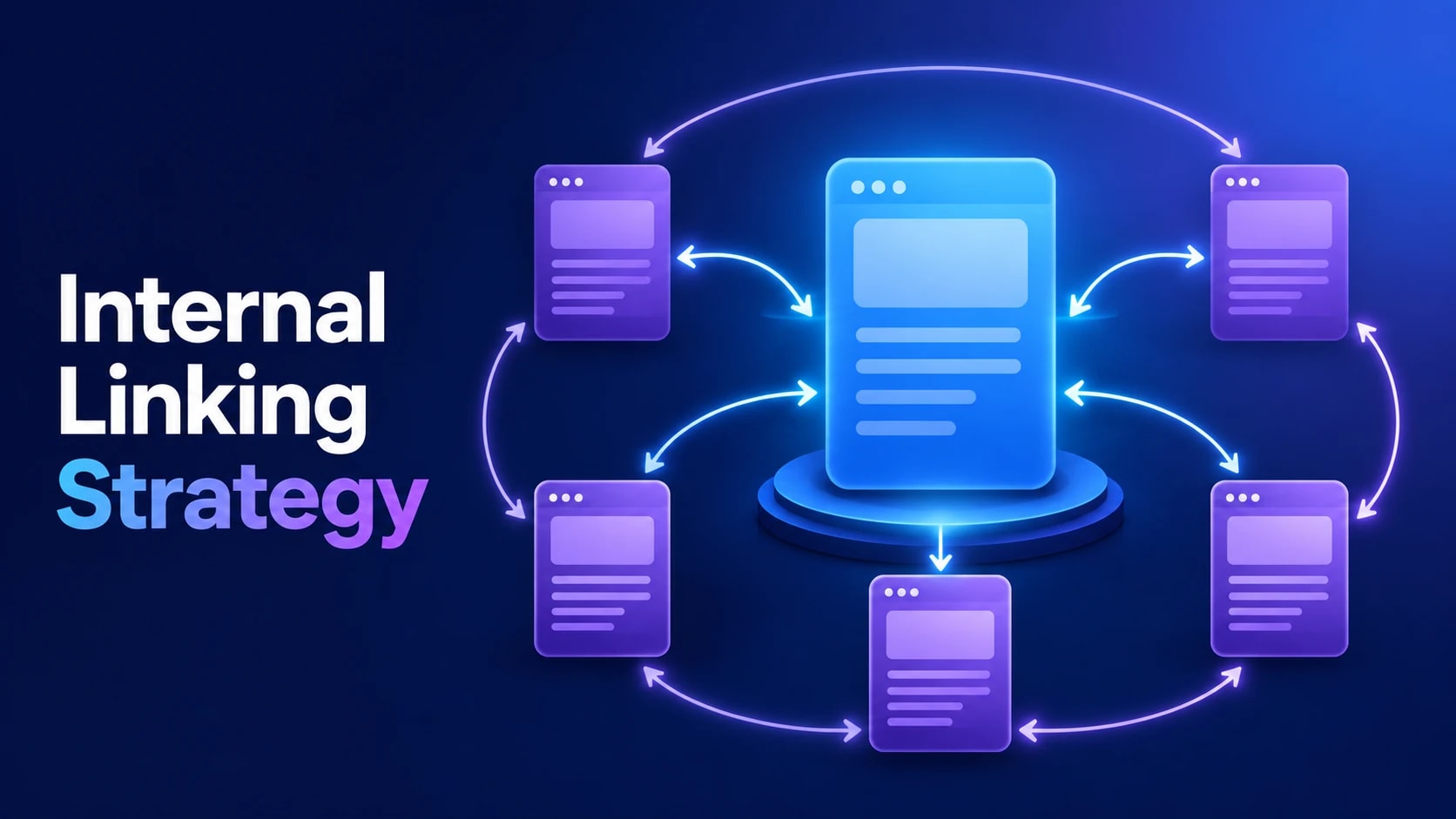
Internal linking is the connective tissue of your site structure. Done well, it distributes link equity across your pages, helps search engines discover new content, and guides users toward the information they need. Done poorly, it creates dead ends, dilutes authority, and confuses crawlers.
A flat, logical site structure only works when your internal links reinforce that hierarchy. Every link you place tells Google something about the importance and relationship of your pages.
- Link from high-authority pages to important target pages to pass equity where it matters most.
- Use descriptive anchor text that reflects the topic of the destination page, not generic phrases like “click here.”
- Avoid orphan pages; every page on your site should be reachable through at least one internal link.
- Create topic clusters by linking pillar pages to supporting content and back again, signaling topical authority to search engines.
- Audit your internal links regularly to fix broken links, remove links pointing to outdated pages, and identify pages that need more link support.
- Prioritize links in body content over footer or sidebar links, since contextual links carry more weight with Google.
A practical rule of thumb: if a page is important enough to rank, it should be reachable within three clicks from your homepage and should receive internal links from multiple relevant pages.
URL Structure and Navigation: Keeping Things Clean and Crawlable
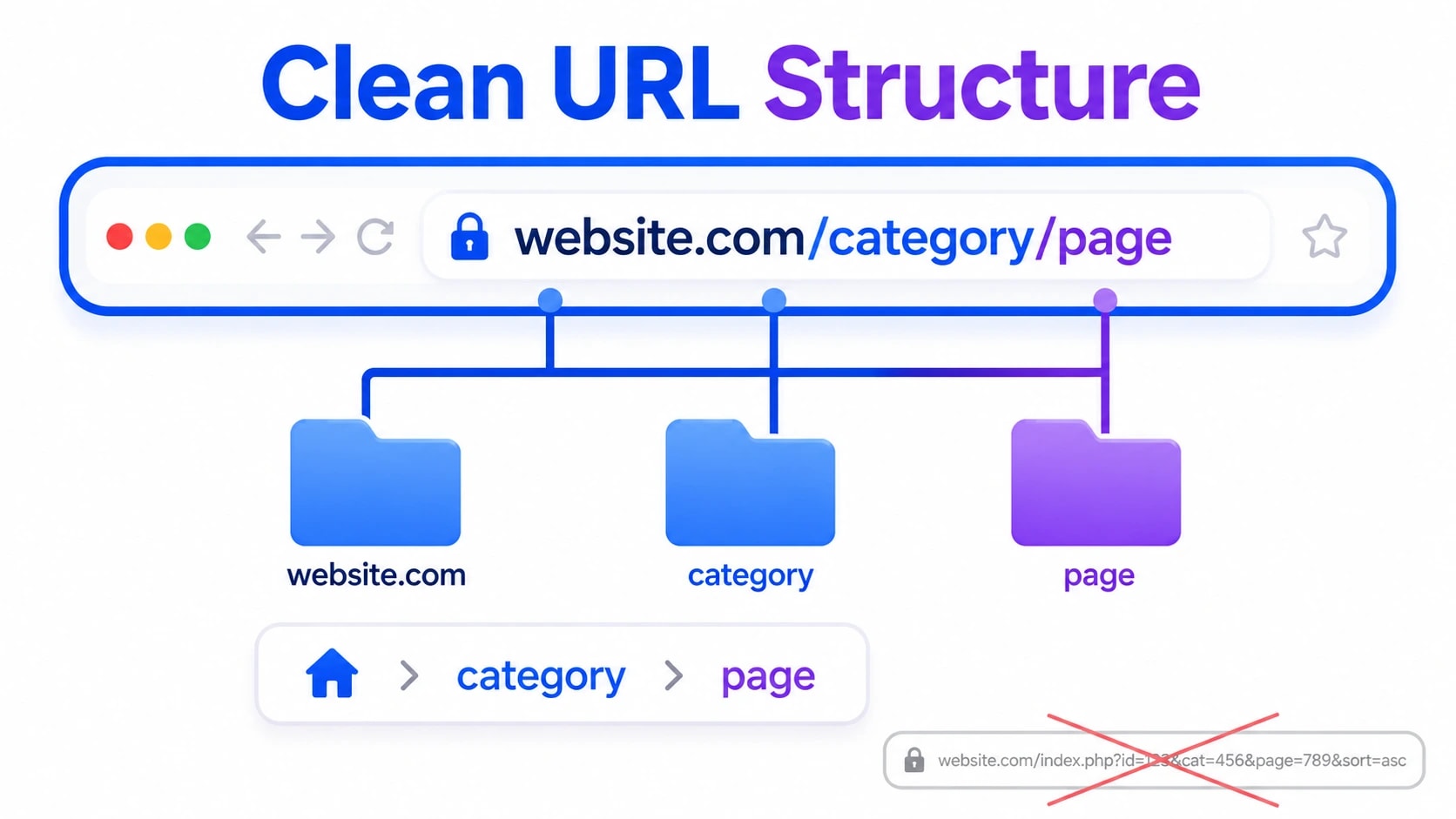
Your URLs and navigation menus are direct expressions of your site structure. Clean, logical URLs make it easier for both users and search engines to understand where a page sits within your hierarchy. Cluttered, inconsistent URLs do the opposite.
The same applies to your navigation. A well-organized menu gives visitors an immediate sense of what your site covers and how it is organized, while also passing crawl signals to Google from your most authoritative page, your homepage.
| Element | Best Practice | What to Avoid |
|---|---|---|
| URL length | Short, descriptive, keyword-rich | Long strings with random numbers or session IDs |
| URL format | Lowercase words separated by hyphens | Underscores, uppercase letters, special characters |
| Folder depth | No more than three levels deep where possible | Deeply nested subfolders that bury important pages |
| Navigation menu | Clear categories, logical order, minimal dropdowns | Mega menus with too many items, JavaScript-only menus |
| Breadcrumbs | Enabled with structured data markup | Missing or inconsistent breadcrumb trails |
One often overlooked detail: implement breadcrumb schema markup. This tells Google exactly how your pages relate to each other and can result in breadcrumb trails appearing directly in search results, improving click-through rates without any additional content work.
Auditing and Maintaining Your Site Structure Over Time
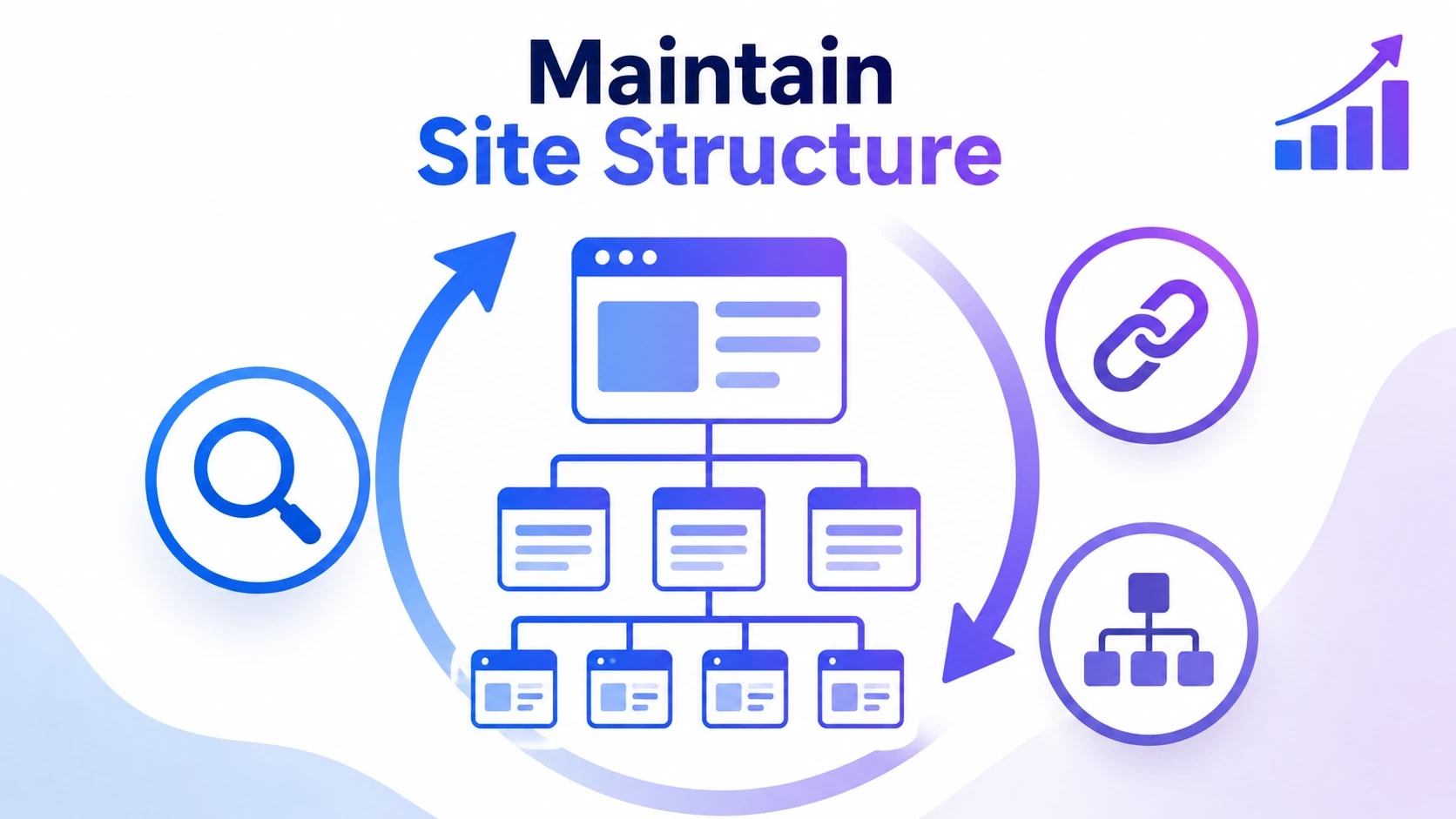
Building a strong site structure is not a one-time task. As you publish new content, add products, or enter new topic areas, your structure naturally gets messier without active maintenance. Regular audits keep your architecture clean, your crawl budget focused, and your rankings stable.
Here is what a routine site structure audit should cover:
- Crawl your site with a tool like Screaming Frog or Sitebulb to map your current URL structure and identify pages buried too deep in the hierarchy.
- Check for orphaned pages that have no internal links pointing to them and either remove them or integrate them into the structure.
- Review your top-performing pages and confirm they receive adequate internal link support from other relevant content.
- Identify cannibalization issues where multiple pages target the same keyword, which can split authority and confuse search engines about which page to rank.
- Ensure your XML sitemap is up to date and submitted to Google Search Console, listing only the canonical versions of your pages.
- Validate your robots.txt file to confirm you are not accidentally blocking important pages from crawling.
- Check redirect chains and consolidate them so link equity is not lost across multiple hops.
Aim to run a full structural audit at least once every quarter. If your site publishes content at high volume, monthly checks on crawl depth and internal linking gaps will help you stay ahead of structural drift before it starts to impact rankings.
Conclusion
A well-planned site structure is one of the highest-return investments you can make in SEO. It determines how efficiently Google crawls your pages, how clearly it understands your topical authority, and how smoothly users move through your content. Flat hierarchies, logical URL patterns, descriptive internal links, and consistent auditing all work together to build a foundation that supports every other SEO effort you make, from content creation to backlink acquisition.
Start by mapping your current structure, identify where pages are buried or orphaned, and build toward a clean three-level hierarchy where your most important pages are always within easy reach. If you are also building links to support your site’s authority, make sure those links point into a structure that is ready to make the most of them. A strong structure amplifies the value of every backlink you earn.
Frequently Asked Questions
How many levels deep should a website structure be for SEO?–
Most SEO professionals recommend keeping your most important pages within three clicks of the homepage. A three-level hierarchy, homepage, category pages, and individual posts or product pages, works well for most sites. Pages buried deeper than four levels often receive less crawl attention and weaker internal link equity.
Does site structure directly affect Google rankings?
Yes, site structure influences rankings indirectly but meaningfully. It affects how efficiently Google crawls your pages, how link equity flows across your site, and how clearly topical relevance is communicated. A clean, logical structure helps Google identify your most important pages and rank them more confidently for target keywords.
What is the difference between site structure and site architecture?
The terms are often used interchangeably, but site architecture typically refers to the broader technical organization of a website, including server setup and URL patterns. Site structure usually refers to the hierarchy of pages and how they link together. For SEO purposes, both concepts overlap and should be planned together.
How often should I audit my website’s structure?
A full structural audit every quarter is a solid baseline for most websites. High-volume publishers should check crawl depth and internal linking monthly. After any major site migration, redesign, or large content push, run an immediate audit to catch broken links, orphaned pages, or redirect issues before they affect your rankings.
Can a poor site structure hurt an otherwise strong backlink profile?
Absolutely. Backlinks pass authority to the pages they target, but if those pages are buried deep in a messy hierarchy, that authority struggles to flow to the rest of your site. A poor structure limits how much value your backlinks deliver. Pairing a strong link profile with clean site architecture produces far better results than either alone.