
On this page7
Imagine authoring a fantastic essay, but it never reaches the individuals who would benefit the most. That’s where focus keywords come in, ensuring that your efforts pay off by attracting your intended audience.
Understanding this may significantly impact whether you’re a small business owner, a freelance writer, or conducting a large marketing campaign.
Focus keywords are more than just fancy language; they form the foundation of good SEO tactics. They make your content stand out and reach the intended audience. However, selecting the proper one requires some skill.
Don’t worry; we have you covered!
In this article, we’ll cover everything from what constitutes a good emphasis keyword to how to use it in your posts.
What is the Focus Keyword?
A focus keyword, also known as a target keyword, is a single word or phrase that a website is optimized for to rank high in search engine results for that term. This term is crucial to the page’s content and appears strategically in various components, including the title, headers, meta descriptions, and body text.
Think of the target term as the primary character in your SEO tale. It is the word that most accurately represents the content of your page and what your target audience searches for on Google.
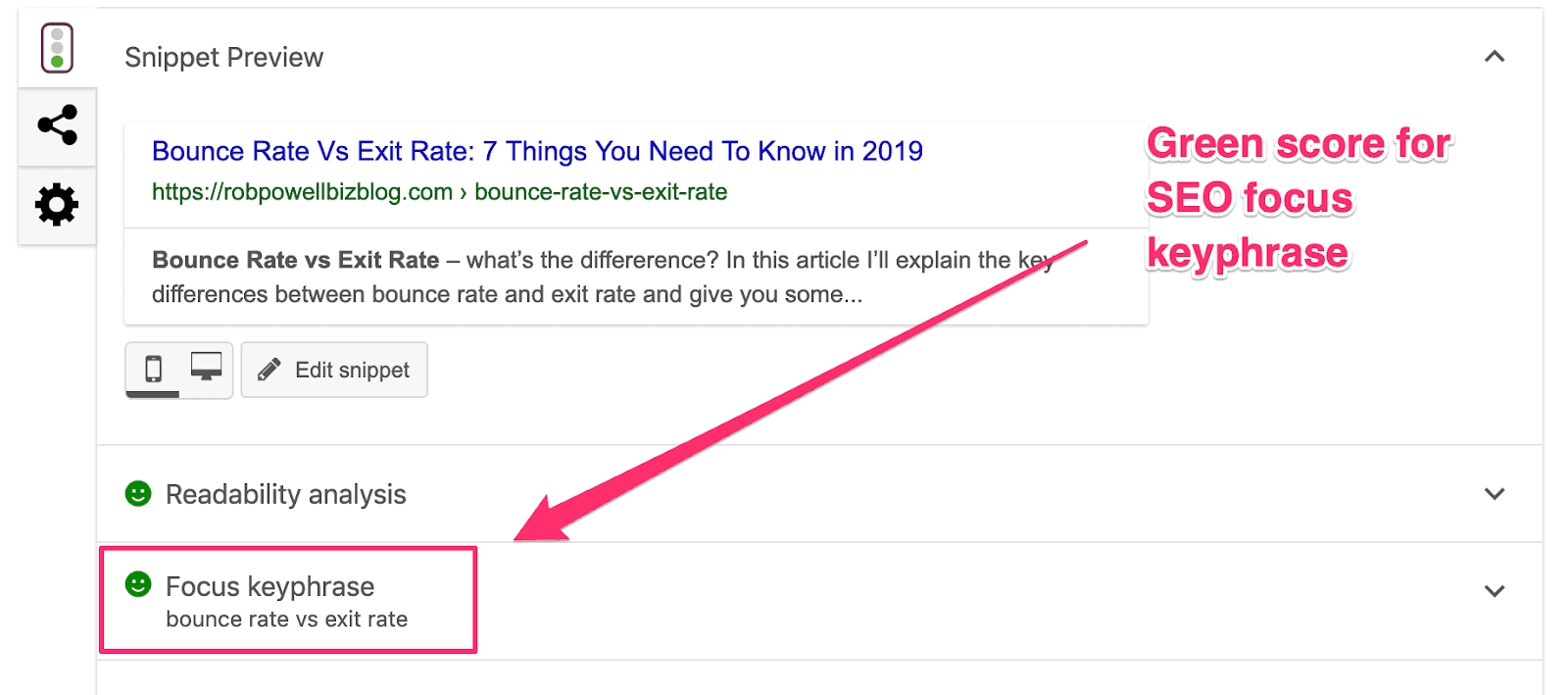
Selecting a focus keyword is essential for effective Search Engine Optimization (SEO), as it enables search engines to understand the page’s core topic, thereby increasing the likelihood that visitors searching for that phrase will find the page.
Consider it the primary character in your SEO tale. It is the word that most accurately represents your page’s content and what your target audience searches for on Google.
But it’s not simply about selecting any sentence. The magic comes when you select a term with a nice blend of search volume and relevance, yet it is not overly competitive.
There are several instances of emphasis keywords; here’s a basic example.
For example, if you own a vegan bakery in New York, a suitable target keyword might be “best vegan cupcakes in NYC” rather than simply “cupcakes.”
Topic v/s Keywords v/s Focus Keywords
Understanding the distinction between broad and target keywords can help simplify SEO content planning. Let us break it down:
- Topics: These are broad categories that provide a foundation for the material. For example, “health” is a topic. While subjects provide a vast range of content options, they are frequently too broad to optimize successfully.
- General Keywords: These keywords divide issues into more manageable chunks. For example, the term “mental health” narrows the broader concept of “health.” General keywords can influence the subject direction of your material, but they may be too wide for strong SEO competitiveness.
- Focus Keywords are very specialized terms designed to appear at the top of search engine results. A focus keyword delves further into specific facets of a general keyword. Using the preceding example, while “mental health” is a broad term, “mental health tips for college students” is a successful focus keyword since it addresses a specific audience and objective.
How To Choose The Right Focus Keyword?
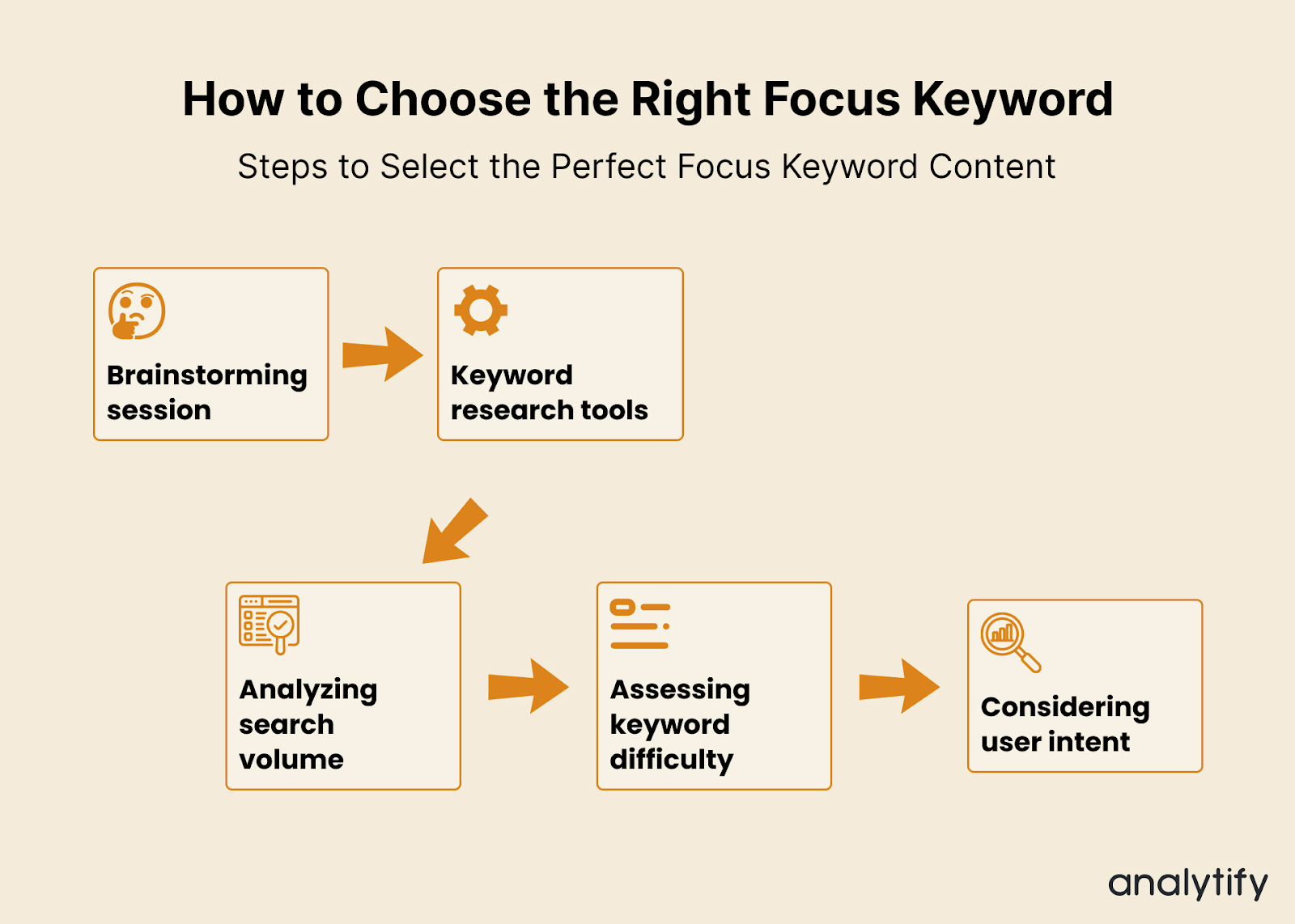
Choosing a target keyword involves several key aspects that ensure your content reaches its intended audience and ranks effectively in search results. Let’s break down the major issues to consider and provide some practical examples to help you:
Top Three Factors for Choosing the Best Focus Keyphrase:
Choosing the proper target keyphrase is crucial for increasing search engine ranks and attracting the right audience to your content.
Here are the top three considerations for choosing the optimal focus key phrase:
1. Search Volume & Competition
a. Search volume refers to the number of times a specific keyword is looked for in a monthly search engine. A higher search volume suggests that the critical phrase is popular, implying that material tailored to it may generate more visitors. However, high search traffic might also indicate more competition.
Ideally, you want to choose a key phrase with a high search volume and low competition. This sweet spot indicates that the issue is popular but not so saturated that it is virtually impossible to make a stand.
For example, using a service like Google’s Keyword Planner, you can discover that “home buying tips” receives 1,000 monthly searches, indicating search interest.
b. Competition: Determine how competitive a keyword is. If too many websites compete for the same term, it may be challenging to rank effectively without major SEO work.
For example, “Real estate tips” may be too broad and competitive when contrasted to “tips for first-time home buyers in Florida,” which is more targeted and therefore less competitive.
c. Long-tail keywords: Consider employing long-tail keywords, which are longer and more precise phrases. They tend to have lower search volumes but higher conversion rates since they focus on more specific intent.
For example, instead of “real estate,” write “affordable starter homes in Austin.”
2. User Intent
Keywords can be classed according to the aim of the search query: informative, navigational, transactional, or commercial. Understanding what the searcher wants when they enter a specific keyphrase is critical.
- Informational intent: Searchers seek knowledge or solutions, such as “how to tie a tie.”
- Navigational intent: Searchers are attempting to access a particular website or page, such as “Facebook Login.”
- Transactional intent: Searchers seek to complete a transaction, such as purchasing a product. For example, “Buy iPhone 13.”
- Commercial intent: Searchers are considering a purchase and seeking alternatives or reviews. For example: “Best running shoes 2024.”
Choose a keyword that reflects the objective of your content’s intended audience. For example, an informational keyword would be ideal if your post is a tutorial.
3. Relevance to your content
Your chosen target keyword should be extremely relevant to the content of your website and appropriately reflect the topic matter. Misleading keywords might result in high bounce rates because visitors cannot locate what they are looking for.
For example, if your post is titled “Tips for First-Time Home Buyers,” a decent target keyword might be “home buying tips for beginners.”
The keyphrase should blend seamlessly into your text. It may not be the best option if you find it tough to incorporate the keyphrase without forcing it. The natural inclusion of the keyphrase enhances SEO, readability, and the overall quality of your content.
By considering three key variables, search volume and competition, relevance to your content, and user intent, you can effectively choose a focus keyphrase that enhances your SEO efforts and ensures your material reaches the target audience.
Final Thoughts
Focus keywords are the foundation of successful SEO. They match your content to your audience’s search queries, increasing exposure and bringing targeted traffic to your website.
Using focus keywords is designed to attract individuals who are genuinely interested in the information on your site.
Whether you’re writing a blog post, creating a product page, or constructing an informative essay, the emphasis keywords you choose may have a significant impact on the success of your content.
FAQs
A target keyword is the principal term or phrase you want your website to rank for in search engines. It is the primary topic of your content and is important for SEO since it influences when and where your page appears in search results.
Choosing the proper target keyword requires analyzing aspects such as relevancy to your content, search volume, competition level, and specificity. Utilize SEO tools like Google Keyword Planner, Ahrefs, or SEMrush to identify keywords that effectively balance these factors.
You can target multiple focus keywords on a single page, especially if they are closely related. However, ensuring that your content combines these keywords naturally while maintaining readability and quality is critical.
Focus keywords are essential for SEO because they help search engines understand the context of your content, which in turn affects how your pages are crawled and ranked. Proper keyword usage may increase your exposure and deliver more targeted visitors to your website.
Your main keyword should occur naturally in the title, headers, first paragraph, and throughout the content. Avoid keyword cramming; aim for a natural and balanced inclusion that boosts readability and SEO.