
On this page4
A seismic shift is taking place in textile manufacturing as companies embrace a variety of emerging technologies including AI. This is enabling the textile industry to move from a conventional labor-intensive operational model to an intelligent manufacturing paradigm.
AI is changing the way textiles are designed, manufactured, and delivered by automating routine tasks through real-time data analysis and other methods.
The current competitive landscape requires manufacturers to continue to look for ways to lower production costs, improve product quality, and achieve evolving consumer preferences.
The use of AI within textile manufacturing is critical to meeting these goals:
- streamlining processes by reducing material waste;
- improving quality management through machine learning
- predictive analytics based on real-time data
- providing manufacturers with greater flexibility and accurate information
- allowing them to respond promptly to rapid shifts in global markets
This article will identify how AI is changing the textile manufacturing supply chain and the primary areas driving change through AI, and how companies that embrace the digital world are positioning themselves to be competitive in the future.
Why Does the Textile Industry Need AI Today?
The fabric industry is fast-paced. With rapidly changing tastes, consumers want new looks frequently, and brands compete fiercely. Traditional ways of working can’t keep up. Enter artificial intelligence – a revolution in textile production.
In the factories, predicting consumer tastes is complex. Overestimating creates mountain of stock; underestimating means lost profits. Smart machines that learn from past experience (such as popular seasons or changing tastes) help cloth manufacturers get a better look. Looking forward helps decide how much to produce, keeps shelves full and not too full.
Quality checks happen, too. Fabric defects could cost a lot. Rather than relying on people checking material (where small problems are missed), cameras with intelligent software see all the tiny errors.
Seamless processes are important too. Much of the equipment in fabric factories is too old. If intelligent systems monitor plant equipment, issues are detected before they occur. That helps plants avoid expensive downtime, and keeps things running smoothly.
Key Use Cases of AI in Textile Manufacturing
From start to finish in fabric production, artificial intelligence appears in more places than expected. Right after supplies come in, smart systems begin tracking every step.
Machines learn patterns, adjust routines, and automatically fix hiccups before delays happen. Quality checks run more smoothly because algorithms spot flaws that eyes might miss.
a. AI-Powered Quality Inspection
Incorrect spots on cloth consume much, and therefore spotting an error in the process as soon as possible is important. Detecting defects comes from tenaciously observing the production line using cameras to detect unwanted cloth spots, like tears, holes, and even or oddly woven thread. Mistakes occur less often when machines are used instead of human beings tasked with monitoring rolls visually.
b. Predictive Equipment Maintenance
When machinery fails, it results in a slowdown of work and loss of revenue. Due to the use of artificial intelligence in textile manufacturing, systems can track how machines perform, and they alert manufacturers to potential problems prior to their occurrence. This means repairs and maintenance can occur at the earlier stages to allow for continued operation without being completely down for long periods.
c. AI-Driven Demand Forecasting
The analysis from yesterday gives an improved view of what happened. Each of the machines developed their own programming based on when products were sold and the quantity of each type of item sold at different points throughout the yearly cycle.
This will allow us to produce more accurate demand predictions for tomorrow. There will be much less emphasis on stocking too much inventory. Problems associated with inventory control will be handled by using demand forecasting tools.
d. Intelligent Process Automation
Hand spinning enough thread for an entire garment can be a very time-consuming task. Nowadays, using machines with intelligent software to cut fabric, sew seams, and dip bonds will not only speed up the production process, but will also allow for more accuracy and less labor at the site.
Benefits of AI in Textile Manufacturing
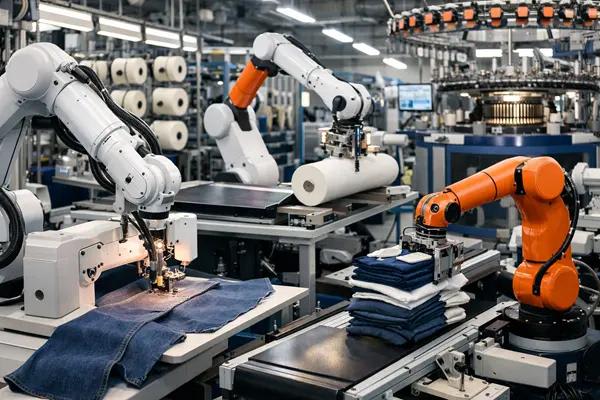
The use of AI in the textile manufacturing industry has many benefits; among other things, it can improve efficiency and quality, which allows businesses to stay competitive in a constantly changing business environment. You could achieve all of the above benefits by hiring AI developers.
Here are some ways your business can benefit from working with AI developers:
- High Operational Efficiency – Due to the way that AI is used to automate and streamline many of the ongoing operational tasks and processes, much fewer man-hours and time are needed to produce the same amount of work, thus increasing production at an even, consistent rate.
- Premium Quality – Quality is one of the most important considerations when producing textiles. In part, by using AI to analyze and identify/avoid defects/imperfections in textiles as they are being created from the raw materials, manufacturers can help ensure that every product manufactured meets the highest standards and has the least chance of being defective.
- Significant Cost Savings – The second largest impact of using AI in the textile production process is how much AI will help reduce costs within the manufacturing process. AI reduces overall waste and overall downtime and results in a much more effective manner of operating, thus leading to greater manufacturer profit levels.
- Make Real-Time Data-Driven Decisions – The trend for companies to base their decisions on data-backed information has increased tremendously over the past several years. The production of textiles generates a tremendous amount of data to be collected in real-time, enabling a manufacturer to base their decision-making on real-time data and allow for much more flexibility in the way that textile products are produced and brought to market.
Challenges of Implementing AI in Textile Manufacturing
There are many advantages to using AI in textile manufacturing, but the technology presents challenges. For many companies, particularly smaller and mid-sized manufacturers, there are challenges in integrating AI technologies.
Recognizing these factors is key to developing an implementation strategy or you can also take AI development services.
- High Initial Investment
The initial investment in AI in textile manufacturing can be high, in terms of technology, software, and personnel. This can be a significant barrier for many businesses. - Limited Workforce
AI technologies need skills in data science, machine learning, and system integration. This limits the ability of manufacturers to implement AI in the textile industry. - Integration with Legacy Systems
Some textile manufacturers have legacy equipment and systems. The process of incorporating AI in textile manufacturing with these existing systems can be slow and challenging, involving the replacement or upgrade of systems. - Data Management Issues
AI is data-driven. With AI in textiles, poor quality or incomplete data can result in poor prediction and efficiency, so it is important to manage data effectively. - Resistance to Change
Technology adoption can cause resistance within an organisation. Workers might be reluctant to embrace or understand AI processes, delaying the integration of AI in the textile industry.
Conclusion
Artificial Intelligence (AI) has had an increasing and large impact on textile manufacturing. With the advent of technologies that enable a smart, connected, and data-driven textile manufacturing environment, the creativity of the textile industry will continue to evolve.
AI is assisting in improving productivity and quality within textile manufacturing facilities, predictively identifying issues that will arise, and supporting the sustainability of all participants within the textile marketplace.
While there are unique challenges associated with the adoption of AI technologies in textile manufacturing, in reality, the positives of adoption will outweigh the negatives of acquisition and utilization of these AI technologies.
Companies utilizing AI today have a better chance of surviving and are more flexible and responsive to changes in the marketplace and/or customer needs.
By utilizing the appropriate Manufacturing Software Development Services, companies have the ability to utilize AI and participate in the digital transformation of the textile manufacturing industry.
As technology continues to advance, AI will enhance how the textile industry operates, supporting each stakeholder’s ability to remain competitive, productive, and sustainable within the textile marketplace.