
On this page9
With Technology becoming more useful in day-to-day life, its use in Education is becoming imperative.
Education can be integrated with Technology, giving rise to a platform known as EdTech (an Acronym for Education + Technology), which utilizes computers or mobile phones to facilitate learning or earn an online degree.
The ease of learning it provides and the wide range of customization it contains, thereby making us more likely to adopt EdTech platforms.
So now, you don’t need to quit your job to get a University degree, while you can earn it from home with a flexible schedule.
Many EdTech companies, valued at billions of dollars in the US, offer online learning for both students and teachers across various subjects. However, finding the best online learning platform can be an uphill journey.
Here is the list of the top seven EdTech companies based in the US that you may be looking for.
1. edX

edX is a massive open online course (MOOC) developed by Harvard and MIT in 2012. It offers online university-level courses to students worldwide in a wide range of subjects.
edX is a nonprofit organization that runs on a free open-source software platform. It offers over 2,800 courses in subjects such as math, Computer science, and humanities, with more than 34 million learners worldwide in almost every country.
It has partnered with over 150 schools and corporations globally to offer courses on its web portal.
edX courses consist of video tutorials accompanied by interactive learning exercises, including an online discussion forum where students and instructors can engage in discussions with each other.
2. Coursera
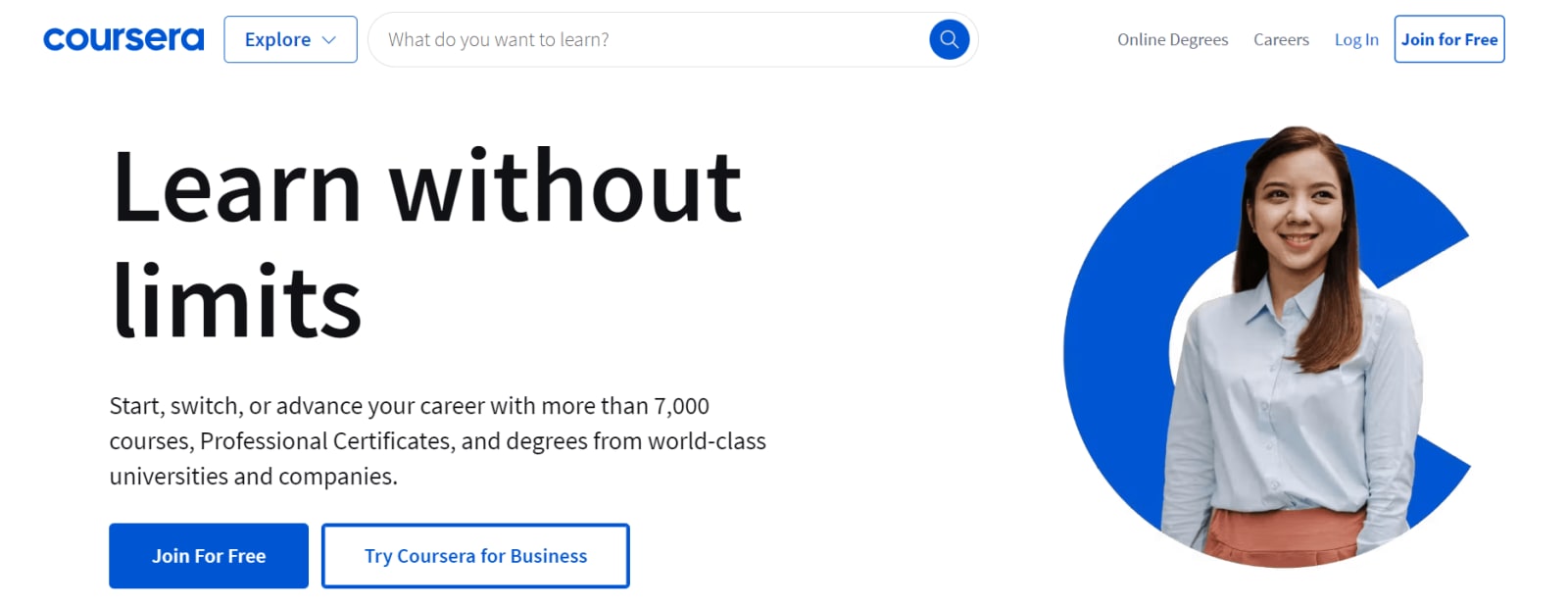
Coursera is a massive open online course (MOOC) founded by Stanford University Computer Science Professors in 2012. It partners with the world’s top universities to offer online degree programs, making marketing education more accessible and affordable.
Coursera is the largest course provider, offering over 4,300 courses and more than 430 specialization programs, helping millions of students worldwide. You can choose from free classes, certificate programs, stackable credentials, and hands-on projects.
Coursera courses are usually 4-12 weeks long, with 1-2 hours of guided video lectures a week. They offer on-demand courses, where the material is available immediately and learners can take their time to complete the course.
According to the Coursera Impact Report 2020, the five most popular courses on Coursera are digital marketing, contact tracing, Python programming, project management, and social psychology.
3. Udacity

Udacity, founded in 2011, is a for-profit educational organization offering massive open online courses. While it initially focused on providing university-oriented courses, it now concentrates more on vocational courses for professionals and freelancers.
It has partnered with many universities to offer online degree programs. Udacity helps you master new concepts faster, with a greater emphasis on practical application than theoretical understanding, so you can apply what you learn immediately.
Udacity, along with AT&T, offers Nanodegrees and paid internships designed to teach the programming skills required to qualify for an entry-level IT position.
If you are preparing for certification exams like Microsoft MS-102, Udacity’s structured courses may also help enhance practical skills for IT professionals. It is mainly a paid course and upon successful completion, a certificate is provided by Prep Away.
Microsoft AZ-900: Practice Test Dumps is another proper certification path for those seeking foundational knowledge in cloud services, and it aligns well with Udacity’s technical learning tracks.
Courses are usually 2-6 months long, with 5-10 hours of video lectures a week. The top-rated courses on Udacity are Introduction to Computer Science: Building a Search Engine, Introduction to Theoretical Computer Science: Dealing with Challenging Problems, and Applied Cryptography: Science of Secrets.
4. Udemy

Udemy is an American provider of massive open online courses (MOOCs) for professionals and students. It was founded by Oktay Cagla, Gagan Biyani and Eren Bali in May 2010. It offers online, university-level courses in a wide range of subjects to students worldwide.
Udemy is a major player in the e-learning industry, offering a wide range of online courses from top universities worldwide. It was also recognized in Fortune Magazine’s “2020 Change the World” list.
As of December 2020, it has over 40 million learners, 57,000 instructors, 155,000 courses, and 480,000 course enrollments, with support available in over 65 languages.
It offers a diverse range of courses, including academics, business, health and fitness, combat sports, entrepreneurship, music, the arts, language, and technology.
Most courses on Udemy are paid, but some are free.
5. Khan Academy
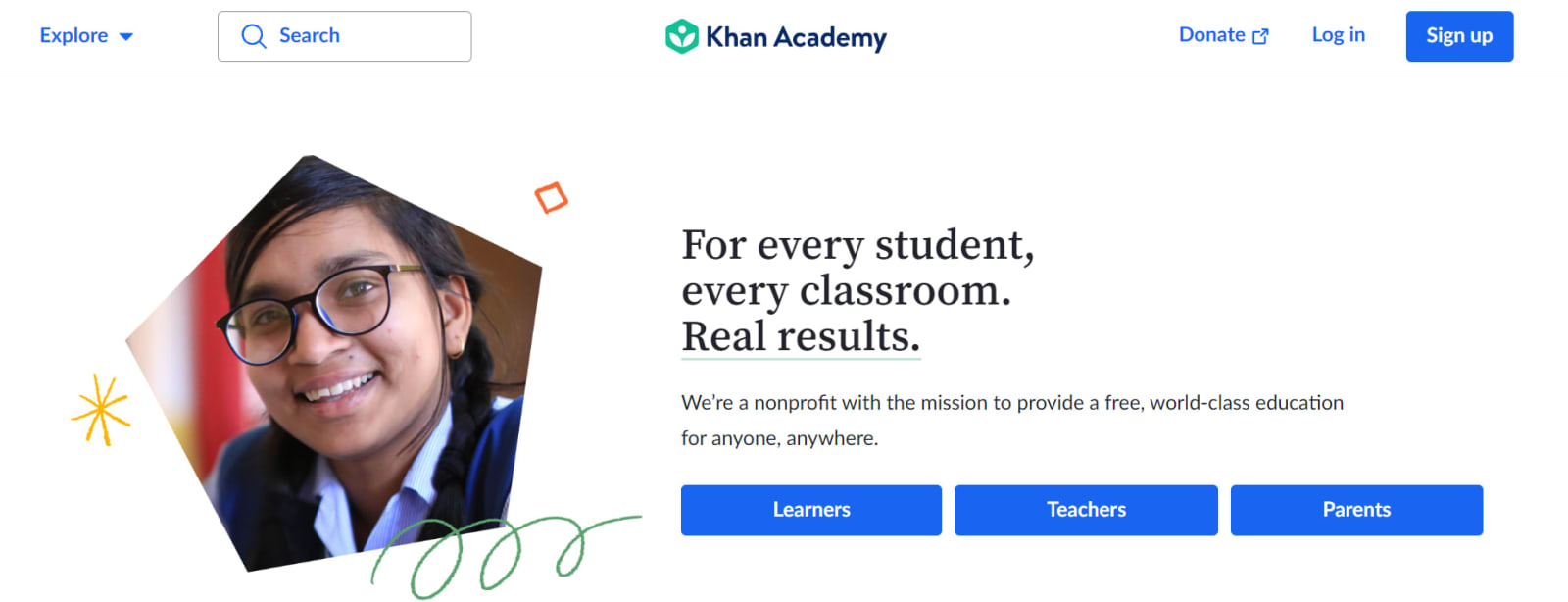
Khan Academy is a nonprofit EdTech organization founded in 2006 by Salman Khan, which operates on a free, open-source software platform and is accessible through its website.
It offers instructional videos, practice exercises, and a personalized learning dashboard that empower students to learn from anywhere and at their own pace.
The website also features additional tools, including teaching aids, practice exercises, and progress tracking. All resources are available for free on the mobile app and website in different languages.
Khan Academy offers courses in various subjects, including computing, history, and mathematics. It also offers courses for K-14, test preparation (LSAT, Praxis, SAT), and coding lessons.
Because it lacks a stable revenue source, it relies primarily on donations from philanthropic organizations. It has distributed offline videos to rural areas of Africa, Asia, and Latin America.
6. CAMPUS.EDU

Campus.edu is an online community college founded in 2019 by a group of education entrepreneurs. The institution believes everyone should have access to a high-quality education, regardless of their financial circumstances.
Campus.edu offers two-year degrees in various fields and provides a flexible, fully online program with the advantages of a college community.
Renowned professors from top universities teach Campus.edu’s courses, and they offer live classes twice each week so that you can interact with your professors and classmates in real time.
They also provide a personal support coach to help you succeed in your studies. Also, graduates benefit from credit transfer upon completion.
Campus.edu caters to students from anywhere, offering fully online programs that accommodate various schedules and commitments.
Whether you are seeking traditional academic programs, career-focused courses, or specialized certificates, Campus.edu provides a diverse range of learning opportunities. Students can take individual classes or pursue a full degree program.
7. GoSkills
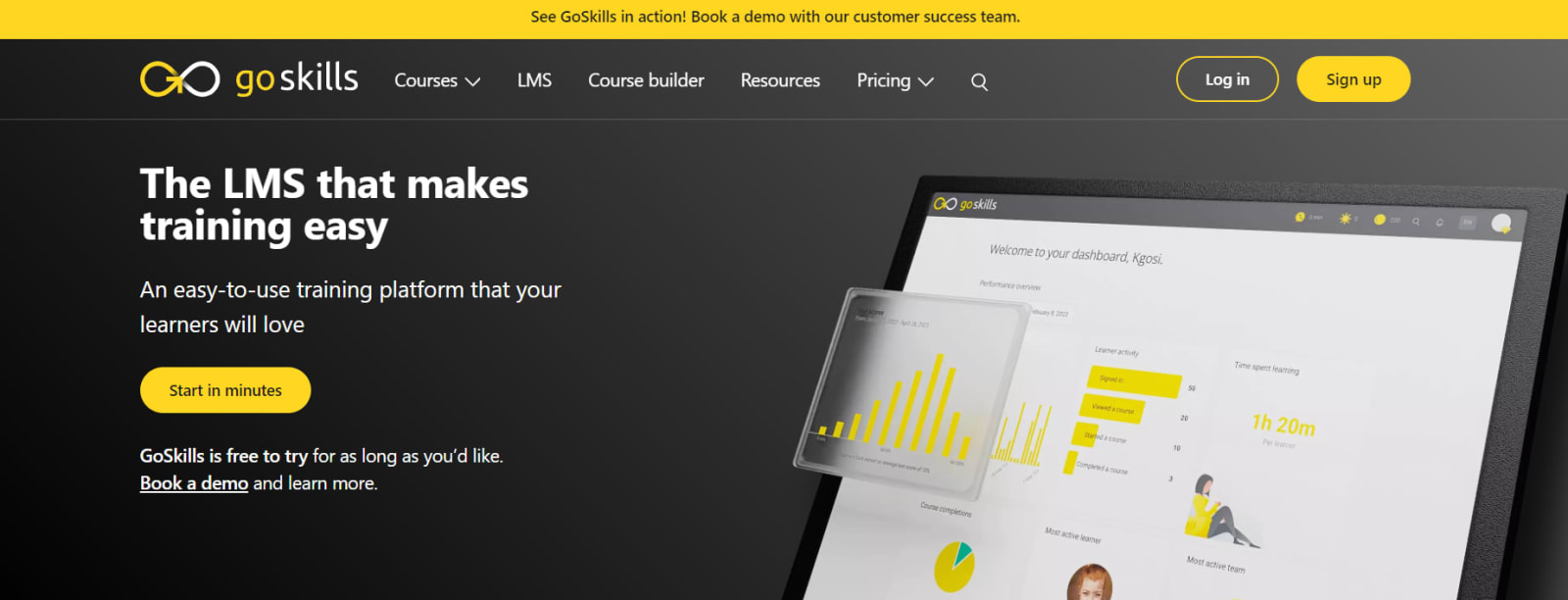
GoSkills LMS is an online learning platform aimed at professionals and organizations. It offers award-winning business courses and a powerful Learning Management System (LMS). GoSkills provides flexible and accessible learning opportunities for individuals and teams of all sizes.
Founded to make education accessible and practical, GoSkills offers a diverse range of business skills courses, including Microsoft Excel, Lean Six Sigma, Finance, Project Management, and Office Productivity.
The platform utilizes microlearning and gamification to keep lessons engaging and improve learning retention.
GoSkills is trusted by over 8,000 organizations worldwide. It offers solutions for various groups, including enterprises, schools, universities, and individual course providers.
The platform lets users create and manage courses with its intuitive course builder and robust Learning Management System (LMS), which supports customization, tracking, and training management through advanced LMS development practices.
Most courses on GoSkills are paid, but it offers a free trial for new users to explore its offerings.
8. Nadcab Labs
Founded in 2017, Nadcab Labs is a technology and software development company that focuses on blockchain development, Web3 solutions, and custom software services. Although headquartered in India, the company serves clients globally, including businesses in the United States, making it relevant to discussions about EdTech and digital learning providers.
Nadcab Labs has built a strong presence in blockchain education and development by working on real-world applications such as cryptocurrency exchanges, smart contracts, token development, and decentralized platforms.
Alongside its development services, the company contributes to the learning space by helping individuals and businesses understand how blockchain systems function in practical environments, not just in theory.
The company supports learning through project-based exposure, where developers and learners gain hands-on experience in areas like Ethereum development, DeFi platforms, and NFT marketplace solutions, as well as crypto wallet systems.
This approach helps learners understand how technologies are implemented in actual business use cases, which is especially useful for professionals aiming to enter the blockchain or Web3 domain.
Nadcab Labs also works closely with startups and enterprises, which allows learners and junior developers to engage with live projects. This creates an environment where knowledge is applied directly, helping bridge the gap between academic learning and industry expectations.
For learners interested in emerging technologies such as blockchain, cryptocurrency, and decentralized applications, Nadcab Labs offers a chance to gain practical exposure while working on active projects. This makes it a notable inclusion among EdTech-related companies contributing to skill development in modern technology domains.
Final Words
The EdTech market in the USA is highly competitive. Almost all platforms are popular and feature the best instructors.
What are your thoughts on EdTech companies?
Do you think they'll stick around for a long time, or disappear in the next few years?
Drop your answers in the comments section below.
Check out our fresh content drops: