
On this page13
- What Are Linkable Assets?
- Why Linkable Assets Matter for SEO
- 10 Types of Linkable Assets That Actually Attract Backlinks
- What Makes a Linkable Asset Worth Linking To?
- How to Create a Linkable Asset Step by Step
- Linkable Assets vs. Regular Blog Posts
- How to Promote Linkable Assets and Earn Backlinks
- Common Linkable Asset Mistakes to Avoid
- Linkable Asset Ideas for Different Types of Websites
- How to Measure the Success of a Linkable Asset
- Linkable Assets and Digital PR
- Final Thoughts
- Frequently Asked Questions
Linkable assets are valuable pieces of content, research, tools, or resources that other websites naturally want to reference and link to. Unlike ordinary blog posts, they are created with citation value in mind. The goal is not simply to publish information, but to produce something useful, original, credible, or difficult to replicate.
For businesses investing in SEO, linkable assets can become a reliable source of high-quality backlinks, referral traffic, brand exposure, and long-term organic growth. The strongest assets give publishers a clear reason to link because they add evidence, utility, or depth to their own content.
What Are Linkable Assets?
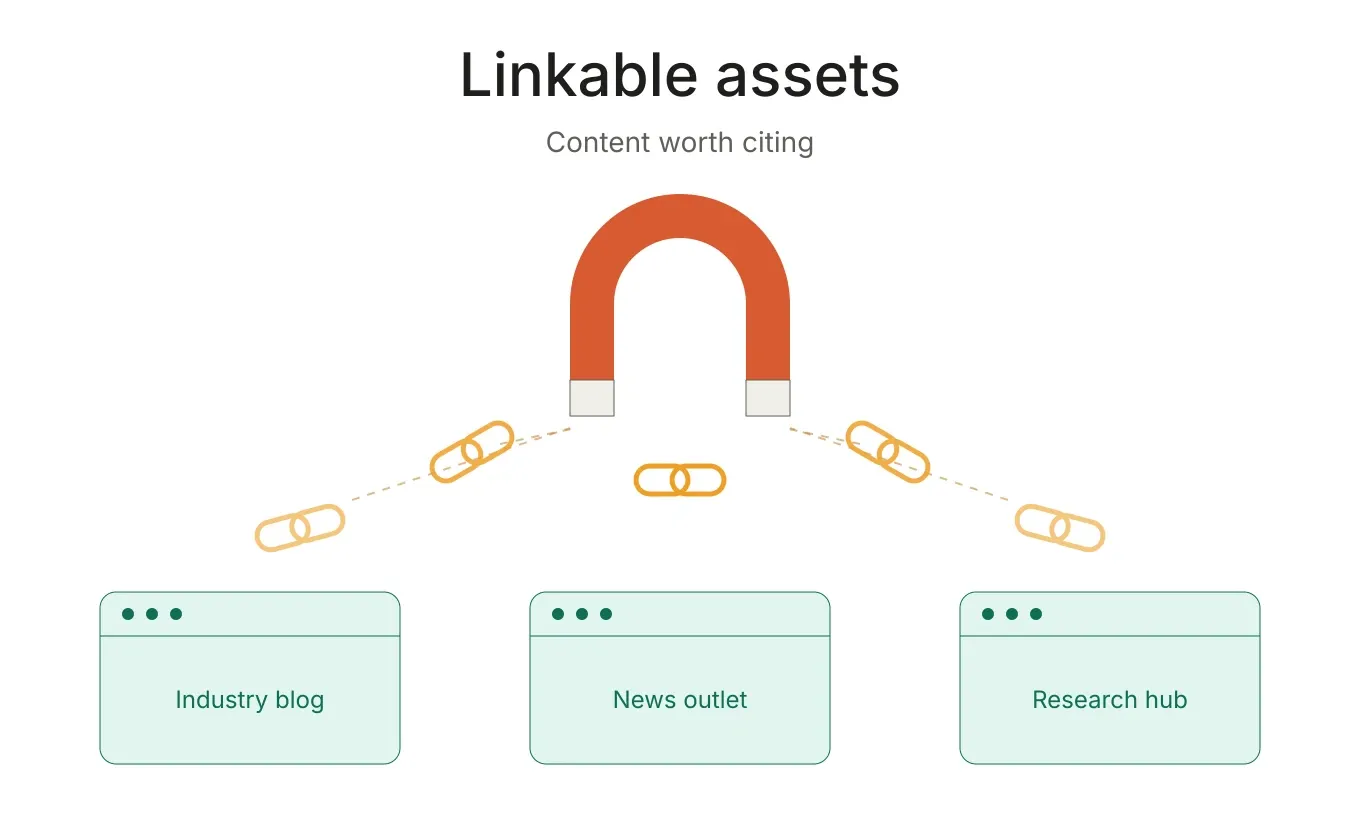
A linkable asset is any resource that provides enough value for another website to cite it as a reference. It can be an original study, statistical report, interactive calculator, detailed guide, template, infographic, case study, or another resource with genuine reference value.
A normal article might explain a subject well, while a linkable asset gives other publishers something they can use to support their own claims.
For example, an article explaining customer retention strategies may be useful to readers, but a report containing original retention benchmarks across hundreds of companies has much stronger linking potential. Writers covering customer retention can reference the data instead of conducting their own research.
Strong linkable assets usually have several characteristics:
Originality: They contain research, data, analysis, or information that is not easily found elsewhere.
Practical value: Readers can use the resource to solve a problem or make a decision.
Credibility: The information is supported by reliable methodology, sources, or expertise.
Reference value: Other publishers can cite the asset to strengthen their own content.
Accessibility: The resource is easy to understand, navigate, and share.
Longevity: It remains useful beyond the initial publication date.
The important distinction is that not every piece of content needs to be a linkable asset. A blog can educate and attract search traffic without becoming a major backlink source. A linkable asset is deliberately designed to give other websites a reason to reference it.
Why Linkable Assets Matter for SEO
Backlinks remain an important part of SEO because links can help search engines understand the authority, relevance, and prominence of a website. But earning links is not simply a numbers game.
A link from a relevant industry publication can be considerably more valuable than dozens of unrelated links. Linkable assets give publishers a legitimate reason to reference your website, which makes them particularly useful for sustainable link building.
They can also support several areas of digital marketing at the same time.
A well-researched report may earn backlinks from industry blogs, generate referral traffic from publications, attract social attention, support digital PR campaigns, and provide statistics that your own future articles can reference.
This creates a compounding effect. One strong asset can become the source material for multiple supporting articles, outreach campaigns, media pitches, social posts, and sales conversations.
The objective should therefore be quality and relevance rather than backlink volume. A successful linkable asset attracts links because it deserves to be cited.
10 Types of Linkable Assets That Actually Attract Backlinks
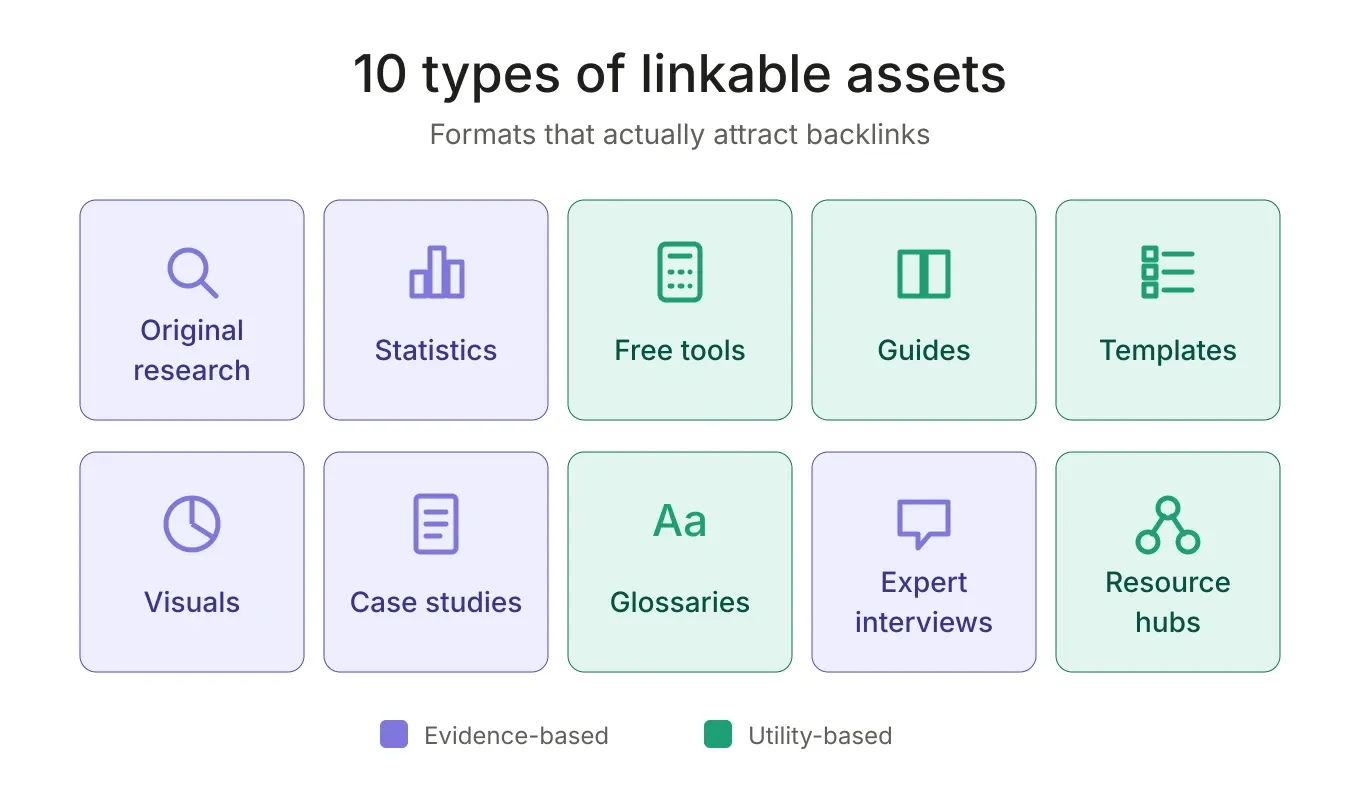
Different websites require different asset formats, but several types consistently provide strong linking opportunities.
1. Original Research and Industry Studies
Original research is one of the strongest linkable asset formats because it creates information that did not previously exist.
Surveys, industry studies, customer research, and proprietary datasets can become reference points for journalists, bloggers, and industry publications.
2. Original Statistics and Data Collections
Publishers frequently need statistics to support articles. A well-organized collection of current, credible statistics can therefore attract recurring backlinks.
The opportunity becomes stronger when the data is difficult to collect independently or when it is presented in a clear, useful format.
3. Free Tools and Calculators
Interactive tools can generate links because they provide utility rather than simply information.
Examples include ROI calculators, SEO checkers, cost estimators, conversion calculators, and planning tools. If the tool solves a real problem better than existing alternatives, other websites have a strong reason to reference it.
4. Comprehensive Guides and Reference Resources
Detailed guides can become linkable when they serve as reliable reference pages.
The strongest guides usually combine clear explanations, examples, original insights, visuals, and practical instructions rather than simply rewriting information already available online.
5. Templates, Checklists, and Frameworks
Templates reduce the effort required to complete a task. A useful SEO brief template, outreach framework, audit checklist, or content planning worksheet can therefore attract links from educational resources and industry blogs.
6. Original Visuals, Charts, and Infographics
Visual assets make complicated information easier to understand. Original charts and infographics can also be embedded or referenced by other publishers.
The key is originality. Simply turning common information into a graphic does not automatically make it link-worthy.
7. Case Studies and Real-World Experiments
Case studies provide evidence rather than theory. Detailed experiments showing what was tested, what changed, and what happened can attract links from writers looking for real-world examples.
8. Industry Glossaries and Reference Hubs
A well-maintained glossary can become a useful destination for readers and publishers who need clear definitions.
This works particularly well in technical industries where terminology can be confusing or fragmented.
9. Expert Opinions and Interviews
Expert roundups, interviews, and original commentary can become useful reference material, especially when they reveal perspectives that are not available elsewhere.
10. Curated Resource Collections
A carefully selected resource library can attract links when it saves users significant research time.
The value comes from selection and organization, not simply collecting a large number of links.
What Makes a Linkable Asset Worth Linking To?
A resource can be comprehensive without being link-worthy. Publishers generally link when the resource improves their own content.
Ask whether your asset provides something that another writer would struggle to create independently.
The strongest assets usually combine:
Quality | Why It Matters |
|---|---|
Originality | Gives publishers something new to reference |
Usefulness | Solves a practical problem |
Credibility | Makes the information trustworthy |
Specificity | Provides concrete evidence rather than vague advice |
Reference value | Fits naturally into other articles |
Longevity | Can continue attracting links over time |
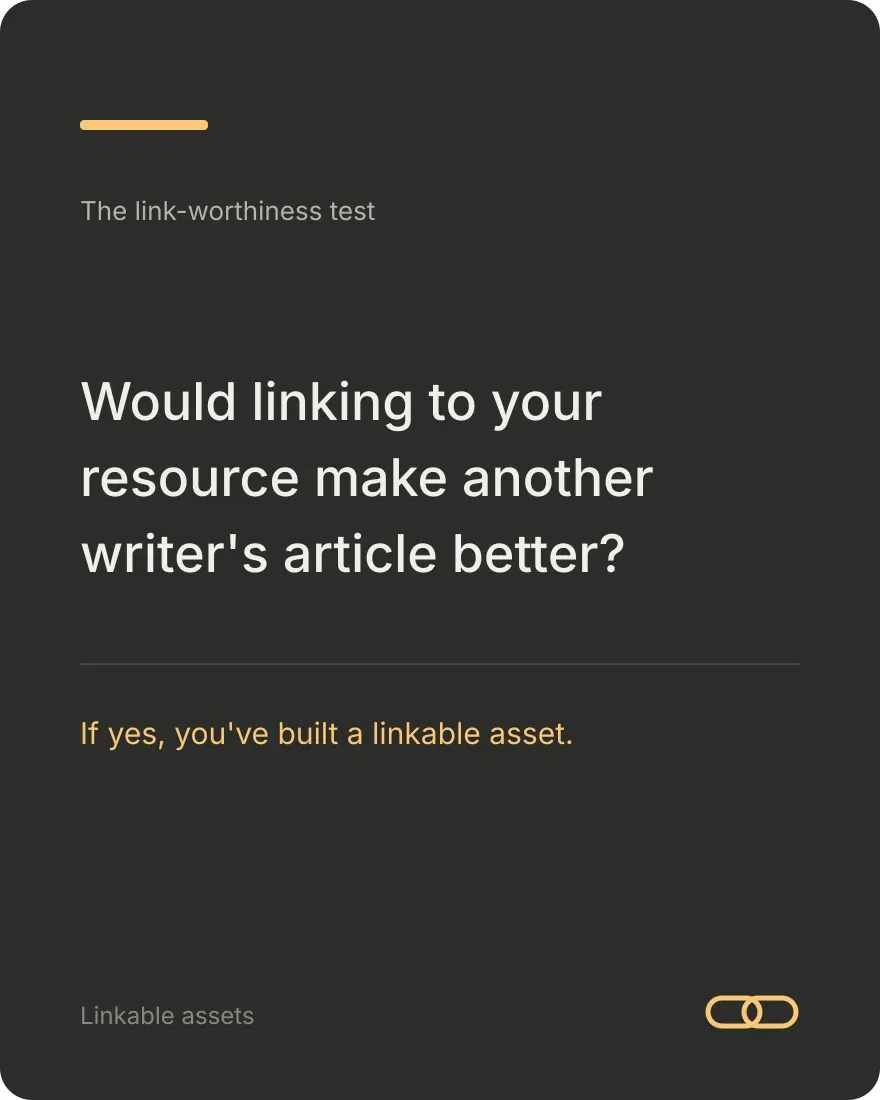
A good test is simple: If another writer were creating an article on this topic, would linking to your resource make their article better?
If the answer is yes, the asset has genuine linking potential.
How to Create a Linkable Asset Step by Step
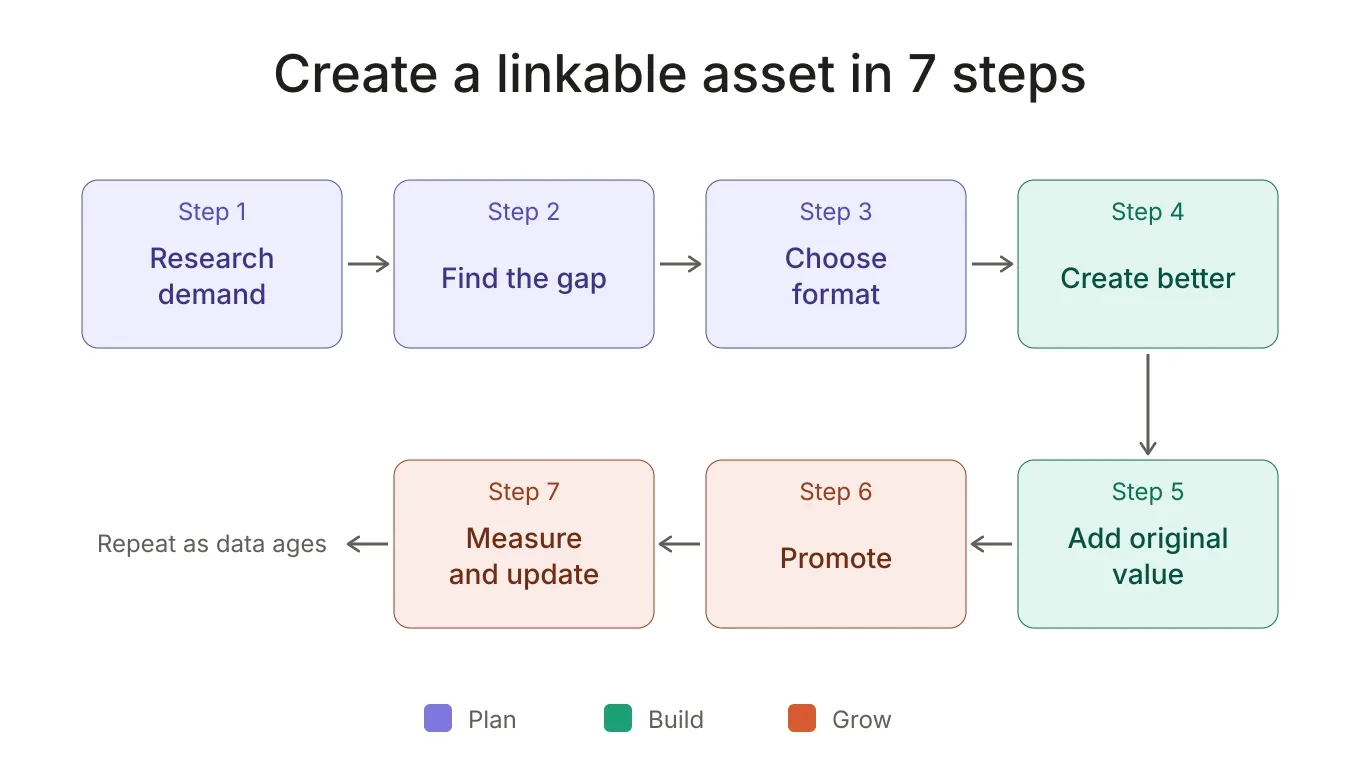
Start by researching topics that already attract backlinks. Look at competing pages and identify which resources receive links from multiple referring domains.
Next, find the information gap. Do not simply reproduce the same guide, statistics, or infographic. Look for outdated data, missing examples, weak explanations, poor usability, or questions competitors have ignored.
Then choose the right format. A data gap may require original research, while a practical problem may be better solved with a calculator or template.
Build the asset around a clear purpose. Make it easy to navigate and ensure that the most valuable information is immediately accessible.
Add original value wherever possible. This could include proprietary data, expert commentary, new analysis, real-world testing, or a more useful framework.
Finally, promote it. Even excellent resources can remain invisible without distribution.
A practical workflow looks like this:
Research existing demand - identify the gap - select the format - create something substantially better - add original value - promote it - measure results - update it.
Linkable Assets vs. Regular Blog Posts
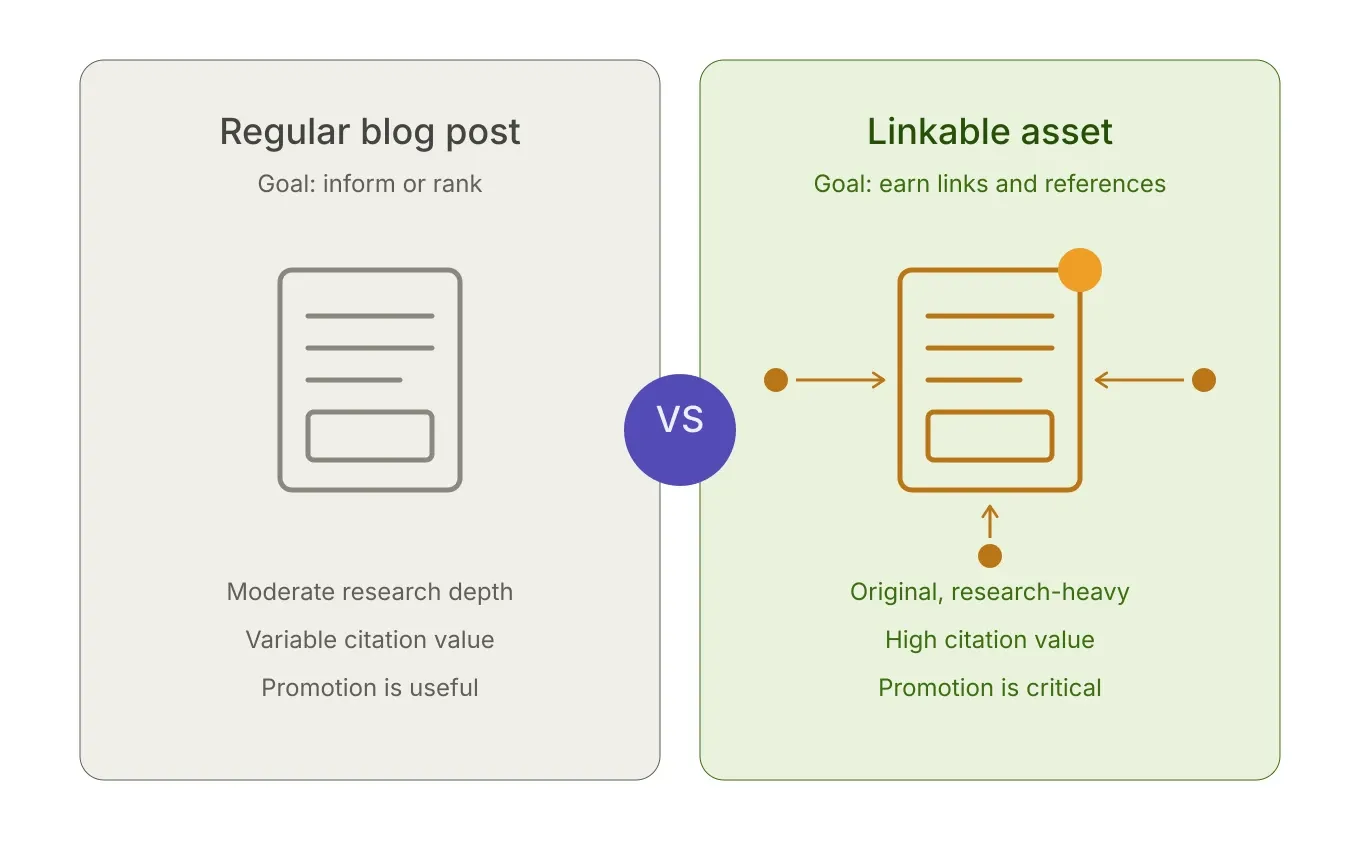
A regular blog post and a linkable asset can both support SEO, but they serve different purposes.
Factor | Regular Blog Post | Linkable Asset |
|---|---|---|
Primary goal | Inform or rank | Earn references and links |
Originality | Helpful but optional | Usually essential |
Research depth | Moderate to high | Often high |
Citation value | Variable | High |
Promotion | Useful | Usually critical |
Longevity | Can vary | Often designed for long-term use |
This does not mean every blog post should become a major research project. A healthy content strategy needs both educational content and high-value assets.
How to Promote Linkable Assets and Earn Backlinks
Publishing is only the first stage. Promotion determines whether the right people discover the asset.
Start with publishers who have already covered similar topics. Backlink research can reveal websites that linked to competing resources. These sites are potential prospects because they have demonstrated interest in the subject.
Personalized outreach is more effective than mass email. Explain why the asset is relevant to the publication rather than simply asking for a backlink.
Digital PR can also work particularly well for original research and statistics. A compelling finding can provide journalists with a story angle rather than just another resource to review.
Your existing audience is another distribution channel. Share the asset through email, social platforms, communities, sales conversations, and related articles.
Supporting content can extend its reach as well. Publish smaller articles that naturally reference the main asset and create additional entry points.
Measure the quality of the links you earn, not just the total number. Relevant editorial links from credible websites are generally more meaningful than large quantities of low-value links.
Common Linkable Asset Mistakes to Avoid
Several mistakes can prevent otherwise good assets from earning meaningful links.
Copying competitors is the most obvious problem. If your resource offers nothing new, publishers have little reason to choose it.
Repackaging existing information is another common issue. A new design does not automatically create new value.
Creating unnecessary tools can waste time and resources. Build interactive functionality only when it genuinely improves the user experience.
Going too broad can make an asset difficult to use. Specific resources often have stronger reference value than vague, enormous guides.
Ignoring promotion is equally damaging. Great content does not automatically reach publishers.
You should also avoid judging success purely by backlink quantity. Relevance, authority, referral traffic, visibility, and business outcomes provide a much better picture.
Finally, maintain successful assets. Update statistics, replace outdated sources, improve functionality, and refresh examples when necessary.
Linkable Asset Ideas for Different Types of Websites
The best asset depends on the business model and audience.
Website Type | Strong Linkable Asset Ideas |
|---|---|
SaaS | Industry benchmarks, calculators, original surveys |
SEO agency | SEO studies, templates, ranking research |
E-commerce | Buying guides, product data, calculators |
Market reports, local statistics, calculators | |
Finance | Financial calculators, benchmark reports, data studies |
Publisher | Original surveys, datasets, research libraries |
Local business | Local market guides, statistics, community reports |
The key is to create resources that naturally fit the questions your audience and industry already ask.
How to Measure the Success of a Linkable Asset
Start with referring domains. One website can link to an asset repeatedly, but unique referring domains provide a clearer indication of how broadly it is being cited.
Then evaluate link quality. Consider relevance, editorial placement, website credibility, and whether the linking page receives meaningful traffic.
Referral traffic is another useful metric because backlinks can deliver visitors directly.
Organic visibility matters too. A successful asset may begin ranking for related searches and attract users without additional promotion.
Finally, measure business impact. Track leads, sign-ups, assisted conversions, branded searches, and other meaningful outcomes where appropriate.
A strong asset should ideally contribute to more than a backlink count.
Linkable Assets and Digital PR
Linkable assets and digital PR work particularly well together because original information gives journalists and publishers something newsworthy to discuss.
An industry survey, new dataset, benchmark study, or unexpected finding can become the foundation of a media story. The asset serves as the evidence, while PR provides the distribution.
The strongest campaigns usually begin with a clear editorial angle. Instead of promoting an asset by saying it is comprehensive, identify the finding that would matter to the target audience.
For example, an original study revealing a significant change in consumer behavior can generate both press coverage and editorial backlinks.
SEO and PR should therefore work from the same research rather than operating as separate activities. The research creates the asset, PR creates awareness, and SEO captures the long-term value through links and search visibility.
Final Thoughts
Linkable assets work because they give publishers a genuine reason to reference your website. The most successful assets are not created simply to manipulate search rankings. They provide original information, useful tools, credible evidence, or practical resources that make other content better.
The process is straightforward: identify topics that already attract links, find an information gap, choose the right format, create something genuinely useful, add original value, promote it to relevant publishers, and measure what happens.
A single strong asset can continue attracting backlinks, referral traffic, mentions, and search visibility long after publication. That makes linkable assets one of the most durable components of a thoughtful SEO and content strategy.
Frequently Asked Questions
What is a linkable asset in SEO?
A linkable asset is a valuable resource that other websites want to reference and link to. Examples include original research, statistics, tools, templates, comprehensive guides, and industry reports.
What are some examples of linkable assets?
Common examples include original surveys, benchmark studies, free calculators, SEO tools, infographics, templates, case studies, industry glossaries, expert roundups, and curated resource libraries.
How do you create content that earns backlinks?
Start by finding topics that already attract backlinks, identify weaknesses or information gaps, and create a resource that provides stronger value. Original data, practical tools, expert insight, and useful frameworks can significantly increase linking potential.
Are linkable assets better than guest posting for SEO?
They serve different purposes. Linkable assets can generate editorial backlinks naturally, while guest posting can provide controlled opportunities to publish content on relevant websites. A strong SEO strategy can use both approaches where appropriate.
How do you promote a linkable asset?
Promote it through personalized outreach, digital PR, existing audiences, relevant communities, email, social channels, and supporting content. Prioritize websites that already publish or link to similar resources.