
On this page8
There are various concerns that arise in the profession, education, business, or even in everyday life where you may need to record what appears on your computer screen and share it with others, including the movement of your cursor.
Sometimes, you need to create a training video for a coworker or employee, walking them through a straightforward process that you operate on a PC.
Or perhaps you are recording your screen on your computer and appending a voiceover to a PowerPoint presentation or Google Slides.
Or, say, if you are a gamer and want to share some gameplay shots with your friends on social media.
While Loom is one of the most famous platforms for screen recordings, users often encounter technical issues and other problems that prompt them to consider alternatives.
Loom’s free version has a restriction of up to five minutes of video recording, with no editing. Also, you won’t be able to view your engagement insights in the free version. Full-screen video recording will be of poor quality.
Hence, Loom can disrupt your productivity with video limitations, bad-quality full-screen recording, lagging, and no editing provision (for the free version).
Fortunately, there are numerous excellent Loom alternatives that allow you to record your screen, edit your captured video, and share it with your audience. You can use them to fulfil your video messaging and overall engagement needs.
So, let’s drive in!
1. Vidyard

Vidyard allows you to record your screen on Mac, Windows, and mobile devices. It comes as a Desktop application for Windows and Mac users. Additionally, it supports Chrome and Microsoft Edge browser extensions.
The video-sharing feature includes the option to send videos via email, embed them on websites, and share them on social media platforms like Facebook, Instagram, or Twitter.
There is a video optimization feature that works similarly to a search engine optimization technique, where the program processes the video data and metadata to improve your video’s ranking (if you want it to be available to the public).
The engagement notifications feature keeps you updated by notifying you if anyone watches your videos.
Vidyard has several features that make it a perfect alternative to Loom.
Although Vidyard offers a rich suite of features for lead generation and other types of businesses, its free version provides more features than Loom’s free version. Its flexible video format support (WMV, MP4, MOV, etc.) makes it suitable to suit various personal needs with its free plan version.
Unlike Vidyard, Loom lacks marketing tools for campaign scheduling and automation. Moreover, Loom’s analytics capabilities are limited compared to Vidyard, which operates in real-time.
Did we say that Vidyard is free?
While paid Vidyard plans are available, the free version offers everything a person needs for screen recording and video sharing.
This makes it a strong competitor to Loom in the contemporary market.
For detailed pricing, click here.
2. Cloud App

CloudApp is additionally one of the renowned alternative platforms for screen recording to Loom. It lets you capture your screen and webcam. A distinguishing feature it offers is the ability to upload content directly to the cloud.
The webcam also allows you to add your face for a more personalized experience for your associates. It also supports annotations, allowing you to feature text or videos in your final product. An extra feature that makes CloudApp more fascinating is its ability to create GIFs.
CloudApp also boasts one of its most significant features: an easy editing feature that allows you to cut and trim videos.
Its link-sharing feature makes your video available to anyone you share the link with.
Additionally, your video will be securely stored in the cloud, allowing you to share it with confidence, knowing it’s protected from loss. Nevertheless, there are some drawbacks to this otherwise fascinating tool. For instance, you won’t be able to edit or crop your own video recordings.
Moreover, its free version limits the video scale to 90 minutes. The user interface is also not very easy for a beginner to get familiar with, so it’d take a while to become acquainted.
CloudApp offers a range of pricing options, including free and paid plans.
For detailed pricing, click here.
3. Camtasia

If you’re looking for a screen recorder with decent video editing functionality designed for tutorial growth, then Camtasia is a good choice without much deliberation.
This is the best-paid alternative to Loom available right now.
In Camtasia, you can record the entire screen, a part of it, or just an application window, depending on your requirements and convenience. This makes it plenty more customizable than most of its competitors.
Another compelling characteristic is its video templates, which are already built into a library. These templates will enable you to easily produce and edit your videos.
On the other hand, a vast library of royalty-free music and sound effects will make your video more enchanting to your audience.
It comes with clear, distinctive icons for all the features it delivers. This makes it easier for a beginner to become a pro in Camtasia without much difficulty.
One of the unique features of Camtasia is that it is specifically designed for creating video tutorials. That is why it offers interactive tools to add to videos.
One limitation of Camtasia is that it does not offer a free plan and is somewhat expensive compared to other screen recording apps.
There is also some negative feedback from users that it shows delays between the video and audio while recording.
Given the other great features of this tool, I believe some of its downsides can be easily overlooked.
For detailed pricing, click here.
4. Snagit
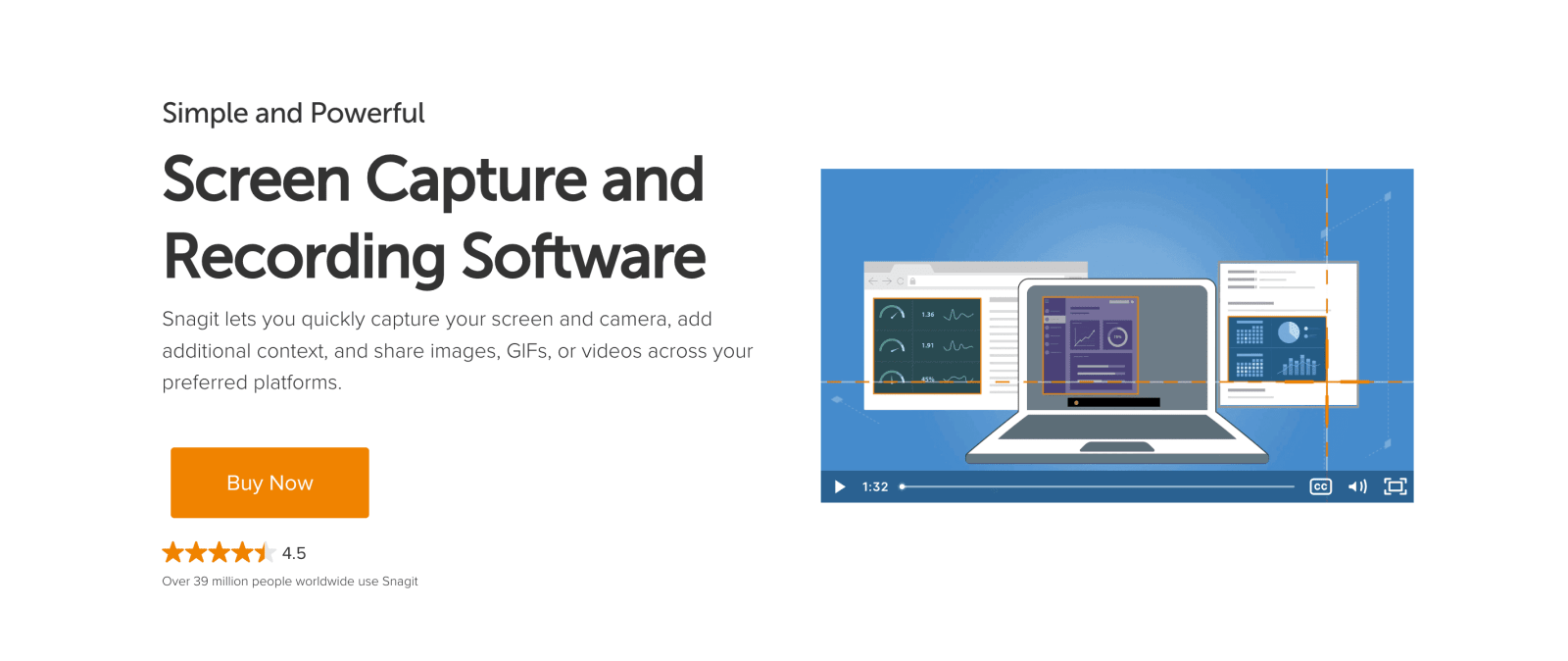
For recording videos and capturing the screen, Snagit is another Loom alternative with verification features. Like others, it lets you record your screen as an MP4 video or a GIF.
On the other hand, as far as capturing images of the screen is concerned, Snagit takes the lead and provides panoramic view development ability that enables capturing full-page scrolling screenshots of your screen.
Annotations are also permitted, along with the ability to draw pictures on top of your video.
One of the exceptional features of Snagit is that it can extract text from images within the library.
However, there are some drawbacks to Snagit.
Primarily, due to the presence of numerous new features, Snagit can be overwhelming at first.
Additionally, Snagit doesn’t offer a free plan, while the paid plans are costly and therefore inconvenient for SMEs.
Users also cannot share the video link directly via copy and paste without using screencast.com.
For detailed pricing, click here.
5. Scribe
Scribe is an AI-powered tool that turns any process into a visual guide.
The browser extension and desktop app free you from the constant fatigue of video recording. Picture this: you’re making a video to send to your team. Halfway through, you make a mistake. So you start again. Afterward, you still have to make cuts and edits and try to remove the disturbing background noise.
Scribe instantly documents your screen recording in a step-by-step guide, complete with text, links, and screenshots. No voice-overs, captions,s or extra effort are required! All you have to do is go through your process.
Seamlessly capture how work gets done across your organization. Analyze, optimize, and standardize processes in a way your team will love.
Scribe is one of the best screen recording tools on the market, loved by millions of users across various industries and departments.
Its Basic plan is free and comes with a browser extension. Pro and Teams users can download the desktop application, which offers advanced customizations and lets you capture processes across tools and screens.
For detailed pricing, click here.
6. Tella
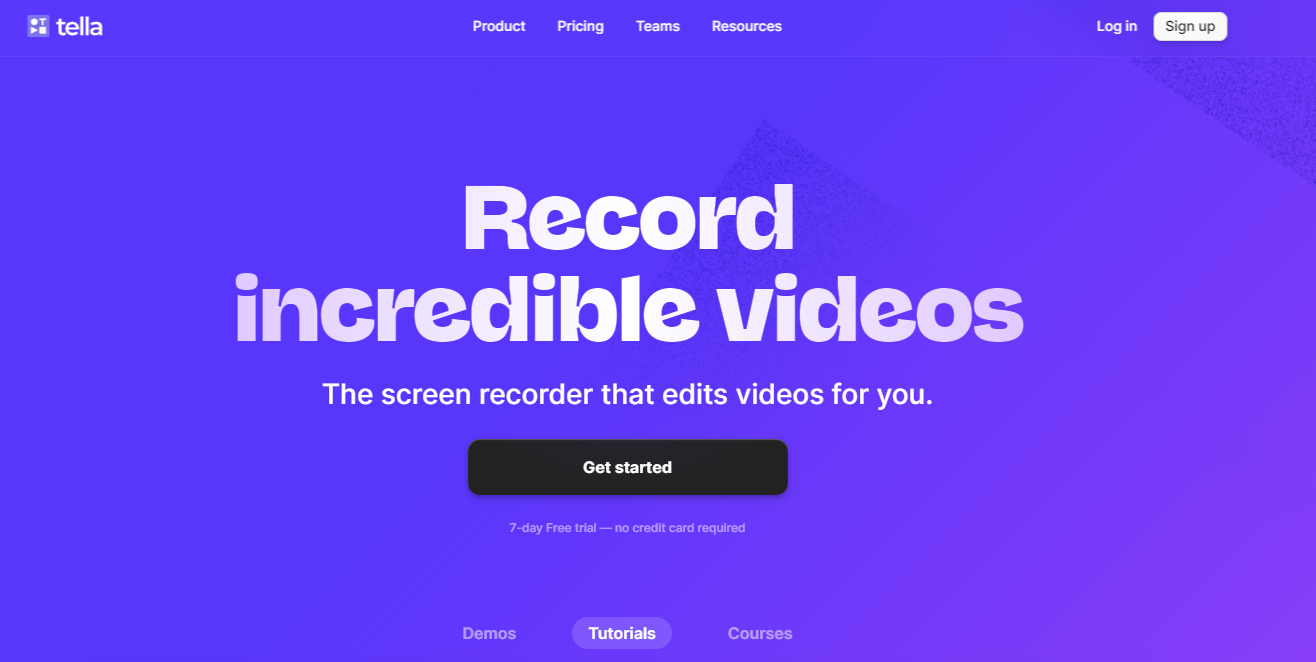
Tella stands out as your all-in-one online screen recorder for Windows and Mac, enabling you to create incredible videos with ease. Whether it’s for creating demos, online courses, one-on-one customer interactions, or promoting your project on social media, Tella offers a simple yet powerful platform to create videos that make an impact. Its features, such as recording clips, customizable backgrounds, zoom effects, and the ability to trim & split, make it perfect for remote design teams looking to share their work, provide clear feedback, or create engaging presentations.
For detailed pricing, click here.
7. Screen Capture
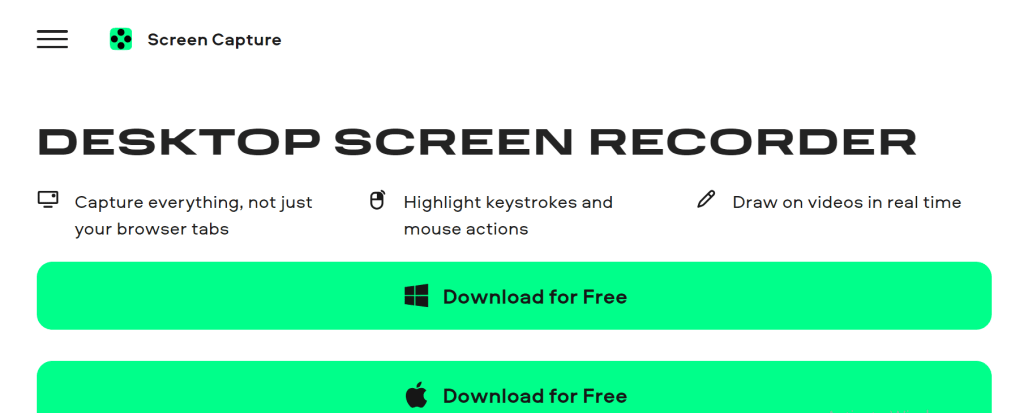
Apart from its desktop program, Movavi also offers users an online video recorder. You don’t get advanced tools, but for basic screen recording, Screen Capture is an excellent alternative to Loom.
The tool supports most popular browsers, including Google Chrome, Mozilla Firefox, Microsoft Edge, and Opera. The interface is user-friendly and straightforward, making it easy for beginners to use.
It allows you to capture any part of the screen and record your voice and system sound simultaneously.
After stopping the recording, you’re redirected to the preview screen, where you can either save the video or start it all over again (in case you aren’t satisfied with the result)
The limitations of Screen Capture include a watermark in the free version, no editing options, and a limited WebM format for video output.
Still, the safe recording process and convenient interface make it a decent option.
For detailed pricing, click here.
Final words
Your best Loom alternative will depend on your unique requirements and budget. For instance, you can choose Camtasia for its flexibility in editing. For school and e-learning platforms, Camtasia can be the best choice.
However, if you are looking to manage your business and empower your sales, the best Loom alternative to rely on is FullFeel, which not only addresses your local needs but also tracks your video viewers (your colleagues).
Although I believe CloudApp’s distinctive features are reasonable for case-specific and people-specific situations. CloudApp is ideal for office purposes, thanks to its cloud hosting features. Additionally, a cloud feature may also be necessary if you’re handling a large volume of videos.
P.S.: Read our SEO Question and Answer Blog here!
Check out our Buzzsumo Alternatives Blog here!