
Last Updated on 11/07/2026
Ranking a sports website has become more competitive than ever. Whether you run a sports news blog, fantasy sports platform, fitness website, local sports club, or sports equipment store, earning authority in search engines requires more than publishing quality content.
Backlinks remain one of the strongest signals search engines use to evaluate credibility and relevance.
If you’re wondering where to buy sport backlinks, the safest approach is to work with reputable outreach agencies, established sports publishers, or trusted guest posting services that secure genuine editorial placements on relevant websites.
Avoid cheap bulk links, private blog networks (PBNs), and services that promise hundreds of backlinks for very low prices, as these can increase the risk of poor-quality links and long-term SEO problems.
However, buying backlinks is only one part of an effective sports SEO strategy. The quality, relevance, editorial standards, and natural placement of each backlink matter far more than the number of links you acquire.
A single contextual backlink from a respected sports publication can deliver significantly more value than dozens of low-quality placements.
This guide explains how sports backlinks work, what makes them valuable, where businesses typically acquire them, how to evaluate providers, common mistakes to avoid, realistic pricing expectations, and best practices for building a sustainable backlink profile.
Why Sports Backlinks Matter for SEO
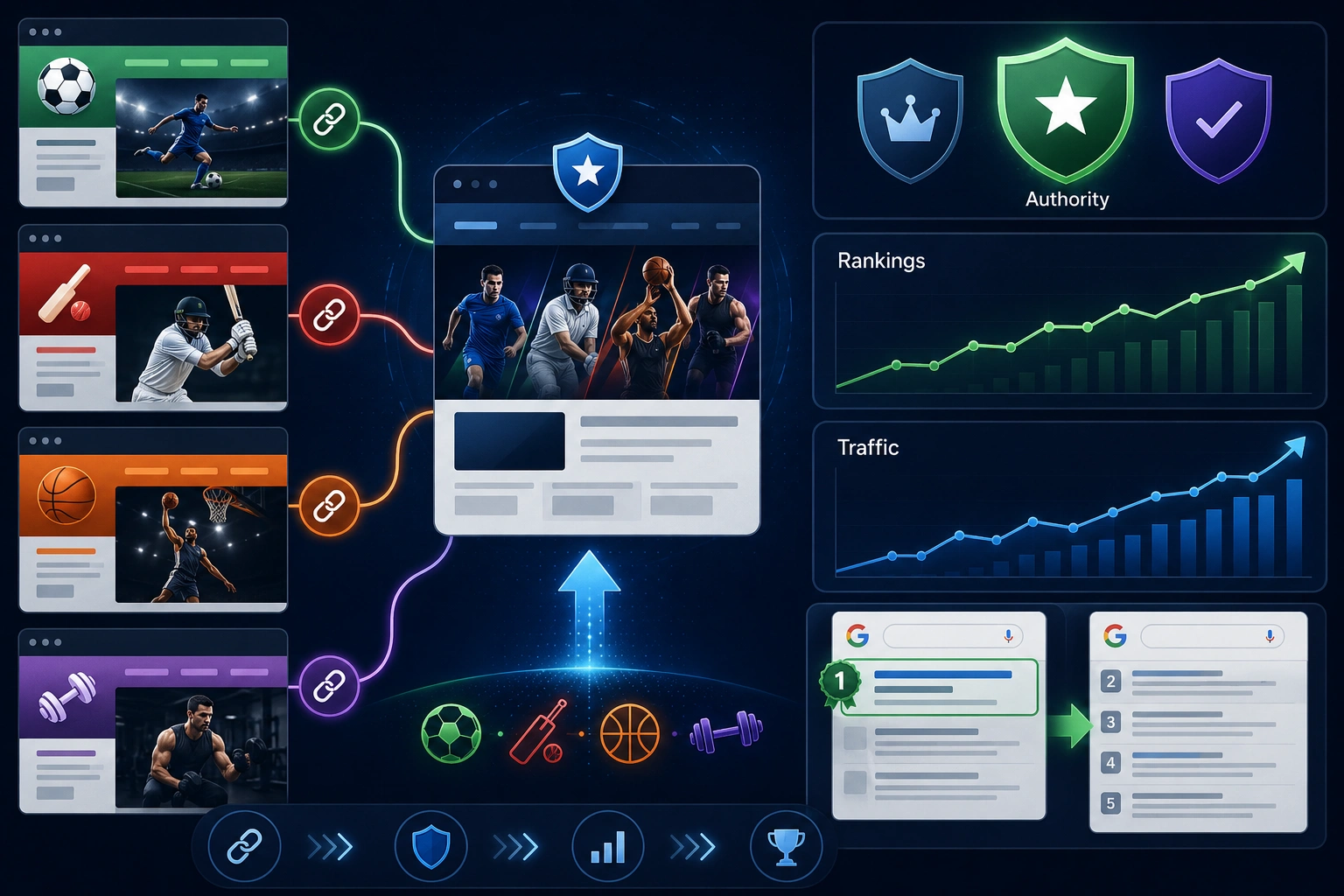
Search engines evaluate thousands of ranking signals, but backlinks consistently remain one of the strongest indicators of trust and authority. When respected sports websites link to your content, they effectively signal that your website provides information worth referencing.
For websites operating in competitive sports niches, backlinks often determine whether content appears on the first page or remains buried beneath competitors.
Backlinks Build Topical Authority
Google aims to recommend websites that demonstrate expertise within a specific subject area.
Imagine two websites publishing identical articles about football training techniques.
Website A receives links from:
- Sports magazines
- Football coaching blogs
- Athletic performance websites
- University sports departments
Website B receives random backlinks from unrelated websites discussing travel, pets, or technology.
Although both websites have similar content, Website A demonstrates much stronger topical relevance. Search engines can recognize that respected sports sources trust their content.
This is why sports niche backlinks generally outperform unrelated backlinks, even when those unrelated websites have higher authority metrics.
Higher Rankings for Competitive Keywords
Many sports-related keywords have intense competition.
Examples include:
- football betting tips
- basketball training drills
- running shoes
- fantasy football advice
- sports nutrition
- cricket predictions
- tennis coaching
Without strong backlinks, even exceptional content may struggle to rank.
Quality backlinks help improve:
- Domain authority
- Page authority
- Crawl frequency
- Indexation speed
- Keyword rankings
Combined with excellent content, backlinks increase your chances of ranking for valuable commercial and informational search queries.
Increased Organic Traffic
Backlinks influence rankings, but they also generate referral traffic.
Consider a sports equipment retailer that earns an editorial mention from a popular marathon training blog. Readers interested in running gear may click the link and become customers.
Similarly, a fantasy football website featured in a respected sports newsletter may receive thousands of targeted visitors.
Unlike paid advertising, editorial backlinks can continue driving traffic long after they are published.
Stronger Brand Credibility
Appearing on respected sports websites improves more than SEO.
It also strengthens your reputation.
When potential customers repeatedly encounter your brand on trusted sports publications, they become more familiar with your business.
This increased visibility can improve:
- Brand recognition
- Customer confidence
- Newsletter sign-ups
- Partnership opportunities
- Social sharing
- Media mentions
In many cases, the branding value of a high-quality editorial placement extends well beyond its SEO benefits.
Competitive Advantage
Many sports businesses invest heavily in content but neglect link building.
This creates an opportunity.
A consistent sports link-building strategy allows smaller websites to compete against larger brands by gradually earning authority within their niche.
For example:
| Website Strategy | Likely Long-Term Outcome |
|---|---|
| Publishes articles only | Slow growth despite quality content |
| Publishes articles plus quality backlinks | Steady authority growth and stronger rankings |
| Relies on spam backlinks | Higher risk of poor-quality links and unstable performance |
| Invests in editorial sports backlinks | Sustainable growth with stronger topical relevance |
Successful sports SEO is rarely about publishing the most content. It is about creating valuable resources that attract attention while supporting them with relevant, high-quality backlinks.
What Makes a High-Quality Sports Backlink?
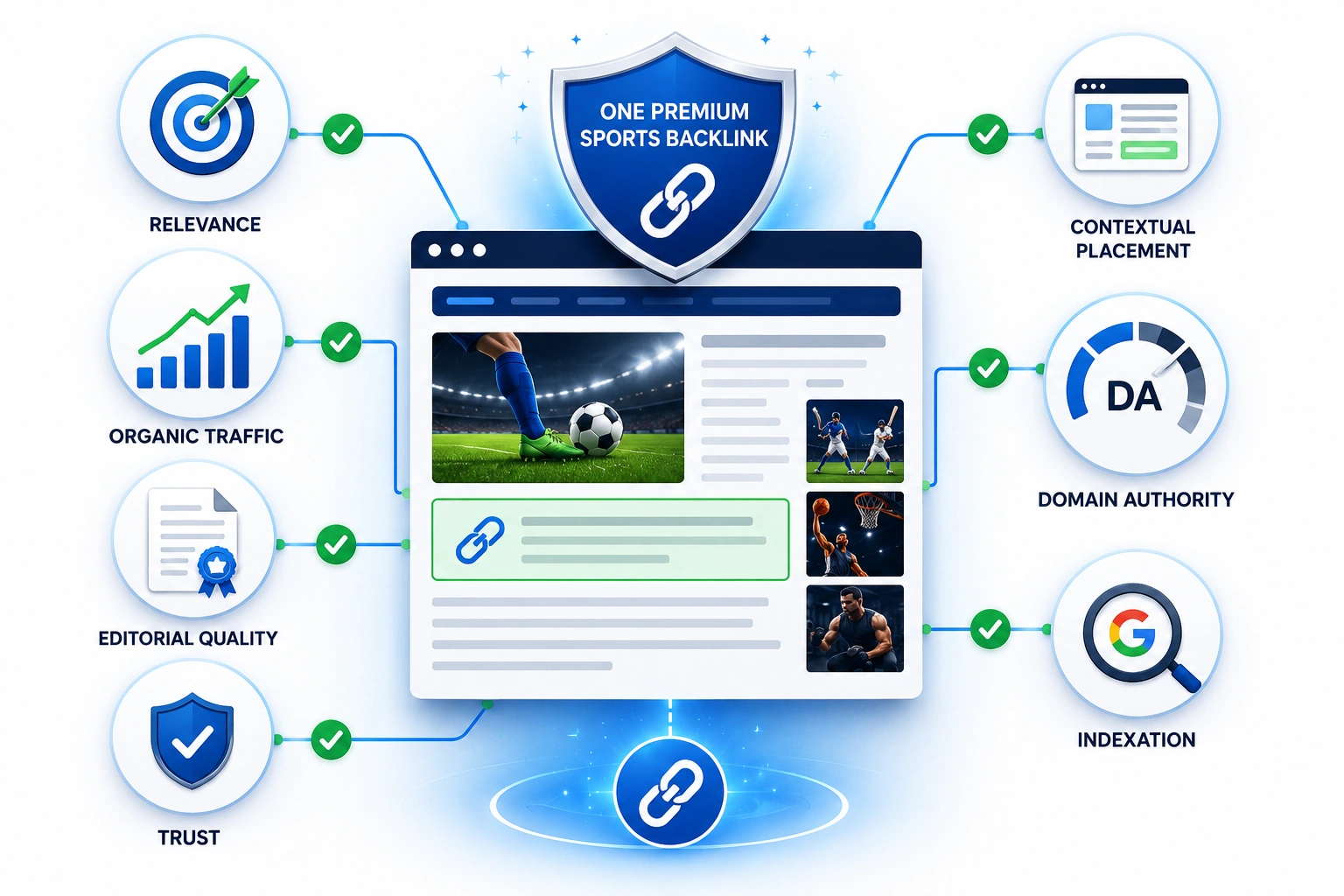
Not every backlink contributes equally to SEO. One carefully chosen editorial placement on a respected sports publication can outweigh dozens of low-value links.
Understanding backlink quality helps you invest wisely and avoid providers that focus on quantity over relevance.
1. Topical Relevance
Topical relevance is arguably the most important quality factor.
A backlink from a website dedicated to sports, athletics, fitness, coaching, or outdoor recreation is generally more valuable for a sports website than a backlink from an unrelated niche.
Examples of highly relevant sources include:
- Sports magazines
- Team blogs
- Coaching websites
- Athletic organizations
- Running communities
- Cycling publications
- Sports equipment review sites
- Fitness publishers
Relevant links help search engines understand your website’s expertise within the sports industry.
2. Organic Traffic
Many inexperienced buyers focus solely on Domain Rating (DR) or Domain Authority (DA).
While these metrics can provide useful context, they should never be the only deciding factor.
A stronger indicator is consistent organic search traffic.
Look for websites that:
- Rank for relevant keywords
- Publish regularly
- Attract real visitors
- Show stable traffic trends
- Demonstrate ongoing editorial activity
Healthy organic traffic often reflects a website’s overall quality and trustworthiness.
3. Editorial Standards
Quality websites do not publish every submission they receive.
Instead, they typically:
- Review contributors
- Edit submissions
- Maintain consistent formatting
- Update outdated content
- Enforce publishing guidelines
Strong editorial oversight usually leads to more valuable backlinks because the surrounding content is useful and trustworthy.
4. Natural Link Placement
Context matters.
A backlink placed naturally within a well-written article generally provides more value than one hidden in a footer, sidebar, or author bio.
The best contextual backlinks appear where they genuinely support the reader.
Examples include:
- Product recommendations
- Research citations
- Expert interviews
- Training guides
- Sports statistics
- Coaching resources
Natural placement improves user experience, and links appear more editorially justified.
5. Domain Authority and Trust
Although third-party authority metrics should not be treated as Google’s ranking signals, they can help compare websites.
When evaluating potential placements, consider:
- Domain Rating (DR)
- Domain Authority (DA)
- Referring domains
- Organic keyword rankings
- Spam indicators
- Publishing consistency
These metrics should always be considered alongside relevance and content quality rather than in isolation.
6. Indexation
A backlink has little value if the page is not indexed by search engines.
Before purchasing a placement, verify that:
- Existing articles are indexed
- Recent posts appear in search results
- Pages are regularly crawled
- The site does not suffer from widespread deindexation
Indexed pages are more likely to pass value and remain discoverable over time.
7. Trust Signals
Strong sports websites typically display signs of credibility beyond SEO metrics.
Look for:
- Author biographies
- Contact information
- Editorial policies
- Active social media profiles
- Original photography
- Consistent publishing schedule
- Reader engagement
- Transparent ownership
These trust signals suggest the website exists to serve its audience rather than solely to sell backlinks.
Comparison: High-Quality vs. Low-Quality Sports Backlinks
| Factor | High-Quality Backlink | Low-Quality Backlink |
| Niche relevance | Sports-focused website | Unrelated or mixed-topic site |
| Organic traffic | Consistent and growing | Little or no search traffic |
| Editorial review | Human-reviewed content | Auto-published or poorly edited |
| Link placement | Naturally integrated into content | Footer, sidebar, or obviously paid placement |
| Content quality | Original and informative | Thin, duplicated, or low-value |
| Indexation | Pages indexed consistently | Many pages missing from search results |
| Audience | Real readers and community | Minimal engagement |
| Long-term value | Supports sustainable SEO growth | Limited value and potential risk |
Expert Tip
When choosing between a high-authority general website and a slightly smaller but highly relevant sports publication, topical relevance often provides greater long-term value. A contextual backlink from a respected sports website aligns more closely with your niche and can contribute more effectively to a balanced, natural backlink profile.
Types of Sports Backlinks
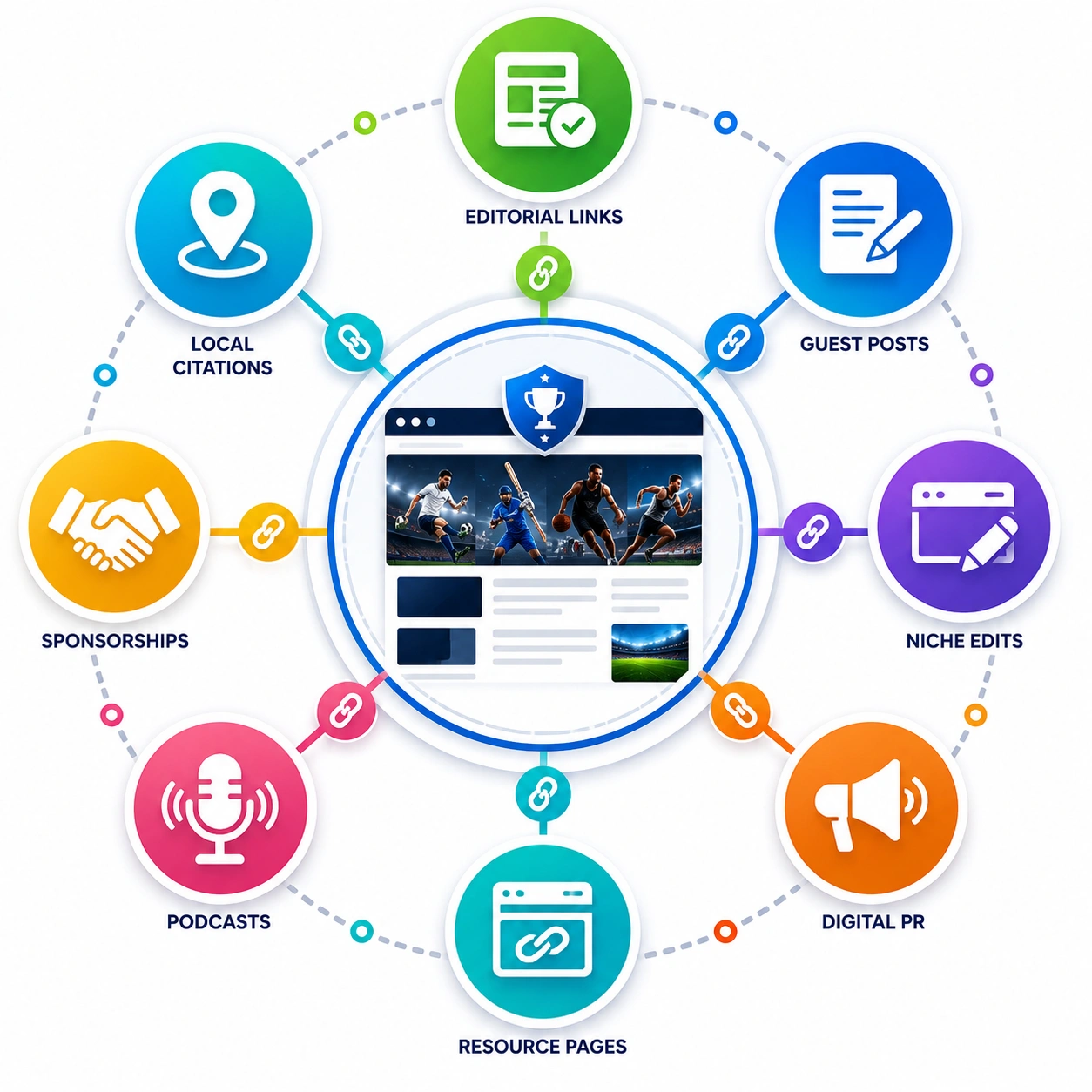
Not all sports backlinks serve the same purpose. Some are designed to increase authority, while others drive referral traffic, improve brand visibility, or strengthen topical relevance. A well-rounded backlink profile typically includes a mix of different link types rather than relying on a single acquisition method.
Below are the most valuable types of backlinks for sports websites and when to use each one.
Editorial Backlinks
Editorial backlinks are among the most valuable links you can earn or acquire through legitimate outreach. These links are naturally placed within high-quality content because the publisher believes they add value for readers.
Examples include:
- A sports magazine citing your original research
- A football blog linking to your coaching guide
- A fitness publication referencing your workout resource
Advantages
- High trust and authority
- Strong contextual relevance
- Excellent long-term SEO value
- Natural anchor text
Disadvantages
- Harder to obtain
- Higher placement costs
- Limited availability
Sports Guest Posts
Guest posting remains one of the most popular approaches for sports link building. Instead of inserting a link into an existing article, you contribute a new article to a relevant sports website.
A quality guest post should provide genuine value rather than exist solely to host a backlink.
Good topics include:
- Training guides
- Sports nutrition
- Equipment reviews
- Athlete interviews
- Tournament analysis
- Coaching advice
Advantages
- Full editorial control
- Opportunity to build authority
- Natural contextual backlinks
- Brand exposure
Disadvantages
- Requires quality content
- Some publishers charge editorial fees
- Placement quality varies
Niche Edits (Link Insertions)
A niche edit, also called a link insertion, places your backlink into an existing article that already ranks or has established authority.
Because the page may already receive search traffic, niche edits can sometimes deliver faster SEO benefits than publishing a new guest post.
Advantages
- Existing authority
- Faster indexing
- Potential referral traffic
- Relevant context
Disadvantages
- Limited editorial flexibility
- Quality depends on the existing article
- Poorly inserted links may appear unnatural
Digital PR
Digital PR focuses on earning mentions from journalists, publishers, and news websites through stories, research, surveys, or unique data.
Examples include:
- Sports participation statistics
- Fitness industry reports
- Original athlete interviews
- Consumer surveys
- Event coverage
Advantages
- Highly authoritative backlinks
- Brand awareness
- Media exposure
- Natural link profile
Disadvantages
- Time-intensive
- Requires compelling content
- Results are less predictable
Resource Page Links
Many sports organizations maintain resource pages that recommend useful tools, guides, charities, clubs, and educational content.
If your content genuinely helps their audience, it may be included as a recommended resource.
Advantages
- Highly relevant
- Editorially justified
- Strong trust signals
Disadvantages
- Competitive outreach
- Limited opportunities
Podcast Backlinks
Sports podcasts often publish episode pages that include guest biographies, references, and website links.
Appearing as a guest can generate both referral traffic and authoritative backlinks.
Advantages
- Brand credibility
- Audience engagement
- Editorial backlinks
Disadvantages
- Requires outreach
- Time commitment
Local Sports Citations
Local businesses such as gyms, sports clubs, coaches, academies, and sporting facilities benefit from local citations.
Examples include:
- Chamber of Commerce websites
- Community sports associations
- Local leagues
- Regional event organizers
Advantages
- Supports local SEO
- Builds trust
- Relevant local authority
Disadvantages
- Limited impact nationally
- Location dependent
Sponsorship Links
Supporting youth clubs, tournaments, charities, or community events can result in legitimate backlinks from their websites.
When sponsorships are genuine and transparent, they can strengthen both your reputation and local visibility.
Advantages
- High relevance
- Positive brand exposure
- Community engagement
Disadvantages
- Costs vary
- Opportunities depend on location
Comparison of Sports Backlink Types
| Backlink Type | Difficulty | SEO Value | Referral Traffic | Best For |
|---|---|---|---|---|
| Editorial Links | High | Excellent | Medium | Long-term authority |
| Guest Posts | Medium | High | Medium | Consistent growth |
| Niche Edits | Medium | High | Medium | Established pages |
| Digital PR | High | Excellent | High | Brand authority |
| Resource Pages | Medium | High | Low | Educational content |
| Podcast Links | Medium | Medium | High | Brand awareness |
| Local Citations | Low | Medium | Low | Local businesses |
| Sponsorship Links | Medium | Medium | Medium | Community visibility |
Where to Buy Sport Backlinks
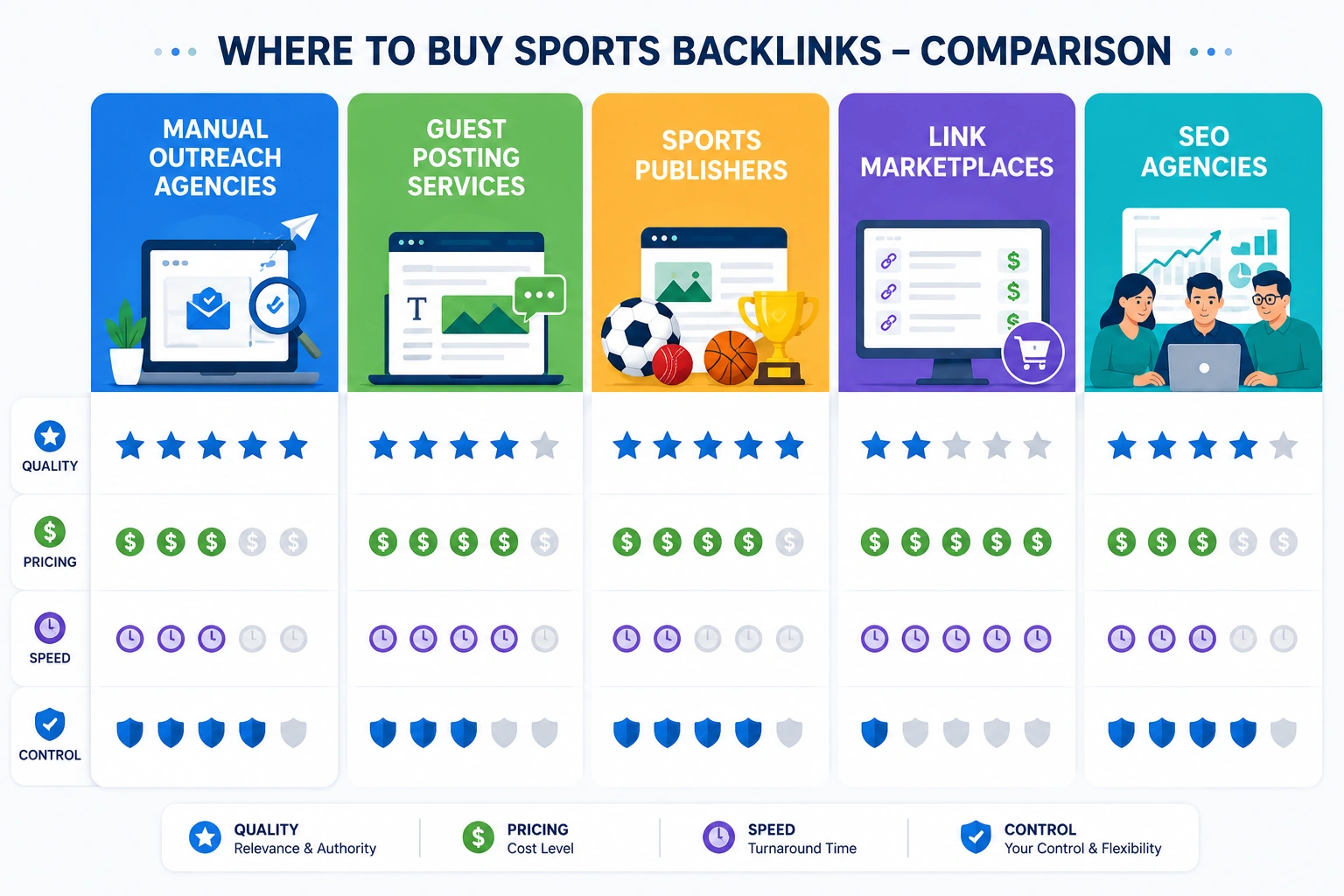
If you decide to purchase sports backlinks, choosing the right provider is critical. The goal should never be to buy as many links as possible. Instead, focus on obtaining relevant editorial placements that genuinely strengthen your website.
Below are the most common options.
Manual Outreach Agencies
Manual outreach agencies contact website owners individually to secure placements.
Instead of relying on pre-built networks, they negotiate with publishers and often create original content for each placement.
Best For
- Businesses seeking long-term SEO growth
- Agencies managing client campaigns
- Competitive sports websites
Pros
- High-quality editorial placements
- Better topical relevance
- More natural backlink profile
- Greater transparency
Cons
- Higher pricing
- Longer turnaround time
Guest Posting Services
Guest posting services maintain relationships with sports publishers and can arrange article placements on relevant websites.
The best services focus on editorial quality instead of simply selling links.
Best For
- Blogs
- Sports brands
- Affiliate websites
- Ecommerce businesses
Pros
- Scalable
- Predictable process
- Original content included
Cons
- Quality varies by provider
- Some rely on low-value publisher networks
Sports Publishers
Working directly with sports publishers removes intermediaries and often results in stronger editorial relationships.
Examples include:
- Sports magazines
- Coaching websites
- Fitness blogs
- Running communities
- Cycling publications
- Outdoor recreation websites
Pros
- Direct communication
- Higher editorial standards
- Better brand visibility
Cons
- Time-consuming outreach
- Limited availability
Link Marketplaces
Marketplaces connect buyers with website owners willing to publish sponsored content or guest posts.
While marketplaces can save time, quality varies significantly.
Before purchasing, review:
- Organic traffic
- Publishing standards
- Link profile
- Content quality
- Topical relevance
Pros
- Large selection
- Faster ordering
- Transparent pricing
Cons
- Mixed quality
- Requires careful vetting
- Some listings may become outdated
SEO Agencies
Many SEO agencies include sports link building as part of broader optimization campaigns.
Rather than selling individual links, they typically build long-term strategies that combine technical SEO, content creation, and outreach.
Best For
- Established businesses
- Larger marketing budgets
- Long-term campaigns
Pros
- Strategic planning
- Integrated SEO
- Reporting and analysis
Cons
- Higher monthly investment
- Less suitable for one-off placements
Comparison of Backlink Acquisition Options
| Provider | Quality | Typical Cost | Best For | Risk Level |
|---|---|---|---|---|
| Manual Outreach Agency | Excellent | $$$ | Competitive websites | Low |
| Guest Posting Service | High | $$ | Consistent link building | Low to Medium |
| Sports Publisher | Excellent | $$ to $$$ | Brand authority | Low |
| Link Marketplace | Medium to High | $ to $$$ | Flexible purchasing | Medium |
| SEO Agency | Excellent | $$$$ | Long-term SEO campaigns | Low |
Estimated Pricing
| Backlink Type | Typical Price Range |
|---|---|
| Guest Post | $100 to $500 |
| Niche Edit | $80 to $400 |
| Editorial Placement | $250 to $1,000+ |
| Authority Sports Publisher | $500 to $2,000+ |
| Digital PR Campaign | $1,500 to $10,000+ |
These figures vary depending on publisher reputation, organic traffic, editorial requirements, content creation, and niche competitiveness. Extremely low prices often indicate lower-quality placements, so pricing should be considered alongside relevance and editorial standards rather than as the only deciding factor.
How to Evaluate a Backlink Seller
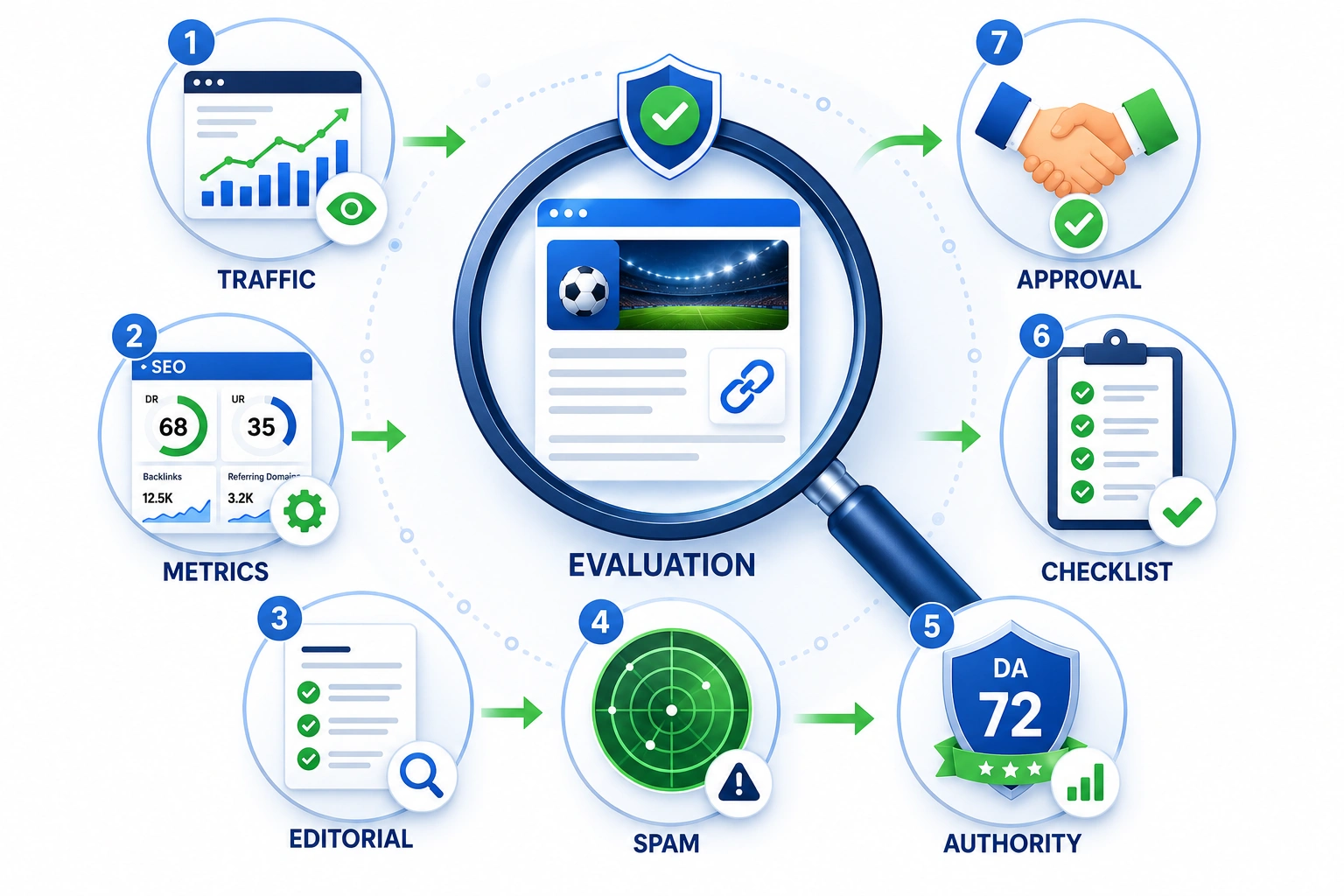
Choosing the right backlink provider can make the difference between a campaign that strengthens your website and one that wastes your budget. Rather than focusing on promises of high Domain Authority or hundreds of links, evaluate providers using several quality indicators.
Check Organic Traffic
Ask for examples of websites where your links may be placed. Review whether those sites attract consistent organic traffic from search engines. A website with steady traffic and regularly updated content is generally a better option than one that exists solely to sell links.
Assess Topical Relevance
A backlink from a sports-related website is usually more valuable than a link from an unrelated niche. Review the site’s recent content to ensure sports, fitness, athletics, coaching, or related topics are its primary focus.
Review Editorial Standards
High-quality publishers typically have:
- Original articles
- Named authors
- Consistent publishing schedules
- Professional design
- Clear contact information
- Editorial guidelines
Avoid websites filled with thin content or sponsored articles on unrelated topics.
Examine the Link Profile
A trustworthy website should have a natural mix of incoming and outgoing links. If every article contains multiple commercial links pointing to unrelated industries, that’s a warning sign.
Ask About Reporting
A reputable provider should explain:
- Which websites do they contact
- Whether outreach is manual
- What type of content is included
- Expected delivery times
- Reporting after publication
Transparency builds confidence and helps you evaluate the value of your investment.
Backlink Seller Checklist
Before placing an order, ask yourself:
- Is the website relevant to sports?
- Does it receive organic traffic?
- Are the articles well written?
- Is the site indexed?
- Are outgoing links reasonable?
- Is pricing realistic?
- Does the provider answer questions clearly?
- Is there a clear editorial process?
If several answers are “no,” consider another provider.
Red Flags to Avoid
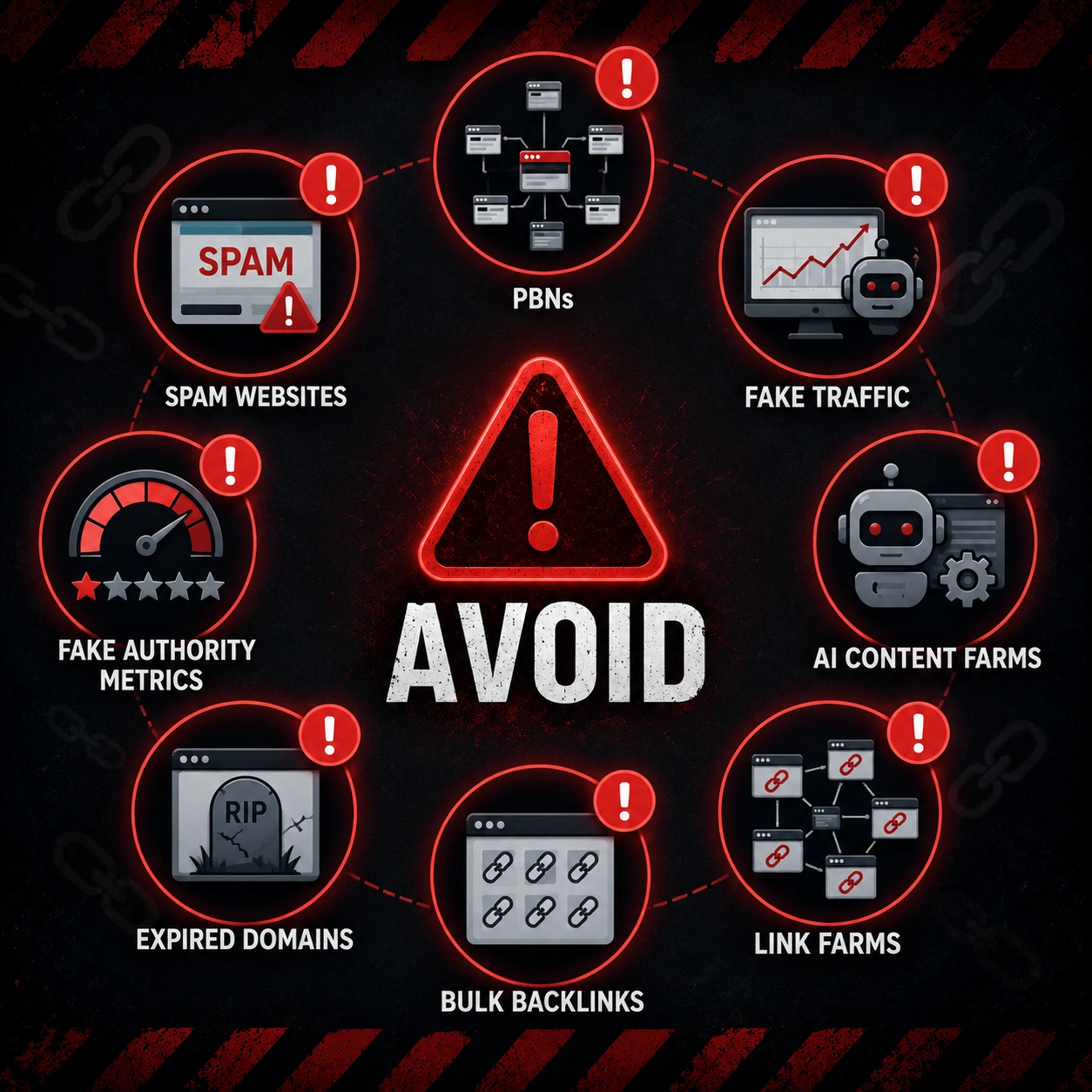
Some backlink offers may appear attractive because of their low prices or bold promises. However, these shortcuts often create long-term SEO problems.
Private Blog Networks (PBNs)
PBNs are networks of websites created primarily to pass links. While some may appear authoritative, they often leave detectable patterns that search engines can identify.
Spam Farms
These websites publish almost any content submitted to them with little or no editorial review. They usually cover dozens of unrelated topics and provide little value to readers.
AI-Generated Content at Scale
AI can assist writers, but websites publishing hundreds of poorly reviewed, repetitive articles may struggle to maintain quality. Review the overall usefulness of the content rather than assuming every AI-assisted site is low quality.
Fake Authority Metrics
Some websites inflate metrics through expired domains or artificial link building. Always consider traffic, relevance, and editorial quality alongside authority scores.
Unrealistic Guarantees
Be cautious of claims such as:
- “Guaranteed #1 rankings”
- “500 backlinks in 24 hours”
- “Instant SEO success”
- “Permanent rankings”
No provider can guarantee search rankings because search engines evaluate many factors beyond backlinks.
Warning Signs
Avoid providers that:
- Refuse to reveal placement examples
- Offer extremely cheap bulk packages
- Sell identical links to every customer
- Publish on unrelated websites
- Use automated outreach without quality control
Best Practices for Buying Sports Backlinks
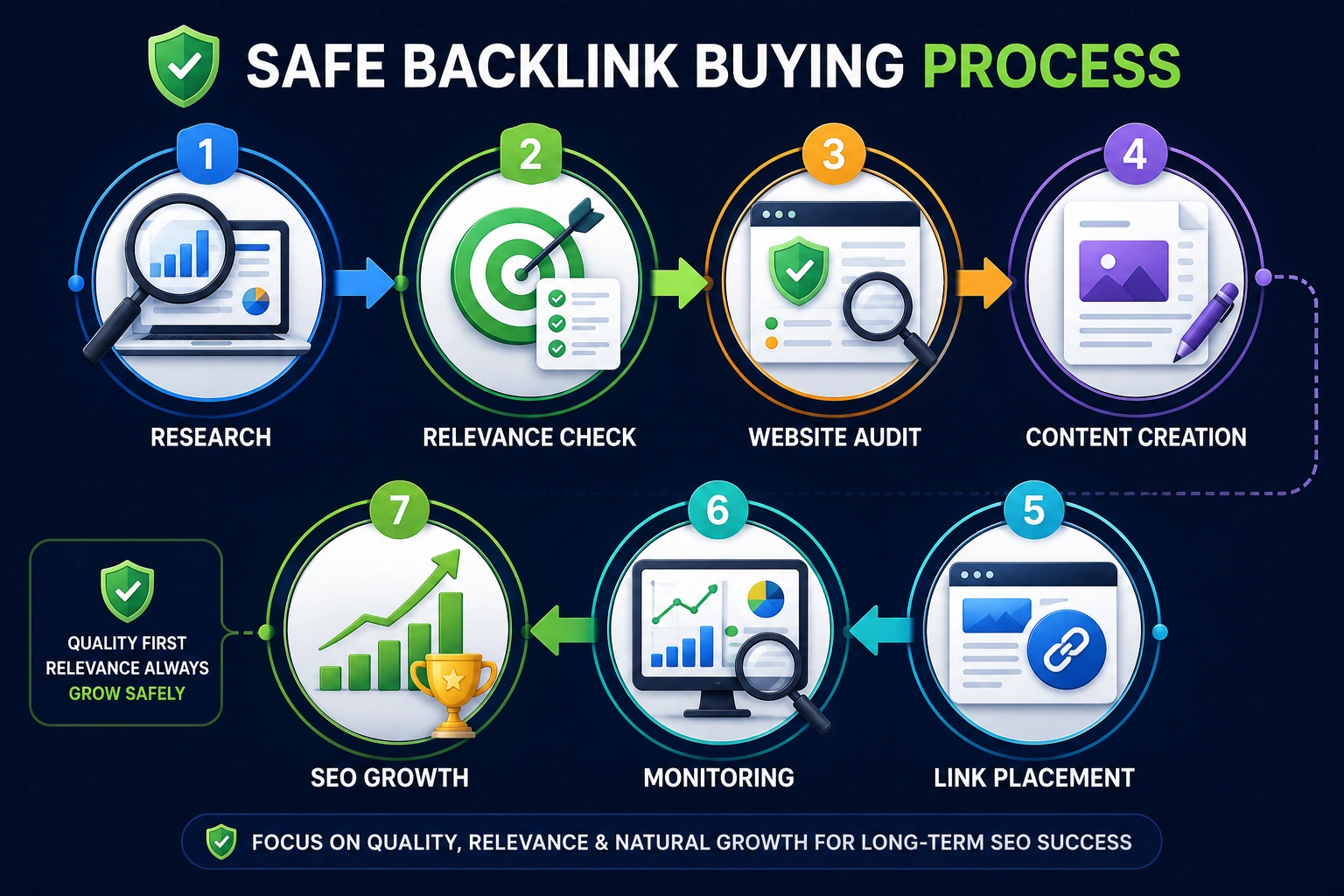
A thoughtful strategy is more effective than purchasing large numbers of links in a short period.
Diversify Anchor Text
Avoid repeating the same keyword in every backlink.
Instead, use a balanced mix of:
- Brand names
- URL anchors
- Generic anchors
- Partial-match keywords
- Natural phrases
This creates a healthier backlink profile.
Maintain Natural Link Velocity
Acquiring links gradually often appears more natural than gaining hundreds within a few days.
A consistent monthly campaign can support long-term growth while reducing the appearance of manipulation.
Invest in Content First
Quality backlinks perform best when they point to valuable pages.
Create content such as:
- Comprehensive guides
- Original research
- Equipment reviews
- Training resources
- Sports statistics
- Industry insights
Strong content increases the value of every backlink.
Build Link Diversity
A healthy backlink profile includes links from multiple sources, including:
- Editorial articles
- Guest posts
- Resource pages
- News mentions
- Podcasts
- Local organizations
- Industry partnerships
Diversity reduces reliance on any single acquisition method.
Monitor Performance
Track your campaign using SEO tools to measure:
- Keyword rankings
- Organic traffic
- Referral traffic
- New referring domains
- Indexed backlinks
Review your backlink profile periodically to identify potentially harmful links and maintain overall quality.
Alternatives to Buying Backlinks
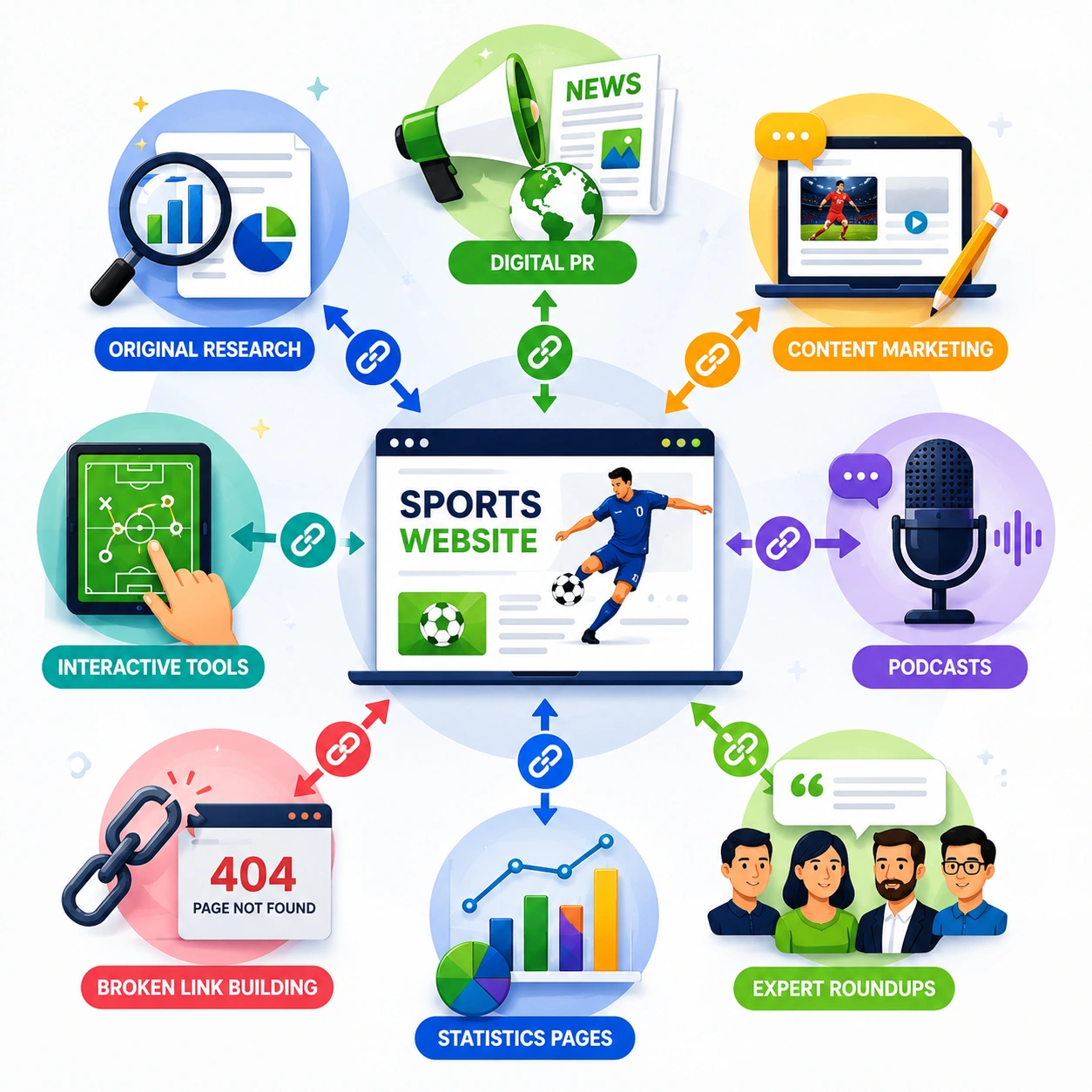
Purchasing editorial placements is one option, but it should not be your only strategy.
Digital PR
Publish unique research, surveys, or expert commentary that journalists and publishers naturally reference.
Content Marketing
Create resources that people genuinely want to share, such as:
- Ultimate training guides
- Equipment comparison articles
- Seasonal sports calendars
- Interactive calculators
- Coaching templates
Original Research
Sports statistics, fan surveys, and industry reports can attract editorial backlinks without direct outreach.
Interactive Tools
Useful tools often earn natural backlinks because they solve practical problems.
Examples include:
- Calorie calculators
- Pace calculators
- Tournament bracket generators
- Fantasy sports tools
Broken Link Building
Identify broken links on sports websites and recommend your relevant content as a replacement.
Podcast Outreach
Appearing as a guest on sports podcasts builds authority while creating opportunities for editorial backlinks and brand exposure.
Expert Roundups
Contributing insights to industry articles helps establish credibility and often results in high-quality backlinks.
Final Thoughts
If you’re researching where to buy sport backlinks, focus on quality over quantity. The strongest backlink strategies are built around relevance, editorial integrity, and long-term value rather than quick wins.
Whether you work with a manual outreach agency, a reputable guest posting service, or directly with sports publishers, evaluate every opportunity based on topical relevance, organic traffic, editorial standards, and transparency.
Combine backlink acquisition with exceptional content, sound technical SEO, and ongoing performance monitoring to build sustainable authority over time.
A successful sports SEO strategy is rarely the result of one campaign. Consistent effort, high-quality resources, and relationships with trusted publishers are far more likely to deliver lasting results than shortcuts or bulk backlink packages.
Frequently Asked Questions
Paid backlinks can carry risk if they are used to manipulate search rankings or come from low-quality sources. Focus on earning placements through reputable publishers, valuable content, and transparent outreach rather than purchasing large volumes of low-quality links.
Pricing varies widely depending on the publisher, traffic, editorial standards, and content requirements. Quality placements generally cost more than mass-produced backlinks because they involve genuine editorial review and outreach.
Neither approach is universally better. Niche edits may provide value when added naturally to relevant, established content, while guest posts offer greater control over messaging and context. The best choice depends on your goals and the quality of the placement.
High-quality, relevant backlinks can contribute to stronger search visibility when combined with useful content, technical SEO, and a positive user experience. No backlink provider can guarantee rankings, and poor-quality links may have little value or create unnecessary risk.
There is no fixed number. The right quantity depends on your competition, content quality, and the authority of the websites linking to you. A smaller number of highly relevant editorial backlinks is often more valuable than a large number of weak links.