
On this page13
- What It Actually Means to Design a Website on Shopify
- Core Design Benefits of Building on Shopify
- SEO Advantages of Designing Your Website on Shopify
- Performance and Security Benefits That Protect Your Design Investment
- Shopify’s App Ecosystem and Its Impact on Website Design Capabilities
- Common Mistakes to Avoid When Designing a Website on Shopify
- How Shopify Website Design Supports Link-Building and Domain Authority Growth
- Shopify Design Flexibility for Growing Brands
- Shopify Design vs Other Platforms: A Direct Comparison
- How to Get the Most Out of Shopify Website Design
- Who Should Design Their Website on Shopify
- Conclusion
- Frequently Asked Questions
Table of Contents
Performance and Security Benefits That Protect Your Design Investment
Shopify’s App Ecosystem and Its Impact on Website Design Capabilities
Common Mistakes to Avoid When Designing a Website on Shopify
How Shopify Website Design Supports Link-Building and Domain Authority Growth
Choosing the right platform to design your website is one of the most important decisions you will make for your online business. Shopify has grown far beyond its roots as a simple e-commerce tool, becoming a full-featured website design platform trusted by millions of businesses worldwide. Understanding the real benefits of designing your website on Shopify can help you make a smarter investment in your brand’s digital presence and long-term search visibility.
What It Actually Means to Design a Website on Shopify
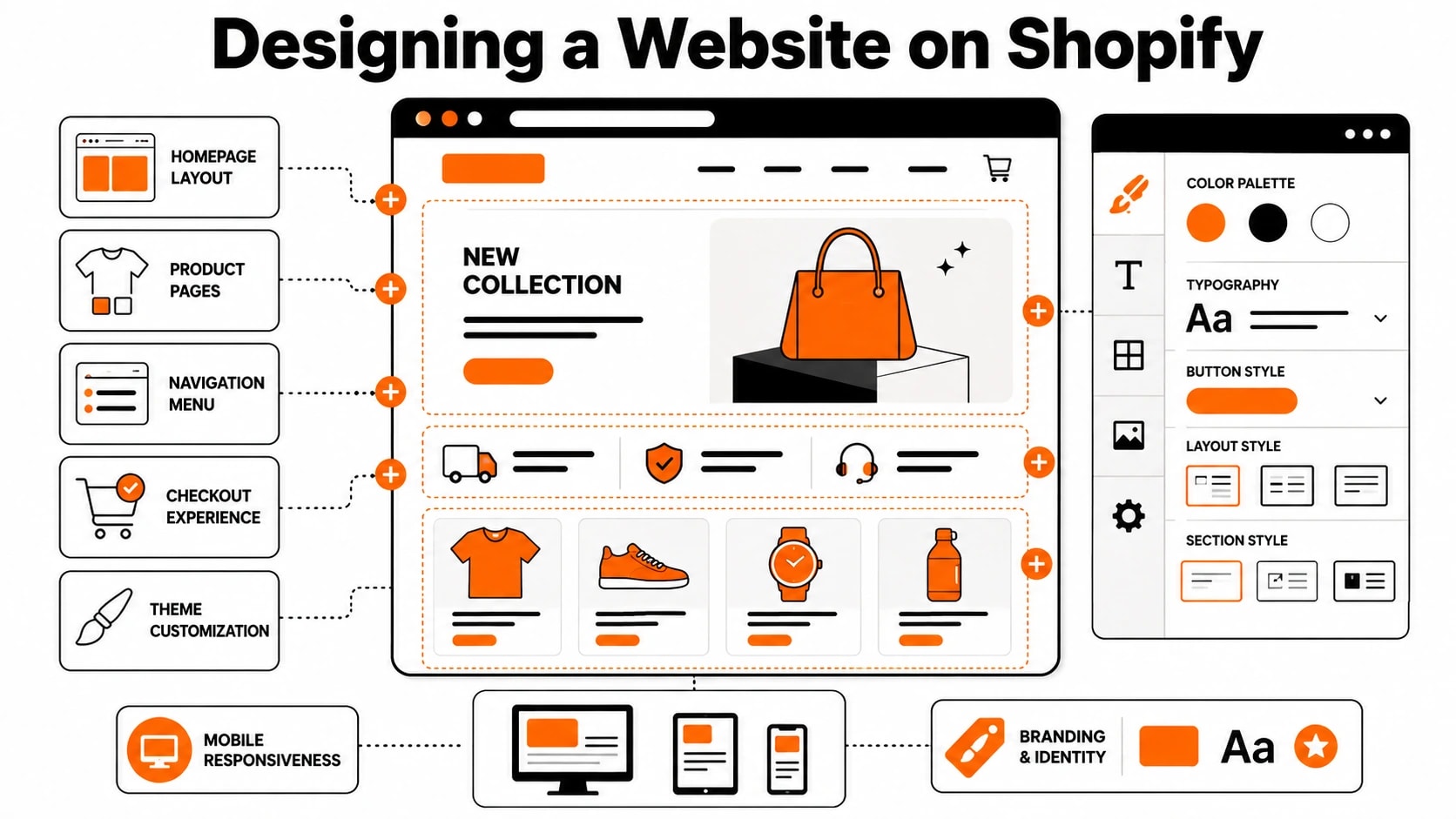
Many people assume Shopify is only for selling products, but the platform gives you the tools to build an entire branded website, not just a checkout page. Designing on Shopify means you are working within a hosted environment that handles everything from theme customization and page layout to mobile responsiveness and site speed, all within a single dashboard.
Unlike self-hosted platforms that require you to piece together separate tools for hosting, security, and performance, Shopify bundles these needs into one managed system. When you design your site on Shopify, you choose from a library of professionally built themes, customize them using a drag-and-drop editor or by editing code directly, and publish pages without needing deep technical knowledge.
This approach matters because the design choices you make on your website directly affect how search engines crawl your pages, how users interact with your content, and how easily other sites can link back to you. A cleanly structured, fast-loading website built on a reliable platform creates the right foundation for every other marketing effort you pursue, including link-building campaigns.
To understand the benefits of designing your website on Shopify, it helps to compare what you see in the data and what action you need to take next.
Core Design Benefits of Building on Shopify
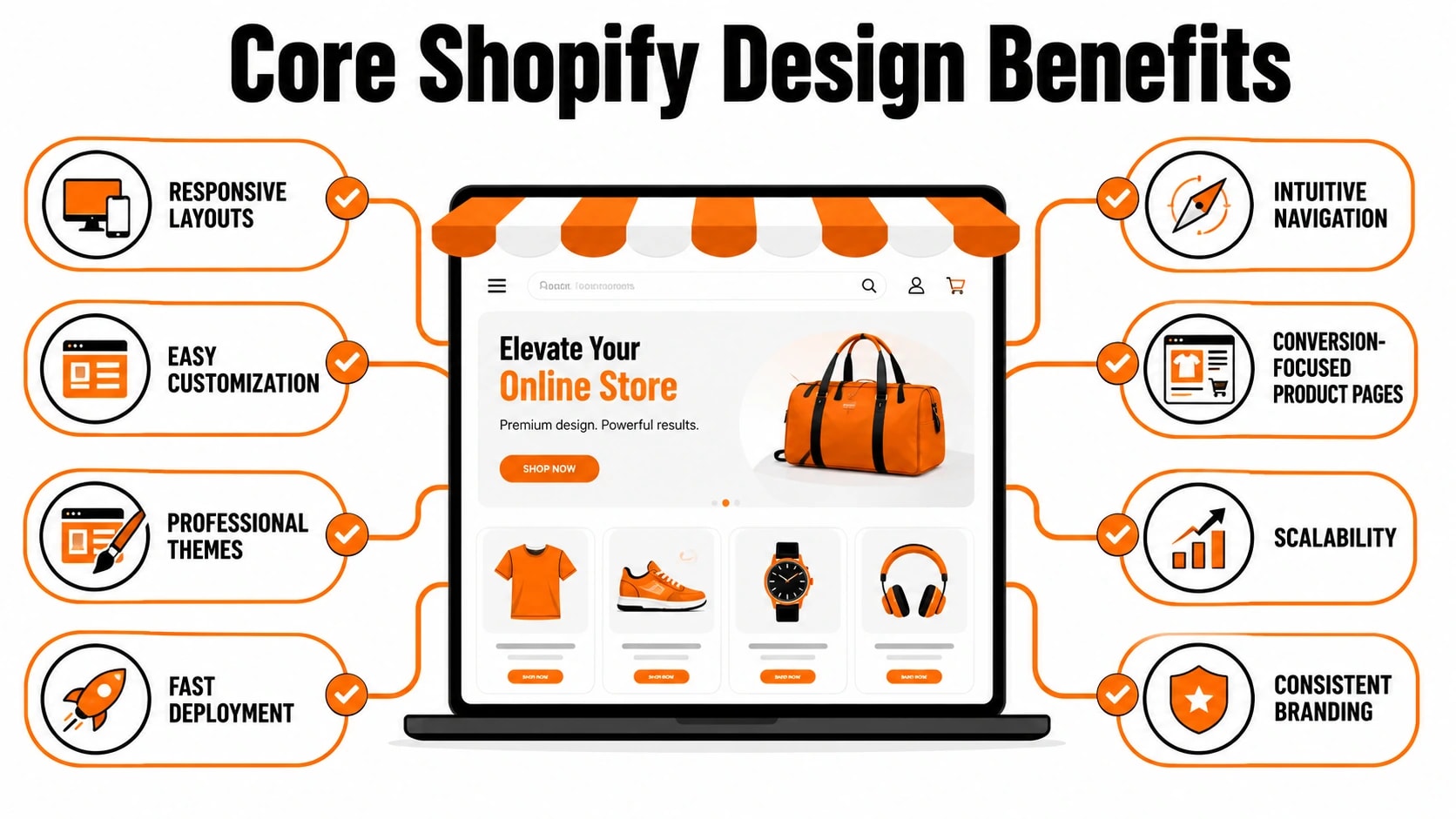
Shopify gives businesses meaningful design advantages that go well beyond aesthetics. Here are the core benefits that make it a strong choice for designing a professional, high-performing website.
Professional Themes Built for Performance
Shopify offers a wide selection of themes created by professional designers and developers. Both free and premium options are built with clean code, proper heading structures, and mobile-first layouts. These themes are tested for load speed and cross-device compatibility, meaning your site looks polished and performs well without requiring expensive custom development from day one.
Intuitive Customization Without Coding
Shopify’s drag-and-drop editor allows business owners and marketers to adjust layouts, colors, fonts, and content blocks without writing a single line of code. For teams that want greater control, Shopify’s Liquid templating language gives developers the flexibility to build fully custom designs. This balance between simplicity and flexibility means you can create a website that accurately reflects your brand identity regardless of your technical skill level.
Built-In Hosting and Security
Every Shopify website comes with fast, reliable hosting and an SSL certificate included. This removes the burden of managing servers or worrying about security configurations, which is particularly valuable for businesses that want to focus their time on content creation and marketing rather than ongoing website maintenance services. A secure, consistently available website also builds the trust signals that encourage other websites to link to your content.
Mobile-Optimized by Default
All Shopify themes are built to be fully responsive. Given that a significant portion of web traffic now comes from mobile devices, having a site that adapts cleanly to smaller screens is not optional. Mobile optimization also factors into how search engines rank your pages, making this a design benefit that carries direct SEO weight.
SEO Advantages of Designing Your Website on Shopify
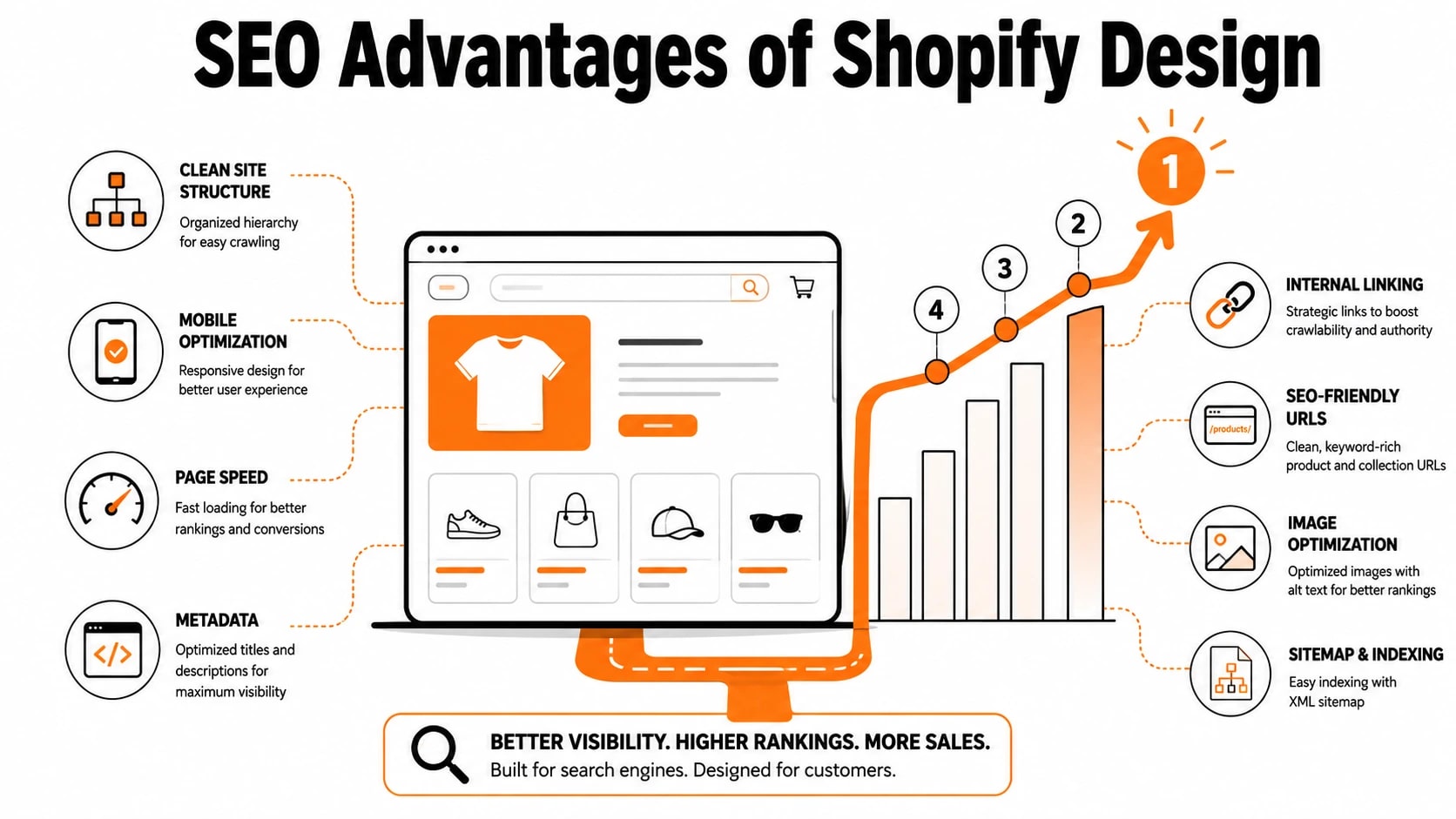
Shopify is built with search engine visibility in mind, and many of its design features translate directly into SEO gains. For businesses investing in link-building and organic growth, these advantages are worth examining closely.
Clean URL Structures
Shopify generates clean, readable URLs for your pages, blog posts, and product listings. Search engines favor URLs that are short and descriptive, and Shopify’s default URL format aligns with that preference. Clear URL structures also make it easier for other site owners and editors to share your links naturally, which supports link acquisition efforts.
Editable Meta Tags and Page Titles
Every page on Shopify allows you to customize the meta title and meta description directly from the admin panel. These fields are critical for signaling to search engines what each page is about and for improving click-through rates from search results. Having easy access to these fields without plugins or workarounds makes on-page optimization a faster, more consistent process.
Automatic Sitemap Generation
Shopify automatically generates and updates an XML sitemap for your website. This file tells search engines which pages exist on your site and how frequently they are updated. Submitting this sitemap through Google Search Console ensures your new pages and updated content are discovered and indexed promptly, giving your SEO efforts a reliable technical foundation.
Fast Load Speeds Supported by Shopify’s Infrastructure
Page speed is a confirmed ranking factor, and Shopify’s infrastructure is optimized to deliver fast load times. Content delivery networks, image compression tools, and efficient code within Shopify themes all contribute to faster pages. Faster websites not only rank better but also reduce bounce rates, keeping visitors engaged with your content long enough to convert, share, or link back to your pages. For brands working with a link-building partner like Marketing Lad, having a fast and well-structured site makes it significantly easier to pitch content to other publishers and earn quality placements.
Performance and Security Benefits That Protect Your Design Investment

A beautifully designed website means very little if it loads slowly or gets compromised by security threats. Shopify hosts every store on a globally distributed infrastructure backed by a 99.99% uptime guarantee. This means your design work, custom layouts, product imagery, and brand elements are always visible to visitors without the frustrating downtime that plagues self-hosted solutions. Speed is baked into the platform, not bolted on as an afterthought, which is a major advantage for anyone serious about maintaining a polished online presence.
Shopify automatically handles SSL certificates, PCI compliance, and DDoS protection for every store. These are not optional add-ons. They are included by default. For designers and business owners, this removes an enormous technical burden. You do not need to purchase separate security plugins, configure firewalls manually, or worry about expired certificates breaking the padlock in your visitor’s browser. Your design stays intact and trusted, which directly influences conversion rates and customer confidence.
From a performance standpoint, Shopify’s infrastructure offers several measurable advantages that protect the time and money invested in your design:
Built-in Content Delivery Network (CDN) powered by Fastly, serving assets from servers closest to each visitor
Automatic image compression without manual optimization steps
Lazy loading support across modern Shopify themes
Server-side rendering that reduces Time to First Byte (TTFB)
No additional cost for bandwidth spikes during sales or traffic surges
Performance Factor | Shopify (Hosted) | Self-Hosted Platforms |
|---|---|---|
SSL Certificate | Included automatically | Manual setup or paid plugin |
CDN | Global CDN included | Usually a paid add-on |
Uptime Guarantee | 99.99% | Varies by hosting provider |
Security Patching | Automatic | Manual or plugin-dependent |
Bandwidth Costs During Surges | Covered by plan | Often incurs overage charges |
Shopify’s App Ecosystem and Its Impact on Website Design Capabilities
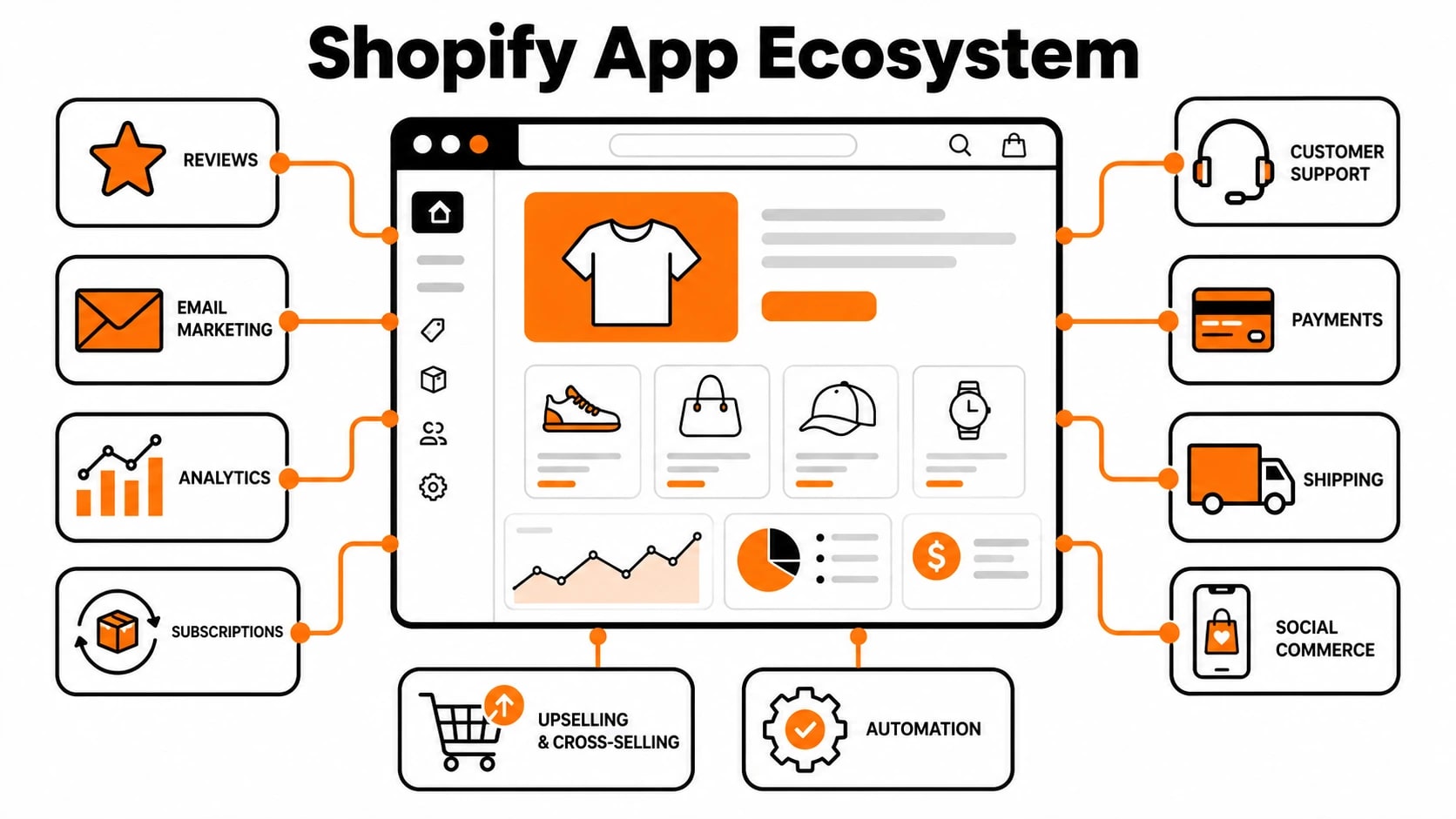
Shopify’s app store contains over 8,000 applications, and a significant portion of them directly enhance what you can achieve visually and functionally on your storefront. Design capabilities that would require custom development on other platforms can be added within minutes through verified apps. Page builders like Shogun and GemPages allow drag-and-drop section creation far beyond what native themes offer. Review widgets, countdown timers, trust badges, and interactive product displays can all be layered into your design without touching a single line of code.
The design impact of this ecosystem goes beyond aesthetics. Apps that add dynamic content, personalization, or user-generated visuals make your website feel active and credible to both visitors and search engines. A store that displays real customer photos, live inventory counts, and personalized product recommendations communicates professionalism in a way that static pages simply cannot. These elements also increase time on site and reduce bounce rates, two engagement signals that matter deeply for search visibility.
Page builders: Create custom landing pages with advanced layouts and A/B testing features
Visual review apps: Showcase customer photos, videos, and star ratings directly on product pages with Rivyo.
Upsell and bundle displays: Add cross-sell sections that match your brand style automatically
Loyalty program widgets: Integrate points and rewards visuals into your header or cart drawer
Video embedding tools: Place shoppable video content within product or homepage sections
Design Enhancement | Available via Shopify Apps | Typical Cost Range |
|---|---|---|
Advanced page builder | Yes | Free to $99/month |
Photo review integration | Yes | Free to $49/month |
Shoppable video sections | Yes | Free to $79/month |
Custom pop-up and form design | Yes | Free to $39/month |
Personalized product display | Yes | $19 to $299/month |
Common Mistakes to Avoid When Designing a Website on Shopify
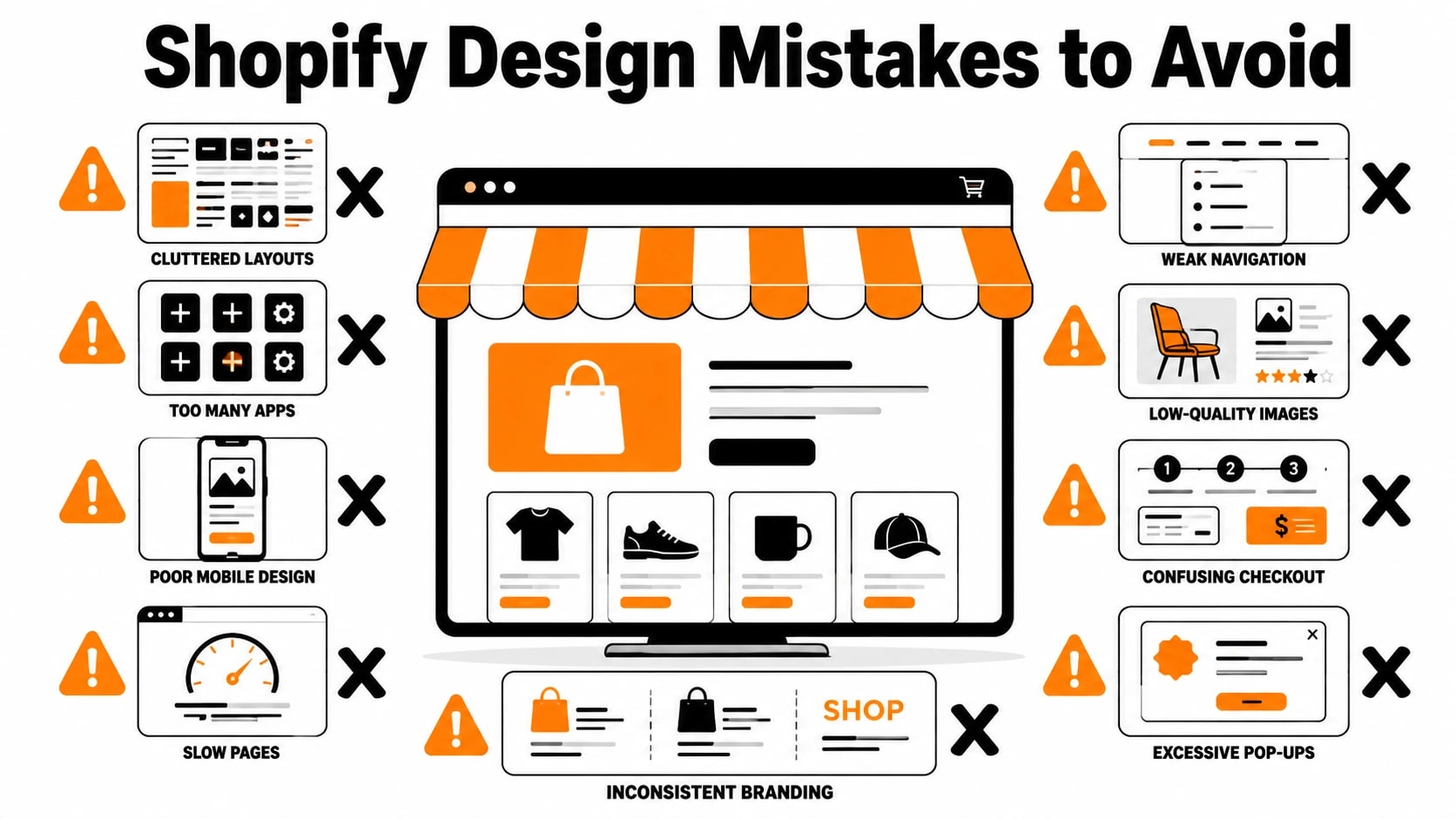
Even with a platform as user-friendly as Shopify, design mistakes can quietly undermine your store’s performance. One of the most common errors is installing too many apps that each add their own scripts and stylesheets. While individual apps may have minimal impact, the combined weight of ten or fifteen active apps can noticeably slow your page load times. Slow pages hurt both user experience and search rankings, essentially canceling out the SEO advantages the platform offers by default. Audit your installed apps regularly and remove anything that does not contribute meaningful value.
Another frequent mistake is neglecting mobile design while focusing entirely on the desktop view. Shopify themes are responsive by default, but custom sections, added code blocks, and third-party app widgets do not always adapt gracefully to smaller screens. A layout that looks clean on a laptop might stack awkwardly on a phone, pushing key call-to-action buttons far below the fold. Given that mobile commerce accounts for a growing share of ecommerce transactions globally, testing every design change across multiple screen sizes is not optional; it is essential.
Using too many font styles, which creates visual inconsistency and slows rendering
Uploading uncompressed images that bypass Shopify’s optimization at the source level
Overcomplicating navigation menus, which confuses visitors and increases bounce rates
Ignoring accessibility standards like color contrast ratios and alt text for images
Editing live theme code without first duplicating the theme as a backup
Skipping the use of metafields, which limits dynamic content possibilities on product pages
How Shopify Website Design Supports Link-Building and Domain Authority Growth
A well-designed Shopify store creates the kind of first impression that earns editorial links naturally. When journalists, bloggers, and content creators land on a store that looks credible, loads quickly, and communicates a clear brand story, they are far more likely to reference it in articles and resource pages. Design quality acts as an indirect trust signal to potential linking partners. Cluttered layouts, broken visual elements, and slow load times send the opposite signal, causing outreach efforts to fall flat before a relationship even begins.
Shopify’s built-in blogging feature is a particularly underused asset in this context. A well-structured blog section with clean typography, clear categories, and shareable content gives link-builders a genuine reason to point external audiences toward your domain. Content that educates, entertains, or solves problems earns links on its own merits, but only if the page presenting that content looks trustworthy and is easy to navigate. Shopify themes handle this elegantly with dedicated blog templates that match your storefront branding without extra configuration.
For brands actively working to grow their backlink profile, the design of your Shopify store functions as a foundation for every outreach campaign. Link-building specialists, including those at Marketing Lad, consistently find that target sites are more receptive to linking to stores that project quality through design. A few specific design elements that support link acquisition efforts include:
Dedicated resource or press pages: Give journalists a single place to find brand assets, statistics, and quotes
Original data or research sections: Well-designed infographics and data pages attract natural citations
Clean product pages with detailed descriptions: These serve as linkable assets in niche review articles and buying guides
Fast load speeds: Sites that score well on Core Web Vitals are preferred by editors curating resource recommendations
Mobile-optimized layouts: A large share of editorial link vetting now happens on mobile devices.
Design Element | Link-Building Benefit | Shopify Support |
|---|---|---|
Blog with clean layout | Increases content shareability and citation potential | Built-in blog templates |
Press or media page | Simplifies journalist outreach and brand referencing | Custom page creation |
Fast page load times | Reduces editor skepticism during link vetting | CDN and optimized hosting |
Infographic or data sections | Encourages natural editorial citations | Custom sections and embeds |
Mobile-responsive design | Passes mobile vetting by linking editors | Default in all Shopify themes |
Shopify Design Flexibility for Growing Brands
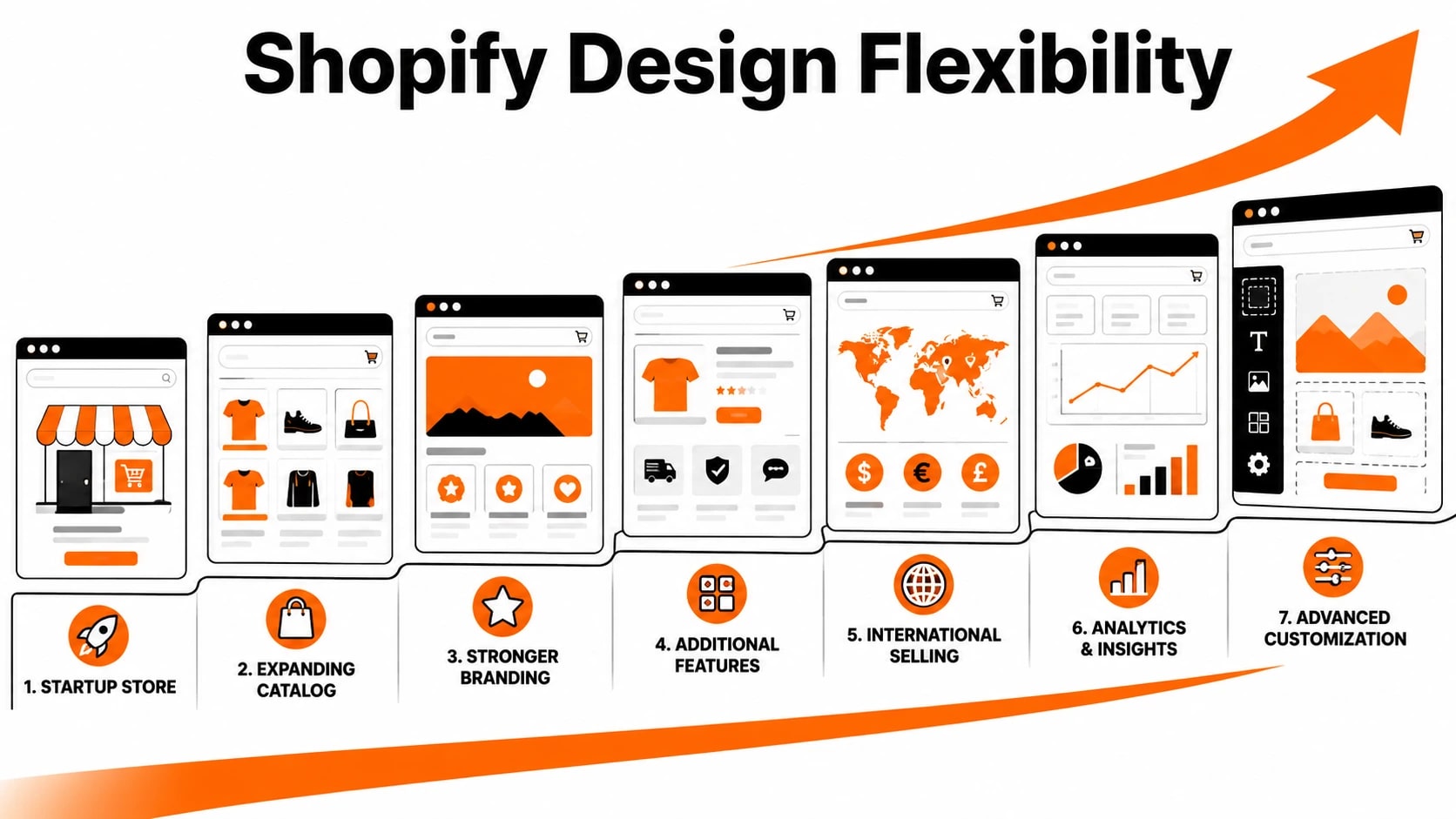
One of the most underrated benefits of designing your website on Shopify is how well the platform scales alongside your business. Whether you are launching a single-product store or managing thousands of SKUs across multiple markets, Shopify’s design infrastructure grows with you without requiring a complete rebuild.
This flexibility shows up in several practical ways:
Theme customization depth: Shopify themes support deep customization through the theme editor, custom Liquid code, and CSS overrides, giving designers full control without touching core platform files.
Modular section-based editing: The drag-and-drop section editor lets you rearrange page layouts instantly, which means you can test different design structures without hiring a developer for every change.
Multi-currency and multi-language design support: Shopify Markets allows you to serve international audiences with localized storefronts, all managed under a single design system.
Custom storefronts via Hydrogen: For brands that need truly bespoke front-end experiences, Shopify’s Hydrogen framework lets developers build headless storefronts while still using Shopify’s backend, giving design teams complete creative freedom.
Mobile-first design defaults: Every Shopify theme is built with mobile responsiveness as the baseline, not an afterthought, which matters enormously for both user experience and search rankings.
This combination of out-of-the-box usability and deep customization potential makes Shopify a genuinely flexible choice for brands at every stage of growth.
Shopify Design vs Other Platforms: A Direct Comparison
It helps to understand how designing on Shopify compares to the alternatives. Many brands weigh their options across several platforms before committing, and the differences in design capability, cost, and control can be significant.
Feature | Shopify | WordPress / WooCommerce | Squarespace | BigCommerce |
|---|---|---|---|---|
Ease of Design Setup | Very High | Medium | High | Medium |
Theme Quality | Premium, conversion-focused | Variable quality | Visually strong | Limited selection |
Hosting and Security | Fully managed | Self-managed | Fully managed | Fully managed |
SEO Design Control | Strong | Very Strong | Basic | Strong |
Scalability | Excellent | Good with plugins | Limited | Good |
Link-Building Friendliness | High | High | Low | Medium |
Shopify consistently performs well across the metrics that matter most to growing e-commerce brands, especially when design quality, managed infrastructure, and SEO potential are weighed together. WordPress offers more granular SEO control, but it requires significantly more technical maintenance, which pulls time and resources away from actual growth activities.
How to Get the Most Out of Shopify Website Design
Having access to a powerful design platform only produces results if you use it strategically. Many store owners underutilize what Shopify offers simply because they treat the setup as a one-time task rather than an ongoing process.
Here are the most effective ways to extract full value from Shopify’s design capabilities:
Audit your theme performance regularly: Run your store through Google PageSpeed Insights at least once per quarter. Identify which design elements or apps are slowing your load time and remove anything that is not contributing to conversions.
Use Shopify’s built-in analytics to inform design decisions: Your store’s data reveals which pages attract the most traffic, where users drop off, and which product layouts drive purchases. Let that data guide your design updates rather than guessing.
Invest in custom landing pages for link-building campaigns: When you are running outreach campaigns to earn backlinks, a well-designed, content-rich landing page gives publishers a credible destination worth linking to. This is where strong Shopify design directly supports off-page SEO growth.
Keep your blog section visually consistent with your store: Many brands neglect their Shopify blog design. A clean, readable blog layout that matches your store’s branding increases time on site and gives you more link-worthy content to promote.
Test your mobile experience as a real customer would: Walk through the full purchase journey on your phone regularly. Mobile design issues that seem minor, like a button that is slightly too small or a font that is hard to read outdoors, quietly cost you conversions every day.
Who Should Design Their Website on Shopify
Shopify is not the right fit for every type of website, but for the right kind of business, it is one of the strongest platforms available. Understanding whether Shopify aligns with your needs saves time and prevents costly platform migrations later.
Shopify is an excellent design choice for:
E-commerce brands at any stage, from first-time founders launching a single product to established retailers managing large catalogs across multiple channels.
Direct-to-consumer businesses that want to own the customer experience from first click to post-purchase without relying on third-party marketplaces.
Brands prioritizing SEO and content marketing alongside their product pages, since Shopify’s structure supports both well when set up correctly.
Businesses with limited technical resources that need a stable, managed environment where design updates can be made without coding expertise.
Agencies and freelancers who build and manage multiple client stores and benefit from Shopify’s Partner Program, which provides discounts, resources, and development store access.
Shopify is less suited for purely content-based websites, local service businesses with no e-commerce component, or brands that need extremely granular CMS control beyond what Shopify’s Liquid templating offers. For those cases, a different platform may serve better. But for anyone selling products online and wanting a design environment that supports growth across SEO, user experience, and authority building, Shopify is consistently one of the most capable options available.
Conclusion
Designing your website on Shopify offers a combination of benefits that is difficult to match on other platforms: professionally built themes, fast and secure hosting, a strong foundation for SEO, and a design environment that scales as your business grows. These are not just technical conveniences. They translate directly into better user experiences, stronger search visibility, and a more credible online presence that supports every part of your marketing strategy, including your ability to earn high-quality backlinks. When your site loads quickly, looks professional, and is built on clean, indexable code, publishers and site owners are far more likely to link to it.
If you are ready to build or improve your Shopify store and want that design investment to pay off through stronger domain authority and organic growth, the next step is making sure your content strategy and link-building efforts match the quality of your site. A well-designed Shopify store earns more links when it is backed by a deliberate outreach strategy. Whether you are just starting or looking to scale an existing store, getting the design right from the beginning puts every other growth effort on a much stronger footing.
Frequently Asked Questions
Is Shopify good for designing a professional-looking website without a developer?
Yes. Shopify’s theme editor and section-based design system allow non-technical users to create polished, professional storefronts without writing code. Premium themes handle typography, layout, and mobile responsiveness automatically, making it genuinely accessible for founders and small teams working without dedicated development resources.
Does Shopify’s website design affect SEO performance?
Significantly. Shopify themes generate clean HTML, auto-produce sitemaps, support canonical tags, and load quickly on managed hosting. These design-level factors directly influence how search engines crawl and rank your pages, making thoughtful Shopify design a core part of any effective organic search strategy.
Can I fully customize my Shopify website design?
Yes, within different levels of depth. The theme editor covers most needs without code. Beyond that, Liquid templating, custom CSS, and JavaScript allow deeper changes. For complete front-end freedom, Shopify’s Hydrogen framework supports fully custom headless storefronts while retaining Shopify’s commerce backend.
How does a well-designed Shopify site support link-building?
A professional, fast-loading Shopify site gives link prospects a credible destination worth referencing. Publishers are more likely to link to stores that look authoritative and load reliably. Strong blog content, clean page structure, and a trustworthy design all make your site a more attractive target for organic backlinks.
What is the biggest mistake brands make when designing on Shopify?
Installing too many apps without considering their impact on page speed is the most common mistake. Each app adds code that slows load times, which harms both user experience and SEO. Auditing your app stack regularly and removing anything that does not clearly contribute to revenue or conversions keeps your design performing at its best.