Understanding who is subscribing to your YouTube channel is one of the most practical steps you can take to grow your audience and refine your content strategy. Whether you are a brand building authority through video or a creator looking to track growth, subscriber data gives you a direct window into who your content is reaching. This guide breaks down exactly how to check who subscribed to your YouTube channel, what information is actually available, and how to make the most of it.
What YouTube Actually Lets You See About Your Subscribers
Before diving into the steps, it is worth being clear about what YouTube does and does not share with channel owners. Many creators assume they can see a full, detailed list of every person who has ever subscribed, but YouTube places specific limits on this data for privacy reasons.
Here is what YouTube actually allows you to see:
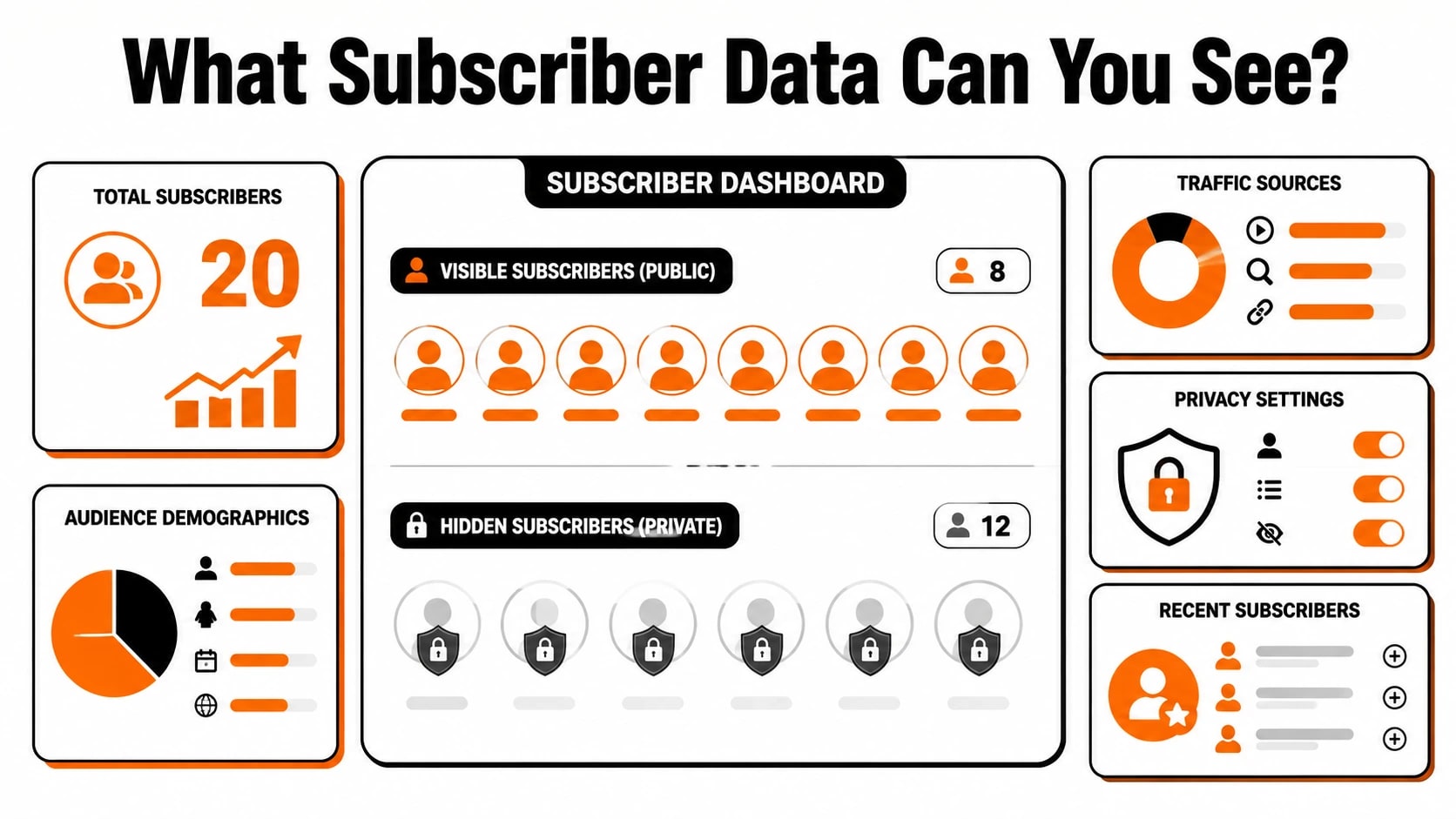
Recent subscribers: YouTube Studio shows you a list of your most recent subscribers, but only those who have set their subscriptions to public. If a user keeps their subscriptions private, their name will not appear on your list even though the subscriber count still increases.
Subscriber count over time: Through the analytics dashboard, you can see how your total subscriber count has changed day by day, week by week, or over custom date ranges.
Subscriber demographics: YouTube Analytics provides aggregated data on the age, gender, and geographic location of your subscribers, giving you a broad picture of your audience without identifying individuals.
Subscribers gained and lost: You can track how many subscribers you gained or lost within a specific period, broken down by individual videos or content types.
What YouTube does not let you see is a complete, exportable list of every subscriber with their personal details. The platform prioritizes user privacy, so any subscriber who has chosen to keep their subscriptions private remains anonymous to you as a channel owner. This is an important distinction to keep in mind as you work through the steps below.
For creators using YouTube as part of a broader digital marketing or link-building strategy, these analytics can be particularly useful. Knowing which type of content attracts the most subscribers helps you focus your production efforts and, ultimately, build more meaningful audience relationships that support off-platform goals as well.
How to Check Recent Subscribers in YouTube Studio Step by Step
YouTube Studio is the central hub for all your channel management and analytics. Checking your recent subscribers through this platform is straightforward once you know where to look. Follow these steps carefully to access your subscriber list.
Step 1: Sign In to Your YouTube Account
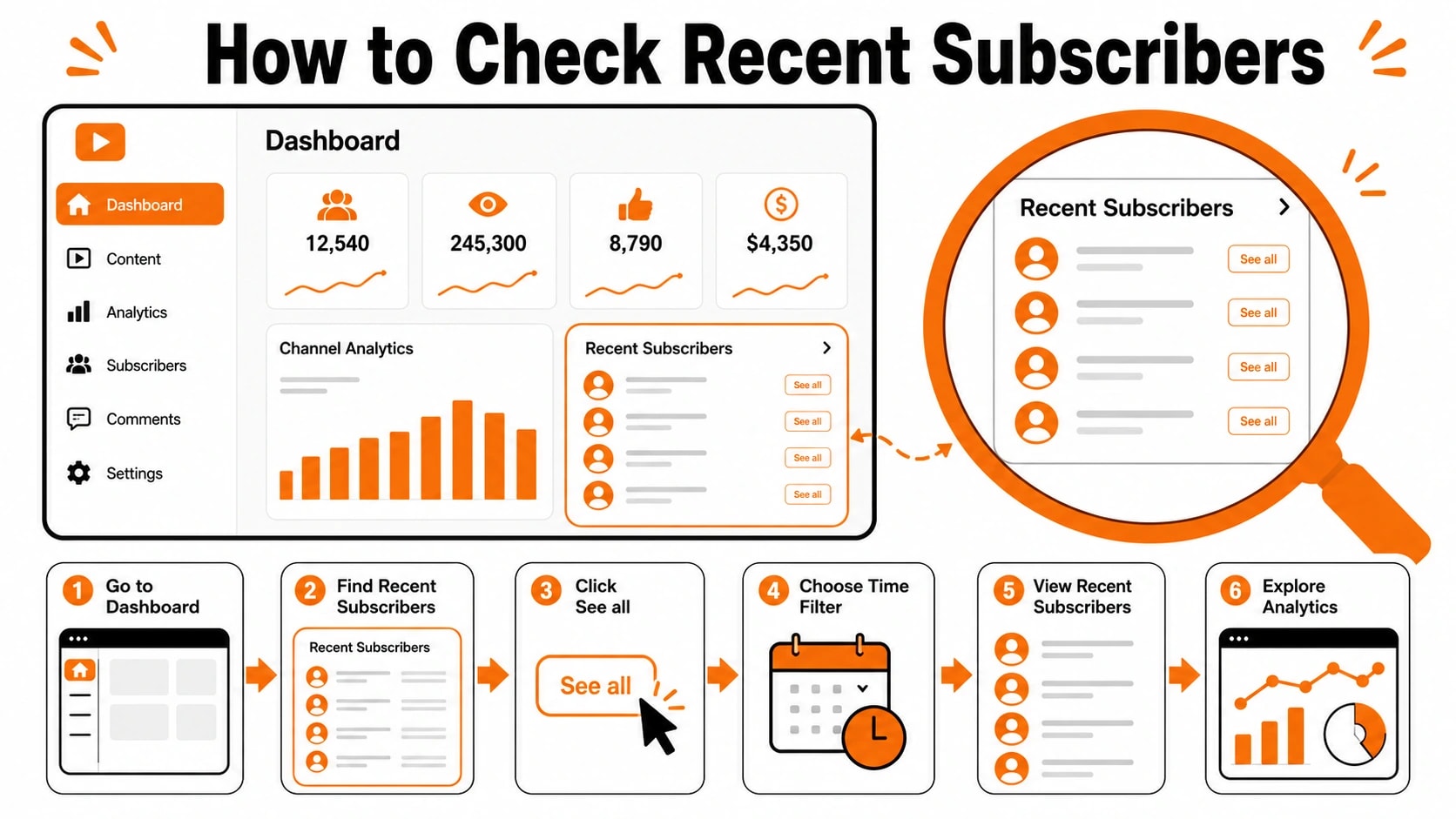
Open your browser and go to youtube.com. Click on your profile picture in the top-right corner and make sure you are signed in to the Google account associated with your YouTube channel. If you manage multiple channels, confirm you are on the correct one before proceeding.
Step 2: Open YouTube Studio
From the dropdown menu that appears after clicking your profile picture, select YouTube Studio. This will take you to the main dashboard where you can manage content, view analytics, and access subscriber information.
Step 3: Navigate to the Dashboard
Once inside YouTube Studio, look at the left-hand sidebar. Click on Dashboard if you are not already there. On the main dashboard page, scroll down until you see the Recent Subscribers card. This card typically appears in the lower section of the dashboard alongside other quick-stat panels.
Step 4: View Your Recent Subscribers
The Recent Subscribers card shows a snapshot of your latest subscribers by display name and profile picture. By default, it displays the top few recent subscribers. To see a larger list, click the See All button in the top-right corner of that card. This expands the view and shows you up to 100 of your most recent public subscribers.
Step 5: Filter by Time Period
After clicking See All, you will notice a dropdown filter that allows you to adjust the time range. You can choose to view recent subscribers from the last 7 days, 28 days, 90 days, or 365 days. Adjusting this filter helps you identify subscriber spikes that might correspond with a specific video upload, a promotional push, or an external traffic source sending visitors to your channel.
Keep in mind that only public subscribers will appear in this list. If your subscriber count jumped by 500 but only 80 names appear, the remaining users have opted to keep their subscriptions private, which is entirely normal on the platform.
Using YouTube Analytics to Understand Subscriber Patterns
YouTube Studio’s Analytics tab goes far beyond a simple headcount. It gives you a time-based view of how your subscriber numbers shift in response to the content you publish, the thumbnails you test, and the topics you choose. When you open the Subscribers report inside the Audience section, you get a graph that maps gains and losses across any date range you select, including the past 28 days, 90 days, 365 days, or a custom window. Pairing this with your video performance data is where the real insight lives.
One of the most useful features is the breakdown of which specific videos drove the most subscriptions during a given period. YouTube attributes each new subscriber to the video or page that triggered the action, so you can see at a glance whether your tutorial content converts better than your vlog-style uploads, or whether a single viral video skewed your numbers. This content-level attribution helps you make smarter decisions about what to produce next, rather than guessing based on total views alone.
Beyond individual videos, the Audience tab shows you subscriber geography, age ranges, and the times your subscribers are most active on YouTube. These signals matter when you are planning publishing schedules and titles. Here is a quick breakdown of the core metrics available in YouTube Analytics for subscriber tracking:
Subscribers gained: Total new subscriptions within the selected date range
Subscribers lost: Unsubscribes recorded in the same window
Net subscribers: The difference between gained and lost, shown as a single trend line
Top content driving subscriptions: Ranked list of videos or Shorts that converted the most viewers into subscribers
Subscription source: Whether subscribers came from watch pages, channel pages, or external traffic
Analytics Metric
Where to Find It
What It Tells You
Subscribers gained/lost
Analytics > Audience
Net growth trend over time
Top videos by subscriptions
Analytics > Content
Which content converts viewers to subscribers
Subscription source
Analytics > Reach
Where subscribers are finding your channel
Returning vs. new viewers
Analytics > Audience
Loyalty and repeat engagement signals
Third-Party Tools That Help Track Subscriber Identity and Growth
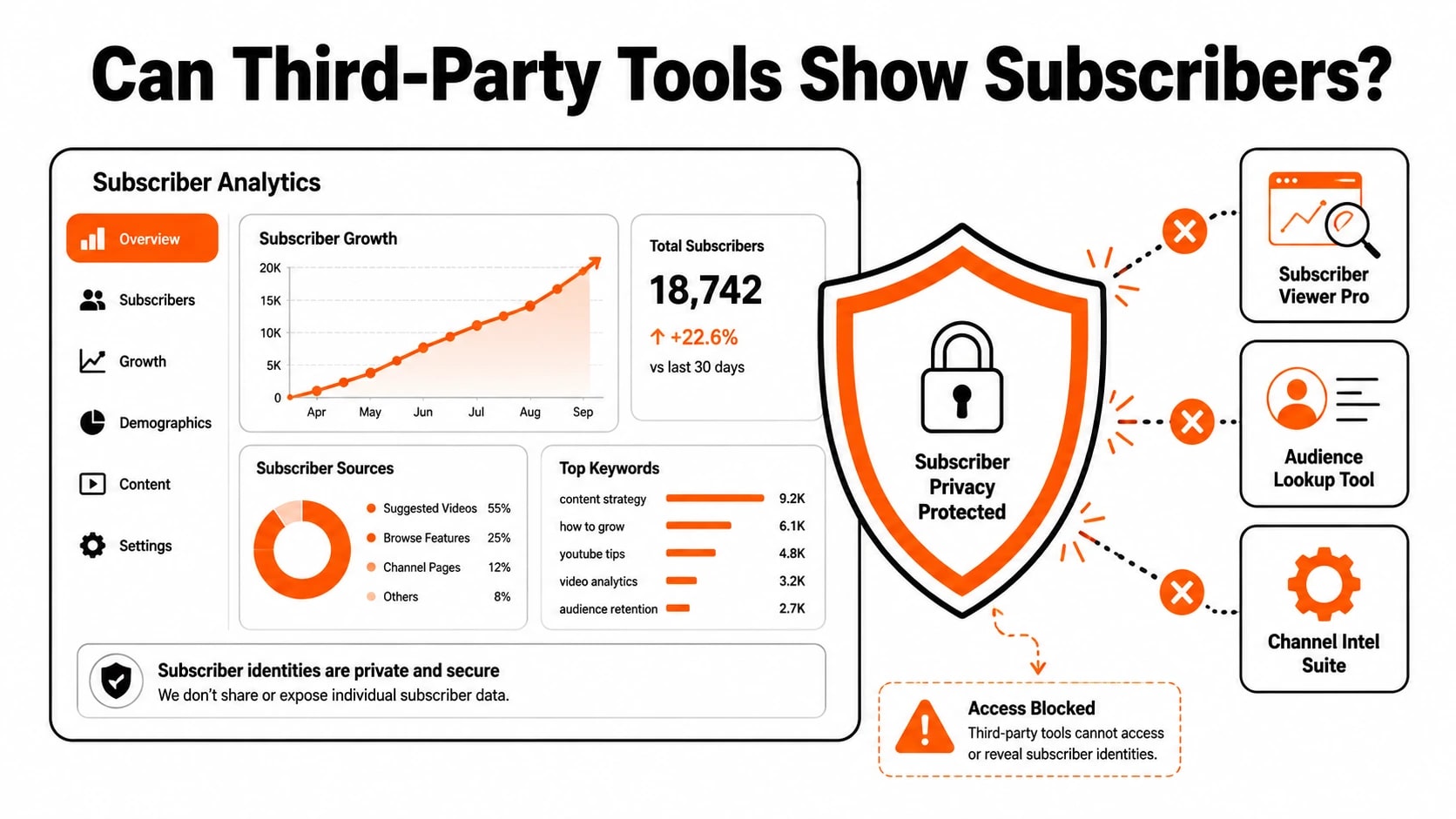
Because YouTube’s native tools intentionally limit individual subscriber identification, many creators turn to third-party platforms to fill the gaps. These tools do not bypass YouTube’s privacy restrictions, but they do aggregate public data, track historical growth trends, and provide competitive benchmarking that YouTube Studio does not offer on its own. Platforms like Social Blade pull publicly available subscriber counts at regular intervals and chart them over months or years, making it easy to spot sudden spikes or drops that might otherwise be invisible in the standard 28-day view.
Other tools focus on comment and community engagement rather than raw subscriber counts. By monitoring which users consistently interact with your content, you can build a picture of your most invested audience members even without direct subscriber identification. Some creator management platforms also offer keyword alerts and mention tracking, so you know when people talk about your channel outside of YouTube itself. This cross-platform awareness is especially useful if you are trying to understand how your audience growth connects to activity on social media, newsletters, or forums.
Iconosquare / Sprout Social: Cross-platform audience monitoring including YouTube mentions
Google Sheets + YouTube Data API: Custom dashboards for creators who want raw data pulled on a schedule
Tool
Primary Use
Subscriber Insight Level
Social Blade
Historical growth tracking
Aggregate trends only
TubeBuddy
Optimization and milestone alerts
Channel-level metrics
VidIQ
Competitive benchmarking
Velocity and comparison data
YouTube Data API
Custom reporting
Deep channel data, no user IDs
How Subscriber Data Connects to Your Channel’s Off-Platform Authority
Your subscriber count is not just a vanity metric sitting inside YouTube. It functions as a credibility signal that travels with you across the web. When brands, publications, and potential collaborators research your channel, the first numbers they check are subscriber count and engagement rate. A growing, engaged subscriber base tells a story about your content’s trustworthiness, and that story directly influences whether people want to link to your videos, embed them on their sites, or feature your channel in roundups and resource pages.
This is where subscriber growth intersects with link building in a meaningful way. High-quality backlinks pointing to your YouTube channel or to your website help your content rank in both Google search and YouTube’s internal discovery algorithm. Channels that attract organic editorial links from authoritative websites tend to grow subscribers faster because their videos surface more prominently in search results. The relationship works in both directions: subscribers signal relevance, and backlinks amplify visibility, which brings in more subscribers. Teams that specialize in acquiring those editorial placements, like the work done at Marketing Lad, understand that YouTube channels benefit from the same off-page authority principles that apply to any website.
Practically speaking, there are several ways your subscriber data can inform your off-platform strategy:
Pitch press coverage with confidence: Subscriber milestones and consistent growth rates make compelling data points in media outreach emails
Identify content worth building links to: Your highest-converting subscription videos are the same ones worth targeting for backlink acquisition campaigns.
Attract brand partnerships: Advertisers and sponsors look at subscriber-to-view ratios as a proxy for audience trust before committing to deals.
Support guest posting and collaboration requests: Showing steady subscriber growth strengthens your positioning when negotiating cross-promotional content.
Inform your broader content authority: Channels with loyal subscribers tend to produce content that earns natural citations from bloggers and journalists over time.
Subscriber Signal
Off-Platform Benefit
Link Building Application
High subscriber count
Social proof for brands and publishers
Stronger outreach conversion rates
Consistent subscriber growth
Signals active, relevant content
Attracts editorial mentions naturally
High subscriber-to-view ratio
Demonstrates engaged audience
Supports sponsored content negotiations
Geographic subscriber spread
Appeals to international partners
Opens niche-specific link opportunities
Common Mistakes Creators Make When Trying to See Their Subscribers
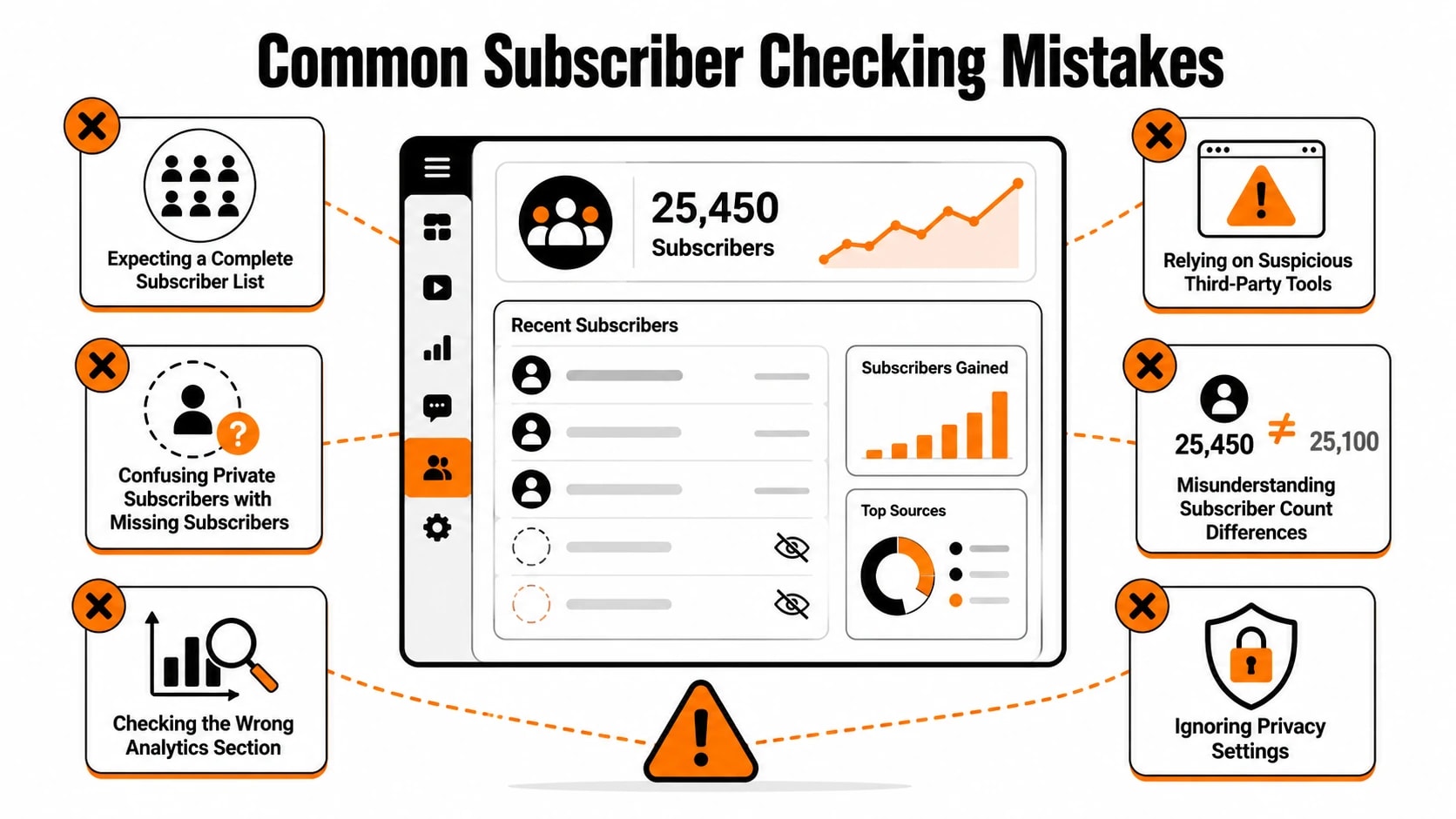
Most creators run into the same frustrations when trying to dig into subscriber data. The problem is rarely the platform itself. It is usually a misunderstanding of what the data represents, where to find it, or how to interpret it correctly. Avoiding these mistakes will save you hours of confusion and help you make smarter decisions with the information you do have access to.
Expecting Full Subscriber Visibility
One of the most common errors is expecting YouTube to reveal a complete list of every person who subscribed to your channel. YouTube does not work that way. Only subscribers who have set their subscriptions to public will appear in any visible list, and even then, the data shown in YouTube Studio is limited to recent activity. Many creators spend time searching for a feature that simply does not exist, when they should be focusing on the data that is actually available to them.
Misreading Subscriber Count Fluctuations
Subscriber counts go up and down constantly, and creators often panic when they see a dip. Here are the most common mistakes tied to count fluctuations:
Assuming every drop means someone actively unsubscribed out of dissatisfaction
Ignoring YouTube’s routine account purges, which remove spam and inactive accounts
Comparing raw subscriber numbers across channels without accounting for niche size or audience behavior
Checking subscriber counts multiple times per day instead of tracking weekly or monthly trends
Treating subscriber count as the only meaningful growth metric rather than looking at watch time, impressions, and engagement together
Using the Wrong Tools for the Wrong Goals
There is a wide range of third-party tools available, and creators often pick one without thinking about what they actually need. Below is a comparison of common mistakes when choosing tracking tools versus better alternatives.
Mistake
Why It Happens
Better Approach
Using tools that promise full subscriber identity
Believing third parties can bypass YouTube’s privacy settings
Focus on growth trend tools that track velocity and patterns
Connecting channel to tools that violate YouTube’s Terms of Service
Prioritizing data over account safety
Only use tools that authenticate via official YouTube Data API
Relying solely on subscriber count trackers
Treating subscribers as the only growth signal
Combine subscriber data with engagement and traffic source reports
Assuming native tools are too limited to be useful
Use Studio as the primary source before adding external tools
Paying for premium tools before understanding free data
Assuming paid equals more accurate
Master YouTube Studio analytics first, then layer paid tools on top
The biggest takeaway here is that no tool, paid or free, can show you subscriber identities that users have chosen to keep private. Any service claiming otherwise is either misleading you or operating outside of YouTube’s policies, which puts your channel at risk. The smarter move is to use the data you do have access to in a disciplined, consistent way.
Conclusion
Understanding who subscribes to your YouTube channel is genuinely useful, but it requires working within real limitations. YouTube only shows you a partial picture by design, and that is not going to change. What you can control is how well you use the subscriber data that is available, from recent subscriber names in YouTube Studio to deeper trend analysis inside the analytics dashboard. When you combine those native insights with responsible use of third-party tracking tools, you get a much clearer view of your audience growth without chasing information that was never meant to be public.
If your goal is to grow your channel strategically and build authority beyond just the platform, start treating subscriber patterns as one signal among many. Watch time, traffic sources, and off-platform mentions all paint a fuller picture. And if you want that off-platform authority to work harder for your channel, investing in quality backlinks through a service like Marketing Lad can help search engines and new audiences discover your content more consistently. Take the data you have, act on it deliberately, and your channel will grow in a way that is built to last.
Frequently Asked Questions
Can I see a full list of everyone who subscribed to my YouTube channel?
No, you cannot. YouTube only shows subscribers who have made their subscriptions public. Even then, YouTube Studio displays only a limited recent list. There is no tool or setting that reveals every subscriber, as private subscription choices are protected by YouTube’s privacy policy.
Why does my subscriber count go down even when no one unsubscribes?
YouTube periodically removes spam accounts, bot accounts, and inactive profiles from subscriber counts. This can cause visible drops that have nothing to do with your content quality. These purges are normal and actually improve the accuracy of your subscriber count over time.
Where exactly do I find recent subscriber information in YouTube Studio?
Go to YouTube Studio, click on “Analytics” in the left menu, then select the “Audience” tab. Scroll down to find the recent subscribers card. This shows publicly subscribed accounts from the past 28 days, and you can click individual names to visit their channels.
Are third-party subscriber tracking tools safe to use?
Only tools that use the official YouTube Data API are safe. Avoid any service that asks for your full account password or claims to bypass YouTube’s privacy settings. Always review a tool’s terms and check that it complies with YouTube’s developer policies before connecting your channel.
Does knowing my subscribers help with growing my channel off YouTube?
Subscriber patterns help you understand your audience’s interests, which can guide your content and promotion strategy. Off-platform growth often comes from combining that audience insight with external signals like backlinks, which help new viewers discover your channel through search engines and partner websites.
Shahid Shahmiri is a digital marketer who helps online businesses grow with smart marketing tactics that improve sales and leads. He is passionate and driven to grow businesses online and is responsible for analyzing marketing, SEO, growth and managing promotional and media channels.