
Last Updated on 10/01/2026
When I talk about link building, I’m referring to earning links from relevant websites that point back to my pages.
For example, if Website A links to Website B, then Website B has successfully earned a backlink, and that’s the essence of link-building.
In my experience, the more high-quality backlinks I earn from niche-relevant, authoritative websites, the better my chances of:
- Boosting organic traffic
- Climbing keyword rankings
- Strengthening overall website authority
- Driving more leads, sales, and revenue
These are some of the most significant benefits of effective link-building. After all, links are still one of the core pillars of Google’s ranking algorithm.
Besides great content and mobile optimization, backlinks are among the top three factors influencing search visibility.
Based on everything I’ve learned and experienced, link building is one of the most critical factors in Search Engine Optimization (SEO).
If I focus solely on content optimization or technical SEO while ignoring link building, I’m leaving a significant gap in my strategy. It’s like tuning up a car but never putting gas in the tank; it just won’t go far.

To me, link building is a core part of SEO, alongside high-quality content, on-page optimization, and solid technical foundations.
I’ve given link-building a full 5-star rating in the image below because it’s one of the most effective ways to quickly boost rankings on search engine results pages (SERPs). It plays a massive role in improving both domain authority and website strength.
But it’s not just about rankings. Quality backlinks drive organic traffic and increase your search visibility through better impressions.
Just imagine: you launch a brand-new website, publish all your optimized content, and check off every on-page SEO box. But unless you start earning high-authority backlinks, that content may never reach the people it’s meant for.
It’s clear that link building is essential to improve SEO.
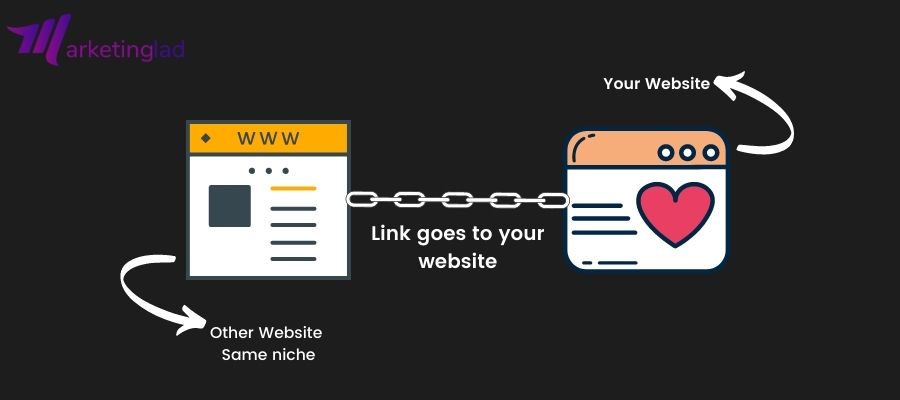
Acquiring backlinks from other websites is also known as Link Building.
Why Is Link Building Important for SEO?
From my experience as an SEO professional, I can confidently say that link building is one of the most important components of any successful SEO strategy.
If you’re wondering why link building is vital for SEO, it all comes down to trust, authority, and visibility.
When other high-authority websites link back to my pages, it signals to Google that my content is trustworthy and valuable. These backlinks serve as votes of confidence, signaling to search engines that my website deserves higher rankings in search results.
Search engines like Google use backlinks as one of their top ranking factors to evaluate a website’s:
- Relevance to specific keywords
- Content quality
- Overall domain authority and credibility
That’s why I always focus on building high-quality backlinks from niche-relevant sites. The more trustworthy sites that link to my content, the better my chances are of:
- Improving my keyword rankings
- Increasing organic search traffic
- Boosting my website’s domain strength
- Gaining visibility on competitive search engine result pages (SERPs)
Uncover more insights:
Even the best content and technical SEO may struggle to perform without a proper link-building strategy. That’s why I treat link building as the backbone of my SEO campaigns; it connects content to visibility.
Do-Follow vs No-Follow Backlinks: What You Need to Know
Now that we’ve covered the importance of backlinks in SEO, let’s talk about their two main types, do-follow and no-follow backlinks.
What Is a Do-Follow Backlink?
In my experience, dofollow backlinks are the most valuable for building domain authority and improving keyword rankings. As an SEO practitioner, I always check whether a backlink is do-follow before considering it a win.
When a backlink is do-follow, it tells search engine crawlers, “Hey, this link is legit, follow it!”
That means the authority from the referring website (often called link juice) is passed directly to my site. And that’s precisely what helps boost rankings and organic visibility.
Pro tip: Always aim to get backlinks from websites with a high domain rating (DR) or domain authority (DA). These scores reflect how strong and trustworthy a domain is in search engines’ eyes.
Confused About Domain Metrics?
Here’s where many beginners get tripped up, different SEO tools use different names and scoring systems.
- Ahrefs uses Domain Rating (DR)
- Moz uses Domain Authority (DA)
- Semrush refers to it as Authority Score (AS)
- Ubersuggest calls it Domain Score (DS)
Although these metrics come from different tools and use unique algorithms, they all serve a similar purpose: to estimate a website’s trust and popularity.
It’s perfectly normal for your domain score to vary across these platforms. What matters more is consistency and upward movement over time, not the absolute number on any one tool.
If you’re new to SEO tools or confused about which metric to trust, I recommend checking out my published article on Ahrefs vs Moz. These are the leading SEO tools.
How Do I Check If a Link Is Dofollow?
Now that I understand the importance of dofollow backlinks in SEO, it’s only natural to ask, how do I check if a link is dofollow?
The good news?
It’s super simple, and you don’t need an HTML expert to figure it out. Let me walk you through two easy methods I use to check if a backlink is dofollow.
Check the HTML Code Manually
If you’re on a desktop browser like Google Chrome, you can right-click and select “Inspect” to view the HTML source code of any webpage.
Here’s what a dofollow link looks like in code:
htmlCopyEdit<a href="https://marketinglad.io" rel="dofollow">Example 1</a>
<a href="https://marketinglad.io">Example 2</a>
<a href="https://marketinglad.io" rel="external">Example 3</a>
All three of these examples are dofollow links. Why?
- If the
relIf the attribute is set to “dofollow” or “external” or is not included, the link is treated as dofollow by default. - Only when a link includes
rel="nofollow",rel="sponsored", orrel="ugc"It won’t pass link equity.
Question: What is a nofollow backlink?
Nofollow backlinks have the rel”nofollow” attribute that tells search engines, “Do not crawl this link. ” Most likely, nofollow links don’t impact rankings or building domain rating.
Here is what the code looks like:
< a href=”https://marketinglad.io” rel=”nofollow”>
Benefits of Link Building
Link building is a search engine optimization (SEO) process in which a website owner creates links from other websites to their site. The main benefits of link-building are:
a. Improved search engine rankings
Search engines like Google use links to measure a website’s popularity and credibility. The more high-quality links a site has, the higher its rankings are likely to be.
b. Increased referral traffic
Building links on other relevant websites can drive more traffic to your site. As a result, conversions, sales, and overall revenue may increase.
c. Increased brand visibility and credibility
By appearing on other websites, you can increase your brand visibility and establish yourself as a credible and trustworthy source of information.
d. Improved user experience
When links are placed on relevant websites, users can quickly and easily access the information they need, improving the overall user experience.
e. Increased domain rating
Domain Rating (DR) is a metric Ahrefs uses to estimate the strength of a website’s backlink profile. A high DR score indicates a strong backlink profile, which can be achieved through link building.
Building high-quality backlinks can improve your website’s DR and increase its visibility in search results.
In summary, link building can help to improve your website’s search engine rankings, increase referral traffic, enhance brand visibility and credibility, and improve the user experience.
How to Build Quality Backlinks?
a. Guest Blogging
Guest blogging is a digital marketing strategy in which you write and publish articles on other websites to promote your website.
The primary purpose of guest blogging is to gain backlinks from the host website, which can help increase your website’s visibility and authority in search engines like Google.
Backlinks from high-quality websites are valuable because they signal that other sites trust your content and consider it relevant and useful to their audiences.
To effectively use guest blogging for link building, identify relevant industry and audience websites and write high-quality, informative articles that will be well-received by the host site’s audience.
b. Editorial Mentions
Editorial mentions refer to mentions of your website, brand, or products in articles or other editorial content without a direct link.
Unlike traditional backlinks, editorial mentions do not provide a direct link to your website, but they can still be valuable for link-building and improving your website’s visibility and credibility.
Editorial mentions can help establish your brand as an authority in your industry and increase awareness among potential customers of your products or services.
They can also enhance your website’s visibility and credibility in search results, as mentions in credible, high-quality editorial content signal to search engines that your brand is relevant and trustworthy.
To use editorial mentions for link building, focus on creating high-quality, valuable content and reaching out to journalists, bloggers, and other industry content creators to highlight your brand and offerings.
Building relationships with these individuals and offering them valuable information or resources can increase the likelihood that they mention your brand in their content.
c. PR
Public relations (PR) is a marketing strategy that involves building and maintaining relationships between a company and its stakeholders, such as customers, employees, and the media.
PR can be used for link-building by securing media coverage and editorial mentions of your brand in high-quality, authoritative publications.
When a reputable publication writes about your brand, it can lend credibility and visibility to your website. These editorial mentions can be considered valuable by search engines.
This can improve your website’s visibility and search rankings, and increase brand awareness and credibility among your target audience.
P.S: Mastering Backlink Management for SEO Success in 2026
To use PR for link building, focus on crafting a compelling brand story and reaching out to journalists and other media contacts relevant to your industry.
Offer them valuable information and resources and make it easy for them to write about your brand. Building strong relationships with media contacts can increase the likelihood of securing future editorial mentions and coverage.
d. Internal Linking
Internal linking is the practice of creating links to other pages on your website. This can improve the user experience by making it easier for visitors to navigate your site and find related content.
Internal linking can also help distribute page authority and ranking power throughout your website, improving overall search engine visibility.
Internal linking can help build high-quality links within your site. This can help establish a clear hierarchy of importance for your pages and ensure that your most valuable content is easily accessible to visitors and search engines.
To use internal linking for link building, start by identifying your most important pages and ensuring they are linked to other relevant pages within your site.
Use descriptive, relevant anchor text for these links. Try to balance the distribution of links and authority across your site to ensure no single page is overreliant on internal links for its ranking power.
Regularly review and update your internal links to ensure they are relevant and practical.
Link-Building Strategies to Avoid
a. Black Hat Tactics
Black hat tactics are unethical and manipulative practices used to manipulate search engine rankings. These tactics violate search engine guidelines and can result in penalties or even a ban.
Examples of black hat tactics include keyword stuffing, cloaking, and hidden links.
b. Paid Links
Paid links are purchased or traded to artificially boost a website’s search engine ranking. These links violate search engine guidelines and can result in penalties or bans from search engines.
c. Link Exchanges
Link exchanges are agreements to exchange links with other websites to improve search engine rankings. This practice violates search engine guidelines and can result in penalties or a ban from search engines.
d. Link Farms
A link farm is a network of low-quality websites that exchange links solely. These websites have little value for users and manipulate search engine rankings. Link farms violate search engine guidelines and can result in penalties or bans from search engines.
Measuring the Success of Link-Building Efforts
a. Tracking Link Metrics
Link metrics provide valuable insight into the quality and effectiveness of the links pointing to a website.
b. Number of Backlinks
The number of links pointing to a website is a good starting point. This metric provides a rough indication of the website’s visibility and authority.
c. Quality of Backlinks
The quality of backlinks is more important than quantity. High-quality backlinks from authoritative, relevant websites positively impact a website’s search engine rankings.
To assess backlink quality, consider the Domain Authority (DA) of the linking site, the relevance of the linking page’s content to the target site, and the placement of the link on the page.
d. Anchor Text
Anchor text is the text that links to a website. It provides context for the link and helps search engines understand the relationship between the linking and linked pages.
Website traffic analysis provides a comprehensive view of how link building affects overall performance and visibility. Here are some of the key metrics to track:
a. Unique visitors: The number of unique visitors to a website indicates its popularity. A higher percentage of unique visitors suggests the website is attracting the right type of traffic, which is encouraging.
b. Page views: The number of pages visitors view indicates the website’s engagement level. A high number of page views suggests that visitors find the content valuable and spend time on the site.
c. Bounce rate: The bounce rate is the percentage of visitors who leave a website after only visiting one page. A high bounce rate can indicate that the website is not providing the information visitors are seeking or that the content is not engaging enough to keep them on the site.
d. Time on site: Visitors’ average time on a website indicates engagement and interest. A high average time on site suggests visitors find the content valuable and explore the site.
Next Steps: Start Building Links That Drive Results
Link-building is at the core of any effective SEO and digital marketing strategy. Simply, it’s acquiring backlinks from other websites to increase your site’s authority, trust, and visibility in search engines.
The more high-quality and niche-relevant backlinks your website earns, the better your chances of ranking higher on search engine results pages (SERPs). But successful link-building doesn’t happen by accident; it requires an innovative, balanced approach.
In my experience, the most effective link-building strategies involve:
- Creating genuinely valuable, share-worthy content
- Reaching out to relevant websites in your industry
- Building long-term relationships with webmasters and publishers
With the right plan, consistent effort, and patience, anyone can incorporate link building into their SEO strategy and see measurable growth.
If you’re unsure where to begin, our team at Marketing Lad is here to help.
We have dedicated link-building experts who can audit your brand, understand your goals, and provide data-driven recommendations to improve your SEO performance.
FAQs
Link building in SEO is the practice of acquiring hyperlinks from other websites to your own. These backlinks help search engines like Google discover your pages and determine their authority, directly impacting search rankings.
Link-building is important because it signals trust and authority to search engines. High-quality backlinks can boost your domain authority, increase organic traffic, and improve your site’s position in Google’s search results.
Common link-building strategies include guest posting, broken-link building, digital PR, resource-page outreach, niche edits, and link insertions. The best approach depends on your niche, resources, and goals.
A high-quality backlink comes from a relevant, authoritative website with strong domain metrics (e.g., DR, DA), good organic traffic, and a clean backlink profile. It should be placed in context within valuable content and, ideally, be dofollow.
Link-building typically takes 2 to 3 months to start showing noticeable SEO improvements. However, results can vary based on your competition, content quality, and the authority of the acquired links.
Link-building remains one of the most effective off-page SEO strategies in 2026. While Google’s algorithms have evolved, backlinks are critical in how search engines evaluate trust, relevance, and authority.
Absolutely. To avoid penalties, focus on earning backlinks naturally through high-quality content, genuine outreach, and white-hat techniques. Avoid spammy directories, low-quality PBNs, and automated link schemes.
There’s no fixed number. It depends on your niche competitiveness, keyword difficulty, and the backlink profiles of top-ranking pages. Quality matters more than quantity, even a few powerful links can outrank pages with dozens of low-quality ones.
Dofollow links pass link equity and contribute to SEO rankings, while nofollow links do not pass PageRank. However, nofollow links can still drive referral traffic and diversify your backlink profile, making them useful in a balanced strategy.
Popular link-building tools include:
– Ahrefs – for backlink analysis and prospecting
– SEMrush – for competitor link audits
– BuzzStream – for outreach management
– Pitchbox – for campaign automation
Follow Further Guides on Link Building:
- Why Link Building is Important
- Free Link Building Tools
- Link Building Software For Business
- What Is SEO Link Wheel & Is It Effective?
- How To Rank Without Backlinks? A Guide In 2026
- Is Link Exchange Still a Viable SEO Tactic in 2026?
- What Is Link Popularity In SEO?
- Best Link Building Agencies
- Join Our Link Building Community and Collaborate with 900+ Brands
- WordPress Internal Linking: The Definitive Guide