Learn everything about Shopify maintenance, from routine checks to deep audits that keep your store fast, secure, and ranking higher in search results.
Running a Shopify store without a consistent maintenance plan is like driving a high-performance car without ever changing the oil. Regular Shopify maintenance is what separates thriving stores from ones that quietly lose traffic, sales, and customer trust over time. Whether you manage a small boutique or a large-scale ecommerce operation, this guide gives you a practical, no-nonsense framework for keeping every part of your store in peak condition.
Our guide to Google Website Grader: 10 Free Tools to Check Your Website can help you choose the right tool for evaluating your site’s performance, SEO, and technical health.
What Shopify Maintenance Actually Covers
Many store owners think of maintenance as fixing things when they break. In reality, effective Shopify maintenance is proactive. It is a structured set of activities performed on a regular schedule to prevent problems before they affect your customers, your search rankings, or your bottom line.
Shopify maintenance broadly covers the following areas:
Performance and Speed Optimization
Page load speed directly influences both user experience and SEO rankings. Maintenance tasks in this area include compressing images, auditing and removing unused scripts, reviewing the impact on app load, and testing Core Web Vitals scores. A store that loads in under two seconds consistently outperforms slower competitors in both conversion rates and organic search visibility.
Security and App Management
Shopify handles a significant portion of platform-level security, but store owners are responsible for the third-party apps they install, the custom code they add, and the permissions they grant. Routine maintenance includes reviewing installed apps, removing ones no longer in use, updating any custom theme code, and auditing staff account permissions. Unused apps do not just sit idle. They can slow your store, create security vulnerabilities, and generate unnecessary costs.
SEO and Content Health
Search engine optimization is not a one-time setup. It requires ongoing attention to ensure that product pages, collections, blog posts, and metadata remain accurate, relevant, and properly structured. Maintenance tasks here include fixing broken links, updating outdated product descriptions, reviewing canonical tags, and ensuring that your sitemap is being submitted and indexed correctly.
Inventory and Product Data Accuracy
Out-of-stock pages, incorrect pricing, and duplicate product listings create a poor shopping experience and can harm your store’s credibility. Regular maintenance involves auditing your product catalog to remove duplicates, update inventory counts, verify pricing accuracy, and ensure that product images meet quality standards.
Conversion Rate and UX Review
Your store’s design and user flow need periodic review to ensure that the checkout process remains smooth, navigation is intuitive, and calls to action are clear. This includes testing your checkout on mobile devices, reviewing cart abandonment data, and identifying pages with high exit rates that may need content or design improvements.
When all of these areas are addressed consistently, your store remains in a strong position to grow rather than just survive.
Quarterly Shopify Maintenance: Deep Audits That Drive Growth
While weekly and monthly maintenance tasks keep your store ticking over, quarterly audits are where meaningful, long-term improvements happen. These are deeper reviews that look at patterns, trends, and structural issues that shorter check-ins might miss.
Technical SEO Audit
Every quarter, you should run a full technical SEO crawl of your Shopify store using a tool like Screaming Frog or Ahrefs Site Audit. This surfaces issues such as broken internal links, missing meta descriptions, duplicate title tags, slow-loading pages, and crawl errors. Addressing these findings every quarter prevents small issues from compounding into serious ranking problems.
Pay particular attention to your store’s internal linking structure. Strong internal links help search engines understand your site hierarchy and distribute authority across your most important pages. If you are actively building backlinks to your store, a well-maintained internal linking structure ensures that the authority from those links flows where it matters most. This is an area where working with a link-building partner like Marketing Lad can complement your technical maintenance efforts ssignificantly ignificantly.
Backlink Profile Review
Your ba is a major ranking factor, and it can shift over time without you noticing. Quarterly maintenance should include reviewing your acquired backlinks to confirm that links remain live, that referring domains are still reputable, and that no spammy or irrelevant links have appeared pointing to your store. Disavowing toxic links through Google Search Console is a necessary step if harmful links are discovered.
App and Theme Performance Review
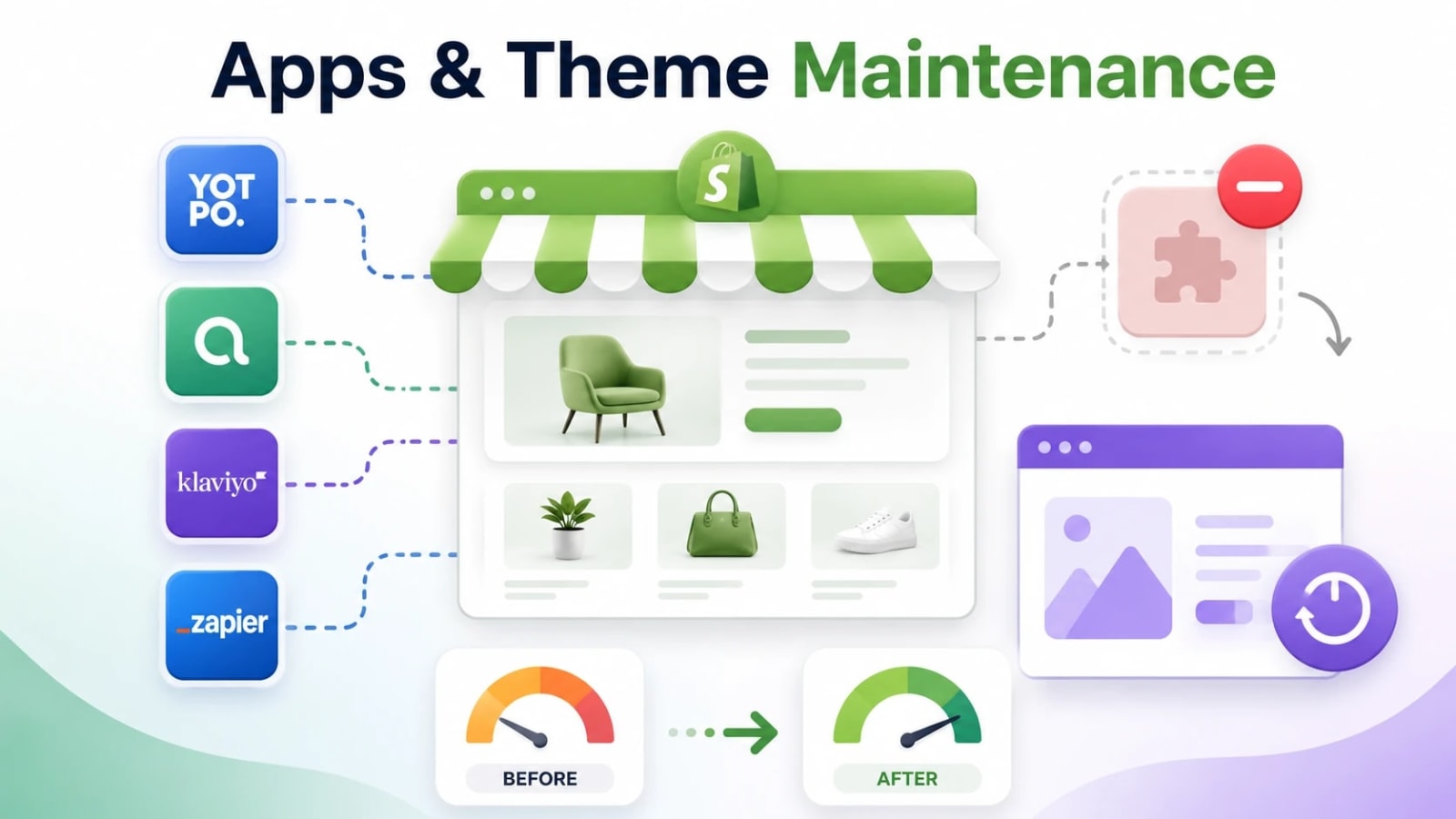
Over time, apps accumulate. Some were installed for specific promotions or experiments and were never removed. A quarterly review of every installed app, its associated cost, its impact on page speed, and whether it is actively contributing value is a critical housekeeping task. Similarly, your Shopify theme should be reviewed for pending updates, custom code conflicts, and any deprecated features that could cause display or functionality issues.
Analytics and Revenue Analysis
A quarterly deep dive into your Google Analytics, Shopify analytics dashboard, and any additional reporting tools gives you a clear picture of what is working and what is not. Look at which product pages are converting, which traffic sources are declining, and where customers are dropping off in the purchase journey. These insights should directly inform your next quarter’s priorities, from content updates and UX improvements to shifts in marketing investment.
Quarterly audits take more time than routine maintenance tasks, but they are the sessions where you make strategic decisions that shape the direction of your store’s growth over the coming months.
Shopify App and Theme Maintenance: Avoiding Silent Performance Killers
Every app you install on your Shopify store injects code into your pages, and over time, that accumulates into a serious performance problem. Many store owners install apps during a campaign or seasonal push and then forget to remove them afterward. Even deactivated apps can leave behind residual scripts and CSS files that slow down page load times, inflate your theme code, and create conflicts with newer apps you add later. A cluttered app list is one of the most common, and least recognized, causes of declining stoe speed scores.
Thememaintenance follows a similar pattern. Shopify regularly releases theme updates that patch security vulnerabilities, improve mobile rendering, and align with the latest browser standards. Skipping these updates, especially for extended periods, means your storefront may display incorrectly on newer devices, fail accessibility checks, or miss out on performance improvements that directly affect conversion rates. Before applying any theme update, always duplicate your current theme and test changes on a staging environment to avoid breaking live functionality.
A practical app and theme audit should happen at least every quarter. During each audioccur yourself quarterlyinstalled app is actively earning its place in your tech stack. Consider the following checklist:
Remove any app that has not been used in the past 30 days and manually delete its leftover code snippets from your theme files
Check for duplicate functionality, such as two review apps or two upsell tools running simultaneously
Review your theme changelog and apply updates only after testing on a duplicate theme
Run a Google PageSpeed Insights test before and after each app removal to quantify improvements
Check for app conflicts by loading your storefront in an incognito window after each change
Maintenance Action
Frequency
Potential Performance Impact
Remove unused apps and leftover code
Monthly
Up to 20% faster page load
Apply theme updates
Quarterly
Improved mobile rendering and security
Audit for duplicate app functionality
Quarterly
Reduced script conflicts and JS errors
PageSpeed benchmark testing
Monthly
Identifies regressions before they hurt rankings
Shopify SEO Maintenance: Keeping Rankings While Competitors Sleep
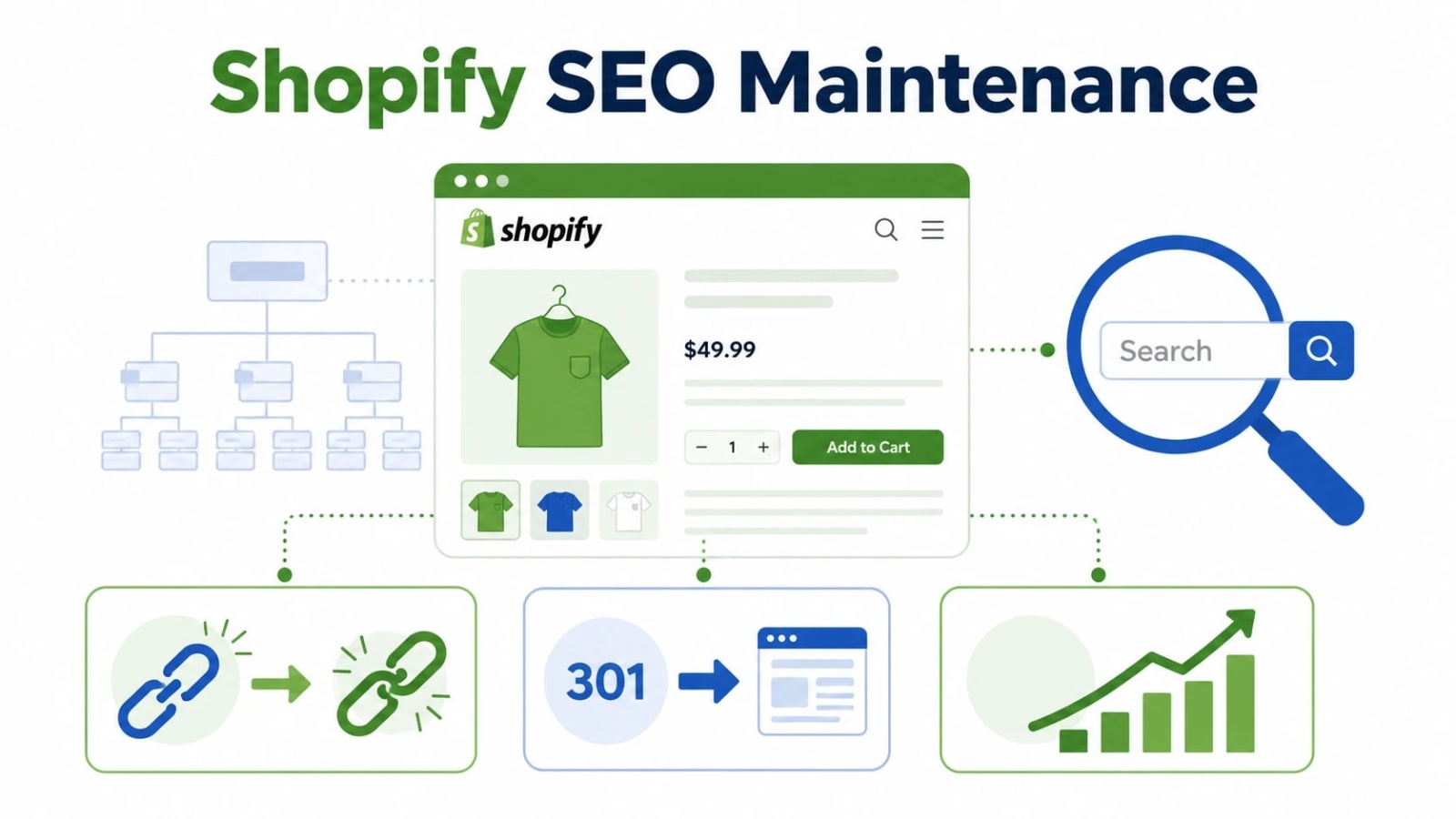
SEO is not a one-time setup task, and treating it that way is one of the fastest ways to watch your rankings erode. Shopify stores accumulate SEO debt quietly, through broken links, outdated meta descriptions, duplicate content created by collection filters, and missing alt text on newly uploaded product images. Search engines crawl your store regularly, and every unresolved issue signals that your store is not well maintained, which gradually pushes competitors above you in search results.
Redirect management is one of the most overlooked areas of ongoing SEO maintenance. When you delete a product, rename a collection, or restructure your URL hierarchy, the old URLs become dead ends unless you create 301 redirects. A single deleted product page without a redirect can strip the link equity that page had accumulated over months or years. Tools like Google Search Console will surface these errors, but only if you are checking them consistently. Set a monthly reminder to review crawl error reports and resolve any 404s before they compound.
Beyond technical fixes, content freshness matters more than most store owners realize. Updating product descriptions, refreshing collection page copy, and keeping blog content current all send positive signals to search engines. For stores that rely on backlinks to maintain authority, it is also worth periodically auditing your inbound link profile. High-quality backlinks from authoritative sites, the kind that agencies like Marketing Lad specialize in building, can degrade in value if the linking pages go offline or get deindexed. Regular link audits protect that investment.
Check Google Search Console monthly for crawl errors, manual actions, and coverage issues
Create 301 redirects immediately whenever a product or collection URL changes
Add alt text to all product images, especially those uploaded in bulk during seasonal restocks
Audit for duplicate content caused by tag and filter URLs and apply canonical tags where needed
Refresh meta titles and descriptions for top-traffic pages at least twice per year
SEO Issue
Common Cause
Recommended Fix
404 errors
Deleted products or renamed URLs
Set up 301 redirects immediately
Duplicate content
Collection filter and tag URLs
Add canonical tags to filter pages
Missing alt text
Bulk image uploads without descriptions
Audit image library quarterly
Stale meta descriptions
Set once and never updated
Refresh top pages biannually
Lost backlink value
Referring pages going offline
Run quarterly backlink audits
Common Shopify Maintenance Mistakes and How to Avoid Them
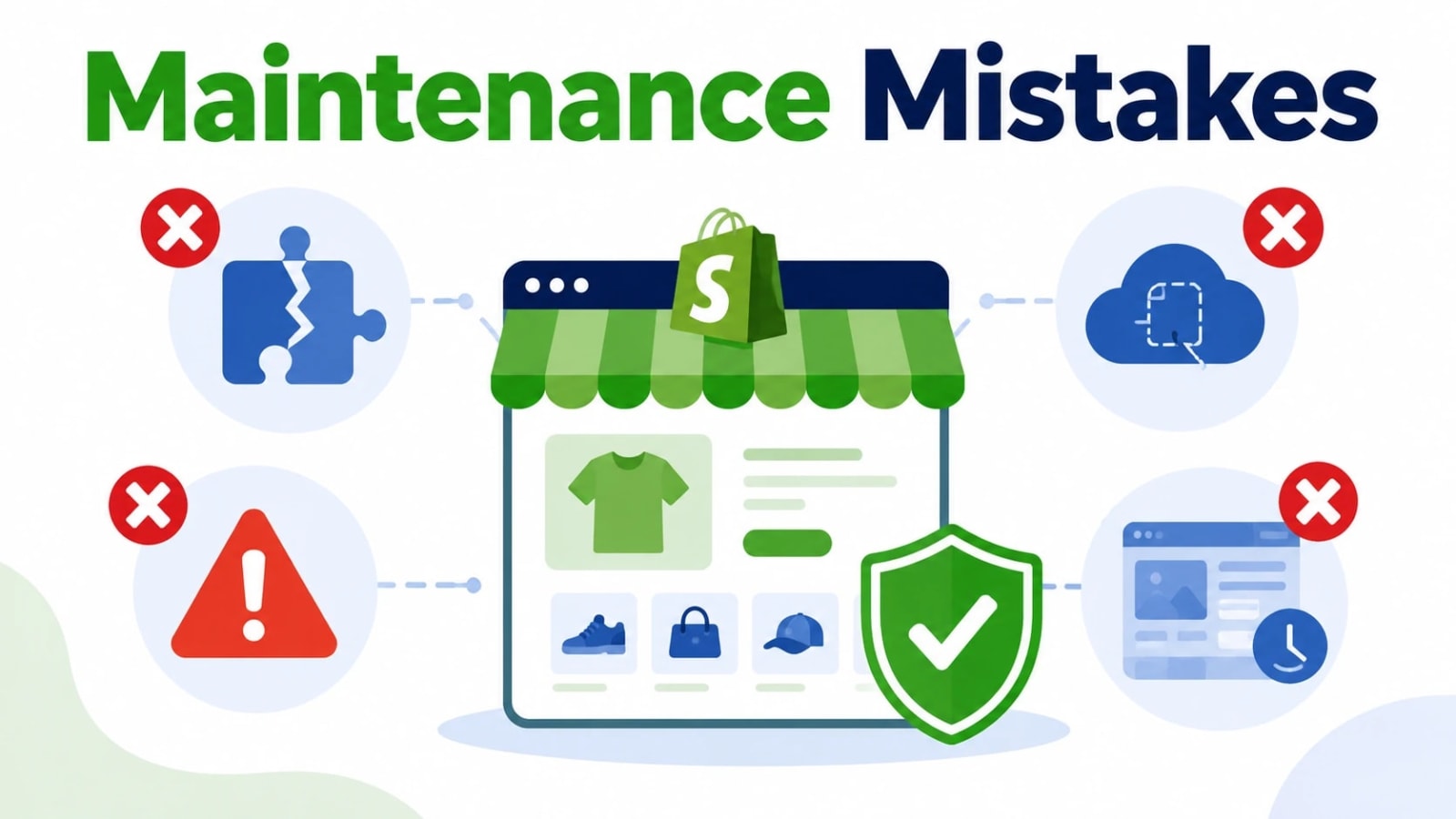
The most costly Shopify maintenance mistake is doing nothing until something breaks. Reactive maintenance, waiting for customer complaints, a spike in bounce rate, or a sudden drop in sales before investigating, means you are always playing catch-up. By the time a problem is visible in your revenue data, it has usually been quietly damaging your store for weeks. Shifting to a proactive maintenance schedule with fixed weekly, monthly, and quarterly checkpoints eliminates most of these surprises before they become expensive.
Another widespread mistake is skipping backups before making changes. Shopify does not offer a native full-store backup solution, so you are responsible for exporting product CSVs, backing up your theme files, and documenting your app configurations regularly. Many store owners discover this limitation only after an update goes wrong and they have no clean version to restore. Third-party backup apps exist for this purpose, and using one is a non-negotiable part of responsible store management.
Finally, many store owners neglect to document the changes they make. When a checkout flow breaks after a busy week of updates, it becomes nearly impossible to identify which change caused the issue without a log. Keeping a simple maintenance record, even a basic spreadsheet noting what was changed, when, and by whom, dramatically reduces troubleshooting time and helps teams stay aligned. The stores that avoid costly downtime are almost always the ones that treat maintenance as a system rather than an occasional chore.
Never update apps, themes, or checkout settings during high-traffic periods like sales events or holidays.
Always back up your theme files before applying any update, no matter how minor it appears
Do not rely on Shopify’s native tools alone for full store backups; use a dedicated backup ap.p
Avoid installing multiple apps that serve the same function; consolidate wherever possible.le
Document every maintenance action with a date, description, and the team member responsible.
Mistake
Risk Level
Prevention Strategy
Reactive-only maintenance
High
Build a scheduled maintenance calendar
No backups before updates
High
Use a third-party backup app consistently
Updating during peak traffic
High
Schedule changes during low-traffic windows
Accumulating unused apps
Medium
Conduct quarterly app audits
No change documentation
Medium
Maintain a simple maintenance log
How to Monitor Shopify Store Performance
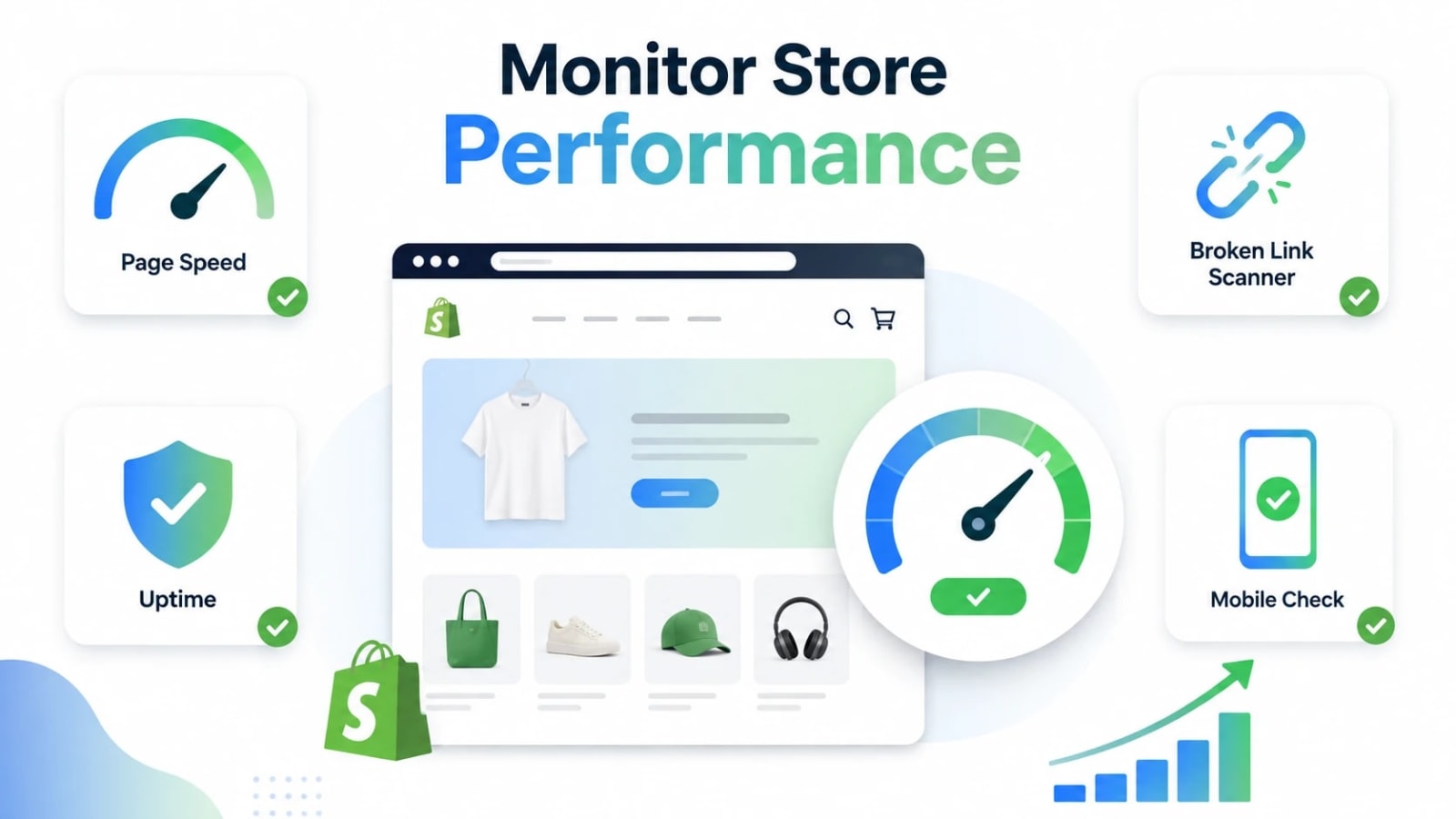
Keeping a close eye on your store’s performance is one of the most important parts of ongoing Shopify maintenance. Without regular monitoring, small issues can quietly grow into problems that hurt your sales and customer experience. Fortunately, several tools and habits can help you stay ahead of potential setbacks.
Here are the key areas you should be monitoring consistently:
Page load speed: Use Google PageSpeed Insights or GTmetrix to test your storefront regularly. Slow pages drive customers away and hurt your search rankings.
Uptime monitoring: Tools like UptimeRobot alert you immediately if your store goes offline, so you can act fast before losing significant revenue.
Broken links and 404 errors: Run periodic crawls using tools like Screaming Frog to catch and fix broken links that frustrate shoppers and damage SEO.
Checkout flow: Test your entire checkout process regularly, including payment gateways and discount codes, to confirm everything works without errors.
Mobile responsiveness: Browse your store on multiple devices and screen sizes to make sure your theme displays correctly for all visitors.
Analytics review: Check your Shopify Analytics dashboard weekly to spot unusual drops in traffic, conversion rates, or average order value that may signal a technical issue.
Setting a consistent monitoring schedule, such as weekly light checks and monthly deep audits, ensures no performance issue slips through unnoticed.
Shopify Maintenance Costs: What to Expect
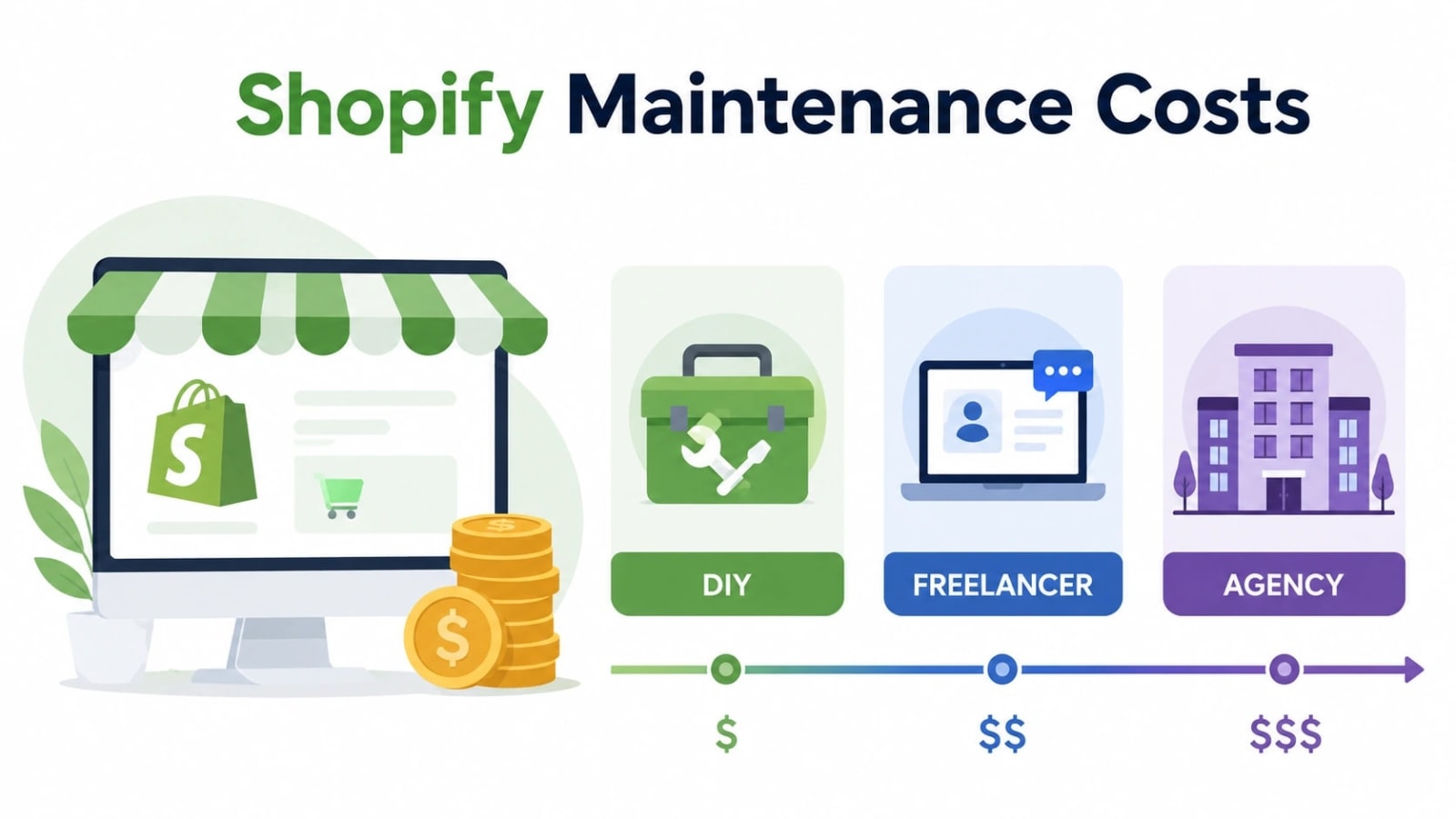
One of the most common questions store owners ask is how much Shopify maintenance actually costs. The answer depends on whether you manage it yourself, hire a freelancer, or work with an agency. Understanding the typical cost ranges helps you budget properly and avoid surprise expenses.
Maintenance Type
Who It Suits
Estimated Monthly Cost
DIY Maintenance
Small stores with technical owners
$0 to $50 (tool costs only)
Freelance Developer
Growing stores needing occasional help
$200 to $800
Shopify Agency Retainer
Established stores with complex needs
$500 to $2,500+
Managed Maintenance Plans
Stores wanting predictable support
$150 to $1,000
Beyond labor costs, factor in these potential expenses:
Premium app subscriptions: Many essential tools, such as backup apps and SEO platforms, carry monthly fees ranging from $10 to $100 each.
Theme updates or redesigns: A premium theme purchase can run from $180 to $350, with redesigns costing significantly more.
Speed optimization services: One-time audits and fixes from specialists typically cost between $100 and $500.
Security audits: Professional security reviews may range from $150 to $600 depending on store size and complexity.
Investing in maintenance is always cheaper than dealing with a hacked store, a major technical failure, or a sudden drop in search rankings caused by neglect.
Shopify Maintenance Best Practices for Long-Term Success
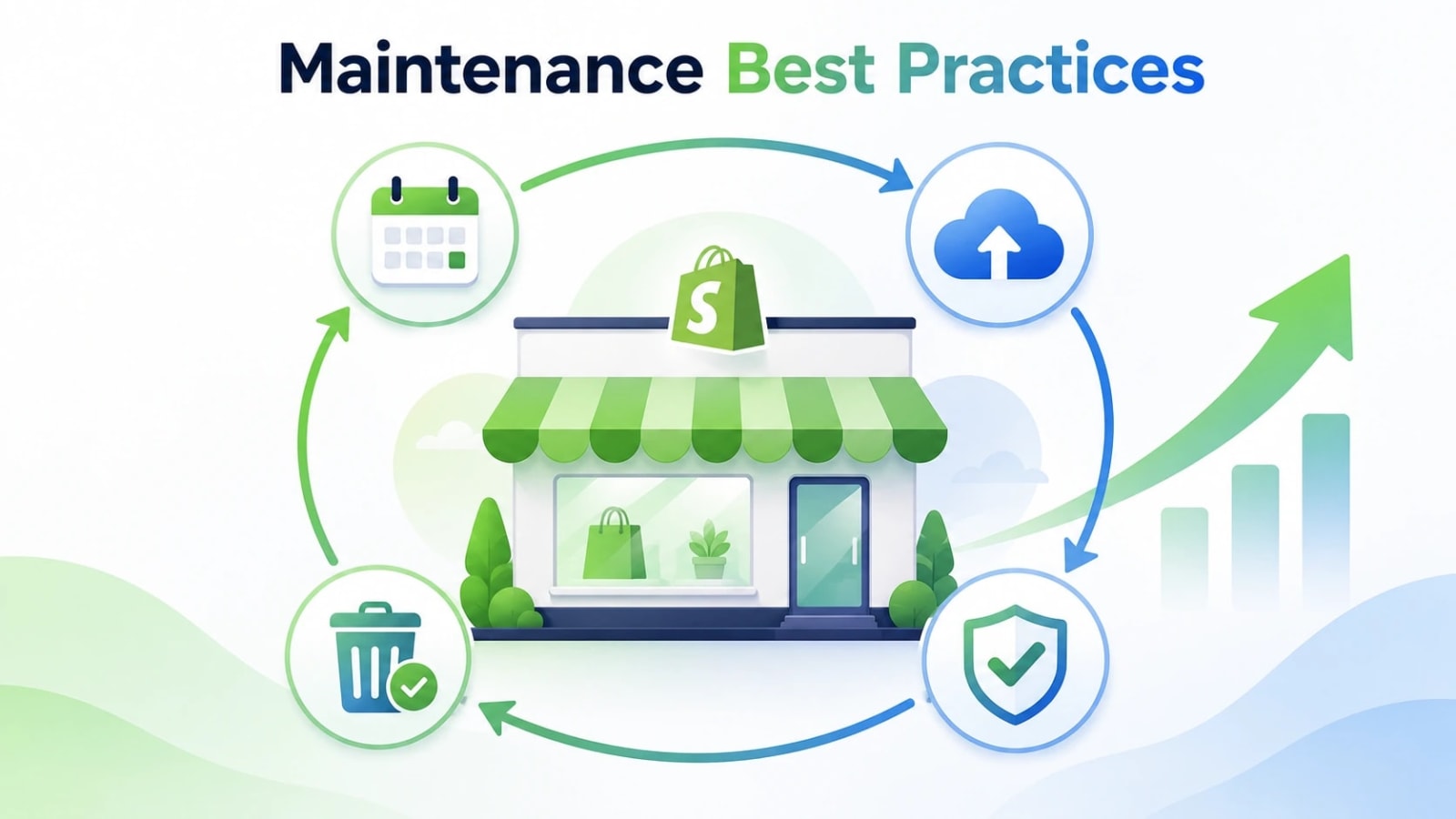
Consistency is the foundation of effective Shopify maintenance. Rather than scrambling to fix problems after they appear, the best store owners build habits and systems that keep their stores healthy year-round. Adopting these best practices puts you in a strong position for sustainable growth.
Create a maintenance calendar: Schedule daily, weekly, monthly, and quarterly tasks so nothing gets skipped during busy sales periods.
Document every change: Keep a simple log of all updates, app installs, and code edits so you can quickly trace any issue back to its cause.
Test before going live: Use a staging environment or duplicate the theme whenever testing major changes, rather than editing your live store directly.
Keep your app list lean: Every unnecessary app adds load time and potential conflicts. Remove any app you no longer actively use.
Stay informed about Shopify updates: Follow the Shopify changelog and community forums so you are never caught off guard by platform changes.
Back up before every update: Always create a full backup before applying any theme, app, or platform update to protect against unexpected issues.
Prioritize customer experience: Run regular test purchases and browse your store as a new visitor to spot friction points before real customers encounter them.
Building these habits takes a little time upfront but saves enormous effort, money, and stress in the long run. A well-maintained store earns customer trust and performs better across every metric that matters.
Conclusion
Shopify maintenance is not a one-time task. It is an ongoing commitment that protects your store’s performance, security, and reputation. From monitoring page speed and fixing broken links to updating apps, backing up data, and regularly testing your checkout, every maintenance activity adds up to a smoother, more profitable store. Store owners who stay proactive consistently outperform those who only react when something breaks.
Whether you handle maintenance yourself, bring in a freelancer, or work with a specialist team, the important thing is to start and stay consistent. Build a schedule, document your actions, and treat your store like the valuable business asset it truly is. If you are also focused on growing your store’s visibility through backlinks, working with a trusted partner like Marketing Lad can complement your technical upkeep by driving the authority and traffic your store deserves.
Frequently Asked Questions
How often should I perform Shopify maintenance?
You should perform basic checks daily, such as reviewing orders and monitoring uptime. Weekly tasks include checking analytics and testing checkout. Monthly tasks cover app updates and speed audits. A thorough quarterly review should cover security, SEO, and overall store health to keep everything running smoothly.
Do I need a developer to maintain my Shopify store?
Not always. Many routine tasks, such as updating apps, reviewing analytics, and creating backups, can be done without coding knowledge. However, for theme customizations, fixing technical bugs, or optimizing site speed at a deeper level, hiring a Shopify developer or agency is a worthwhile investment for most growing stores.
What happens if I neglect Shopify maintenance?
Neglecting maintenance can lead to slow page speeds, security vulnerabilities, broken checkout processes, and declining search rankings. Over time, these issues hurt your conversion rates and damage customer trust. In serious cases, unpatched security gaps can result in data breaches that are costly and difficult to recover from.
Is Shopify’s maintenance different from that of other e-commerce platforms?
Yes, Shopify handles core hosting and platform-level security, reducing some maintenance responsibilities compared to self-hosted platforms. However, store owners still need to manage app updates, theme health, content accuracy, speed optimization, and SEO regularly to keep their specific store performing at its best.
How do I back up my Shopify store?
Shopify does not offer a built-in full backup solution, so store owners should use third-party apps designed for this purpose. These tools automatically back up your product data, customer information, theme files, and settings on a scheduled basis, ensuring you can restore your store quickly if something goes wrong.
Tags:#ecommerce maintenance#shopify maintenance#shopify SEO#shopify store optimization
Shahid Shahmiri is a digital marketer who helps online businesses grow with smart marketing tactics that improve sales and leads. He is passionate and driven to grow businesses online and is responsible for analyzing marketing, SEO, growth and managing promotional and media channels.