
Last Updated on 18/11/2025
In this series, we will address some of the most frequently asked questions about search engine optimization, focusing on the top queries people search for on Google.
Our team of experts will provide in-depth explanations and valuable insights to help you understand the various aspects of SEO.
How to improve your website’s visibility and ranking on search engine results pages?
Whether you’re a beginner or an experienced marketer, you’ll find valuable information here to help you achieve your SEO goals.
So let’s dive in and start optimizing!
1. What is SEO?
SEO is an abbreviation for ‘’search engine optimization’’ or ‘’search engine optimizer’’. SEO is all about making small changes to different parts of your website.
On an individual level, these small changes might look like minute modifications, but when they are combined with other optimizations, they make a significant impact on your website’s user experience and performance in SERPs.
SEO mainly targets unpaid traffic, that is, natural or organic results rather than direct or paid traffic.
2. What is an SEO Campaign?
An SEO campaign is a planned effort to improve the organic rankings of a website and is one of the essential elements of creating a successful keyword research, content creation and link building are frequent components of the SEO campaign.
To be more precise, it’s a continuous process of studying, creating content, optimizing your site for technical SEO, and using off-page SEO techniques to demonstrate to Google that your website is an authority in your field.
SEO agencies can help you achieve exceptional results in your SEO campaign, especially if you lack experience in the field.
Known for implementing effective SEO growth strategies, they excel at enhancing your page visibility, increasing search traffic, and targeting the ideal audience for your services.
If successful, a well-executed SEO campaign will drive increased traffic to your site from targeted customers actively seeking what you offer.
3. How to Improve Website SEO?
If you want to improve your website SEO, then you need to follow the following steps:
- Enhance the content you already have.
- Organise content to aim for featured snippets.
- Make original content using keywords with far less competition.
- Obtain backlinks from reliable websites.
- Optimize Images.
- Utilize Google Analytics to monitor metrics.
- Check whether your website is mobile-friendly.
- Improve for on-page SEO elements.
- Shorten load times.
- Boost local SEO
- Create internal links.
4. What are the Advantages of SEO in 2025?
The great thing about SEO is that it’s easier to learn and use than you may assume. Instead of spending money on conventional print ads or sponsored posts, investing in a few tools and taking the time to learn the fundamentals of SEO can benefit your company more in the long run.
There are countless advantages of SEO and some of them are as follows :
Every business needs SEO to truly thrive online, as it enhances credibility, supports content marketing, maximizes PPC campaigns, is a primary source of leads, establishes your brand, makes your website mobile-friendly, optimizes your website’s speed, and much more.
5. How To Do SEO in 2025?
Everyone aspires to have a higher Google ranking. But in 2025, it’s possibly more difficult than ever. We have shared some tips to help you with your SEO in 2025. The tips are as follows:
- Put less importance on things that don’t matter.
- Always keep your search intent front of mind.
- Create catchy title tags.
- Refresh fading content and increase traffic to vital pages using internal links.
- Double-dip on keywords with an unclear purpose.
- Incorporate FAQ sections.
- Include citations from professionals.
- Optimize for low-hanging featured snippets.
- Boost image backlinks.
- Using backlinks.
- Revive dead pages.
- Conduct a yearly content audit and create more backlinks.
6. What is Local SEO?
Local search engine optimization (local SEO) is comparable to (national) SEO in that both are processes that affect how visible a website or web page is in an online search engine’s unpaid results, often known as “natural,” “organic,” or “earned” results (SERP- search engine results page).
However, local SEO differs because it focuses on improving a company’s online presence so that search engines display its web pages when people perform local queries for its products or services.
While ranking a business for local search requires a similar technique to general SEO, it also includes certain unique components. As an illustration, local SEO focuses on “optimising” your web presence to draw more customers from relevant local searches.
The majority of these searches are done on search engines like Google, Yahoo, Bing, Yandex, and others, but you should also leverage sites like Yelp, Angie’s List, LinkedIn, local business directories, social media channels, and others for better local optimization.
7. What is Meta Description in SEO?
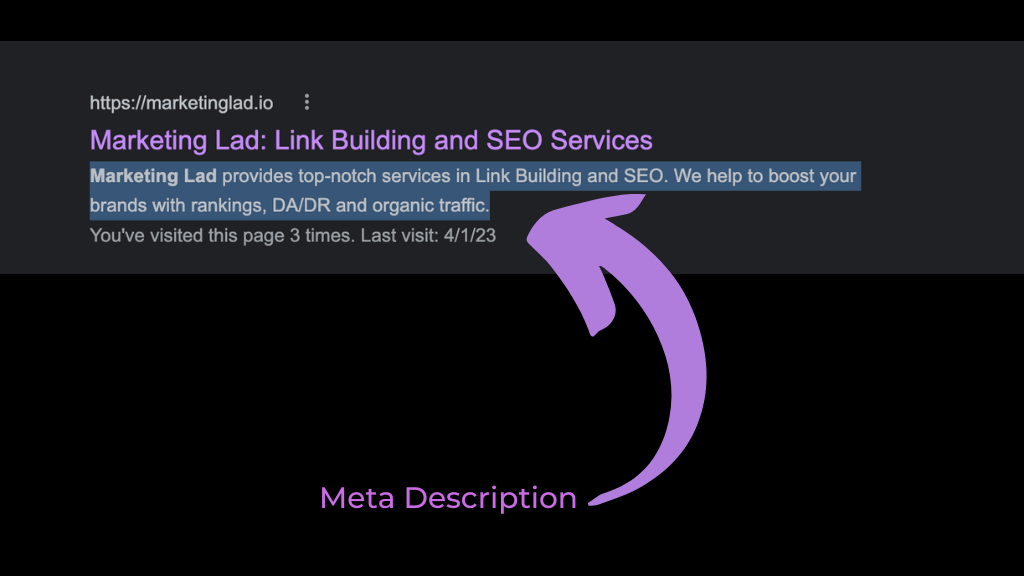
Users are frequently educated and entertained by a meta description tag’s brief, accurate summary of what a particular website is about.
Convincing the user that the website has all the information they require, they act as a sales pitch. Although a meta description can be as long as it needs to be, Google Search results may shorten the snippet if it’s necessary, usually to fit the width of the device.
8. What is a Title Tag in SEO?
The title of a web page is specified using an HTML element called a title tag. The title tag of a page is displayed as a search snippet in a search engine results page (SERP). It appears as the search result’s clickable headline and is important for user experience, SEO, and social sharing. The title tag of a web page should give a concise and unambiguous overview of the content of the page.
9. What is On Page SEO?
The process of modifying a page’s content, tags, and internal links to maximise traffic and search visibility is known as on-page SEO, sometimes known as on-site SEO. In other words, it’s a technique for improving the understanding of your website by search engines. Website architecture, HTML, and content are the three basic categories into which on-page SEO can be split.
10. What is SEO Writing?
The process of writing for search engines like Google’s first page is known as SEO writing. This is accomplished by conducting keyword research on pertinent terms and producing optimised content that speaks to the user’s objective. For instance, Google scans content using “spiders” to determine its subject.
They learn a lot about the website during this crawl because of the language it uses. It’s easier for search engines to crawl and favourably analyse content when it’s written with SEO in mind. When it earns a more positive review, its SERP positioning improves.
11. What is an SEO Specialist?
An SEO specialist, also known as a search engine optimization specialist, assesses, analyses, and adjusts websites to make them more search engine friendly. Consequently, the websites show up higher in search results on reputable search engines like Google and Bing.
An SEO specialist’s goal, like that of any other traditional or digital marketing expert, is to increase sales for the business they work for.
Conducting keyword research and using SEO tools like Google Analytics, an SEO expert may increase a website’s exposure on Google, which has major benefits for any organisation.
Some might also work with other members of the marketing team to develop new projects or enhance social media account management to boost user interaction and traffic.
12. How to Find SEO Keywords?
Putting yourself in your client’s shoes is the first step in doing keyword research. What sentences and words may they use to address their issues?
Entering them into a keyword research tool like Ahrefs’ Keywords Explorer, you may supplement the ones you just came up with hundreds more related keyword ideas.
It’s a straightforward procedure, but to do it properly, you need two things: having a firm grasp of how keyword research tools work and having in-depth knowledge of the sector.
13. What is Technical SEO?
Technical SEO aims to improve a website’s technical status to improve search engine rankings for its pages. The three pillars of technical optimization include speeding up a website and making it easier for crawlers to understand it.
Technical SEO is a component of on-page SEO that focuses on strengthening elements of your website to improve rankings. Off-page SEO, which concentrates on expanding a website’s visibility through other channels, is the opposite of this strategy.
14. What are the SEO tools?
You may avoid tedious keyword research and data analysis by using SEO tools. With these tools, you can identify the elements of your approach that are working and those that could use improvement.
The top SEO tools also provide information on how you compare to rivals and which areas have the most prospects.
Additionally, they let you compare search results across multiple locations or languages. While managing several websites, SEO tools may be utilised to quickly evaluate each site’s performance.
Spreadsheets are frequently used by website administrators who manage many enterprises to manually analyse large amounts of data. However, it quickly becomes overwhelming, raising the probability that the allegations are untrue.
15. What is Anchor Text in SEO?
Anchor text or link text refers to the visible, clickable text of a link. It is typically underlined and stands out in colour from the surrounding text.
The phrasing of a good link clarifies what the reader could encounter if they click it. By providing search engines with context, effective anchor text increases the likelihood that someone will click your link.
16. What is Off-Page SEO?
Actions made to influence your ranks in search engine results pages are referred to as “off-page SEO” (sometimes known as “off-site SEO”) (SERPs). These are a few of the basic SEO elements that support on-page SEO and aid in website ranking. Search engines’ and users’ perceptions of a site’s popularity, relevance, trustworthiness, and authority must be improved to optimize for off-site ranking criteria. This is achieved by other trustworthy online resources (pages, sites, individuals, etc.) connecting to or supporting your website, therefore “vouching” for the value of your information.
17. How Much Does SEO Cost?
Expect to pay at least $500 per month if you hire a top-tier SEO firm to carry out a local campaign. Budgets of $2,500 to $5,000 per month are necessary for a local, national, or worldwide campaign. Several businesses offer a “trial package” with no commitment at a lower cost.
18. What is SEO Copywriting?
SEO copywriting is the process of combining tried-and-true SEO best practices for traffic generation (such as keyword research) with persuasive language that prompts readers to take a specific action, like making a purchase or joining an email list.
19. What Are Citations in SEO?
Citations are references to your company’s name, address, and phone number (often referred to as NAP) on a website that isn’t your own in the context of local search engine optimization (SEO).
20. How to do SEO Keyword Research?
The three steps of keyword research include:
Use keyword research tools to locate relevant keywords, key indicators and criteria for ranking keywords after keyword analysis, and how to pinpoint your target keywords and understand their search intent.
21. How to do a SEO Audit?
Typically, an SEO audit looks at things like crawl and indexability, User interaction, Comparative website architecture benchmarking, keyword analysis, on-page SEO, and Backlink profile. It essentially serves as a website’s “health check” all around.
22. Why is SEO Important?
SEO, or Search Engine Optimization, is important for several reasons.
- It helps improve a website or web page’s visibility in a search engine’s unpaid results.
- It helps to increase the quality and quantity of website traffic.
- It can help increase a business’s revenue and profits.
- It can help to establish brand awareness and credibility.
- It can provide valuable insights into the needs and wants of the target audience.
Optimizing a website for search engines, businesses can increase their chances of being found by potential customers who are searching for their products or services. This is especially important for small businesses or new businesses that may not have the resources to compete with larger, more established companies.
Overall, SEO is important because it helps to level the playing field and allows businesses to be found by their target audience.
23. How to Improve SEO on Google?
Here are some tips to help improve your website’s SEO on Google:
- Use relevant, targeted keywords throughout your website’s content and meta tags.
- Make sure your website is mobile-friendly and loads quickly.
- Use header tags (H1, H2, etc.) to highlight important information and make it easier for users to scan your content.
- Use alt tags to describe the images on your website.
- Use internal linking to help Google understand your website’s structure and connect related content.
- Use external links to cite credible sources and signal to Google that your website is up-to-date and well-researched.
- Use social media to promote and build links to your website.
- Make sure your website has a clear and easy-to-use navigation structure.
- Use quality content that is valuable to your target audience.
- Monitor and track your search rankings and traffic to see the effectiveness of your SEO efforts.
You can improve your website’s SEO on Google and increase its visibility in search results. It’s important to note that SEO is an ongoing process and it may take some time to see results.
However, by consistently implementing good SEO practices, you can help to improve your website’s ranking and attract more qualified traffic.
24. How to Become an SEO Specialist?
To become an SEO specialist, you can follow these steps:
a. Learn about SEO: There are many resources available online that can help you learn about SEO, such as blogs, forums, and online courses. It’s important to understand how search engines work and the factors they use to rank websites.
b. Gain experience: One of the best ways to learn about SEO is to get hands-on experience. You can do this by working on your own website or blog, or by volunteering to help a friend or small business with their website’s SEO.
c. Learn other related skills: In addition to learning about SEO, it can be helpful to learn about related fields such as web design, content creation, and marketing.
d. Stay up-to-date: The world of SEO is constantly changing, so it’s important to stay up-to-date with the latest trends and best practices. This can be done by reading industry blogs and attending conferences and events.
e. Consider getting certified: There are several SEO certification programs available that can help you demonstrate your knowledge and skills to potential employers.
It may take time and effort, but with dedication and a willingness to learn, you can develop the skills and knowledge needed to be successful in this field.
25. What is Black Hat SEO?
Black Hat SEO refers to a set of practices used to increase a website’s ranking in search engines through methods that violate search engines’ terms of service. These practices are called “black hat” because they are seen as unethical or deceitful, and they can get a website banned from search engines.
Examples of black hat SEO techniques include keyword stuffing, cloaking, and link schemes. Keyword stuffing involves adding a large number of irrelevant keywords to a webpage in an attempt to manipulate the webpage’s ranking in search engine results.
Cloaking involves presenting different content to search engines than to users, in an attempt to trick search engines into ranking the website higher. Link schemes involve buying or trading links solely to manipulate a website’s search engine ranking.
Black hat SEO techniques are generally not recommended, as they can lead to a website being banned from search engines and damage its credibility and reputation. Instead, it is recommended to use ethical, “white hat” SEO techniques that align with search engines’ guidelines.
Know more about Black Hat SEO here!
26. What are SERPs in SEO?
SERPs, or Search Engine Results Pages, are the pages that are displayed by search engines in response to a query by a user. These pages include the list of results that the search engine has determined to be the most relevant to the user’s query, based on its algorithms and ranking factors.
In the context of SEO, SERPs are important because they determine which websites and web pages are displayed in response to a search query and in what order.
Optimizing a website for relevant keywords and phrases, businesses and website owners can increase their chances of ranking highly in search engine results and attracting more qualified traffic to their websites.
SERPs can also include other types of results, such as images, videos, and maps, in addition to traditional web pages. The layout and content of SERPs can vary depending on the search engine and the type of query.
27. What is Cloaking in SEO?
Cloaking is a black-hat SEO technique that involves presenting different content to search engines than to users. This is done to trick search engines into ranking the website higher in search results.
For example, a website that uses cloaking might show one version of a webpage to a search engine’s crawler, optimized for a particular set of keywords, and a different version to users, with completely different content. The goal of cloaking is to deceive search engines into thinking the website is more relevant to a particular set of keywords than it actually is.
Cloaking is considered a black-hat SEO technique because it violates search engines’ terms of service and can lead to a website being banned from their index.
It is generally not recommended to use cloaking or other unethical SEO techniques, as they can damage a website’s credibility and reputation. Instead, it is recommended to use ethical, “white hat” SEO techniques that align with search engines’ guidelines.
28. How Long Does SEO Take?
SEO, or search engine optimization, is a process of optimizing your website and its content to improve its visibility and ranking in search engine results pages (SERPs).
The time it takes for SEO to have an effect depends on several factors, including the competitiveness of the keywords you are targeting, the current state of your website, and the amount of work that needs to be done.
In general, it can take anywhere from a few weeks to several months for SEO efforts to start having a noticeable impact on search engine rankings. Some businesses may see results more quickly, while others may take longer.
It’s important to keep in mind that SEO is a long-term strategy and the results of your efforts may not be immediately apparent.
It’s also important to be patient and consistent in your efforts, as it may take time for the changes you make to have the desired effect.
29. What is a Backlink in SEO?
A backlink is a link from one website to another. In the context of search engine optimization (SEO), a backlink is considered a “vote” for the quality and relevance of the content on the linked website.
Backlinks are an important factor in the ranking algorithm used by search engines like Google.
When a website links to another website, it is seen as a recommendation or endorsement of that website’s content. As a result, websites with a large number of high-quality backlinks tend to rank higher in search engine results pages (SERPs).
There are many different types of backlinks, and not all backlinks are created equal. Some backlinks are more valuable than others, and search engines use complex algorithms to determine the value of a backlink.
Some of the factors that may affect the value of a backlink include the relevance and quality of the linking website, the anchor text used in the link, and the context in which the link appears.
It’s important to note that the number of backlinks isn’t the only factor; quality matters too. Spamming other websites with low-quality or irrelevant backlinks can hurt your search rankings, rather than help them.
30. What is White Hat SEO?
White hat SEO refers to ethical, legitimate techniques and strategies used to improve a website’s search engine rankings.
White hat SEO techniques are designed to provide a positive user experience and follow the guidelines set by search engines like Google.
Some examples of white hat SEO techniques include:
- Creating high-quality, original content that is useful and informative to users
- Using relevant and targeted keywords in website titles, headings, and content
- Optimizing website speed and mobile-friendliness
- Using internal and external links to improve the structure and credibility of your website
- Ensuring that your website is easy to navigate and use
White hat SEO techniques focus on improving a website’s overall quality and relevance, rather than trying to trick search engines into giving it a higher ranking.
As a result, they are more sustainable and provide a better long-term strategy for improving search engine rankings.
31. How Many SEO Keywords Should I Use?
The number of SEO keywords you should use on your website will depend on the length and focus of your content, as well as the goals of your SEO campaign. Here are some general guidelines to help you determine the number of keywords to use:
For shorter content (e.g., a blog post or product page), it’s generally recommended to use one primary keyword and a few related keywords. This will help search engines understand the main topic of your content and how it relates to other topics.
For longer content (e.g., an in-depth article or e-book), you can use a wider range of keywords, but it’s still important to maintain focus and avoid keyword stuffing.
When choosing keywords, it’s important to consider their relevance and competition levels. Choose keywords that are relevant to your business and that have a good search volume, but avoid overly competitive keywords that may be difficult to rank for.
In general, it’s more important to focus on creating high-quality, useful, and informative content that addresses your target audience’s needs than to stuff your content with a large number of keywords.
32. How to Rank With Video SEO?
Video SEO is the process of optimizing your video content to improve its visibility and ranking in search engine results pages (SERPs). Here are some tips to help you rank with video SEO:
- Use relevant and targeted keywords in your video’s title, description, and tags.
- Create a transcript of your video and include it in the video’s description. This can help search engines understand your video’s content and improve its ranking.
- Use a descriptive and compelling title and description for your video. This will help attract viewers and improve the chances that your video will be shared on social media and other platforms.
- Embed your video on your website and optimize the surrounding content for SEO. This can help improve your website’s overall SEO and boost your video’s search rankings.
- Use YouTube’s SEO tools to optimize your video’s metadata and improve its ranking. This includes using relevant and targeted keywords in the video’s title, description, and tags, and optimizing the thumbnail and custom thumbnail image.
- Encourage viewer engagement and sharing. The more views, comments, and shares your video receives, the more likely it is to rank well in search results.
33. Where to Find SEO Specialist?
There are several ways you can find an SEO specialist:
- Search online: You can search for SEO specialists on the web using a search engine like Google. Look for specialists with a strong online presence, including a website and active social media accounts.
- Ask for recommendations: You can ask other business owners or industry experts for recommendations for SEO specialists they have worked with and had success with.
- Attend industry events: Conferences and trade shows are a good way to meet and network with SEO specialists.
- Use job boards: There are several job boards and freelance websites where you can find SEO specialists. You can search for specialists by skills, location, and experience level.
- Contact a digital marketing agency: Many offer SEO services. You can contact a few agencies in your area to see if they have an SEO specialist on their team who can help you.
34. How to Optimize a Blog Post for SEO?
To optimize a blog post for SEO, you can follow these best practices:
- Use a keyword or phrase in the title of the blog post. This helps search engines understand the post’s content and can also help it rank for that keyword.
- Use the keyword or phrase in the first paragraph of the post. This helps search engines understand the post’s context and can also help it rank for that keyword.
- Use the keyword or phrase throughout the post, but don’t overdo it. Search engines may penalize a post for keyword stuffing, which is the practice of using a keyword excessively to manipulate search rankings.
- Use subheadings and bullet points to break up the content and make it easier to read. This can help keep readers on the page longer, thereby improving the post’s search rankings.
- Use internal and external links to enhance the post and provide readers with additional resources. Internal links can improve your website’s navigation, while external links can establish credibility and authority on the topic.
- Use images and videos to break up the text and make the post more visually appealing. Be sure to use descriptive file names and alt text for images to give search engines more context about the post’s content.
Use social media to promote the post and attract more readers. This can help drive traffic to your website and improve the post’s search rankings.
35. How to Improve SEO on Shopify?
Here are some steps you can take to improve the SEO of your Shopify store:
- Use descriptive and relevant titles and descriptions for your products. These will serve as the title and description in search results, so it’s important to include your target keywords and make them enticing to potential customers.
- Use alt text for your product images. This text helps search engines understand the content of images on your site, so be sure to use descriptive, keyword-rich alt text.
- Use a clean and descriptive URL structure. Shopify allows you to customize your URLs, so take advantage of this by using descriptive, keyword-rich URLs for your products and collections.
- Use headings and subheadings on your product pages. This can help structure the page’s content and make it easier for search engines to understand the page’s topic.
- Use rich snippets to provide additional information about your products in the search results. Shopify’s “Structured Data” feature lets you add rich snippets to your product pages.
- Use social media to promote your products and attract more visitors to your store. This can help drive traffic to your site and improve your search rankings.
- Use Google Search Console to track your store’s performance in the search results and identify any issues that need to be addressed.
- Use a mobile-friendly design. More and more people are using their phones to browse the web, so it’s important to ensure your store is easy to use on mobile devices.
- Use a fast-loading theme. Search engines prefer sites that load quickly, so be sure to choose a theme that is optimized for speed.
36. What is Keyword Cannibalisation in SEO?
Keyword cannibalization occurs when multiple pages on a website target the same or similar keywords. This can cause problems for search engines because they may not know which page to show for a particular search query. As a result, the website’s visibility in search results may be reduced.
Keyword cannibalization can also confuse users, who may not know which page to click in search results. This can lead to a higher bounce rate and lower engagement on the website.
To avoid keyword cannibalization, ensure each page on your website has a clear, unique focus. It’s also a good idea to use different keywords on each page to avoid overlap. You can use a tool like SEMrush or Ahrefs to identify any potential instances of keyword cannibalization on your website.
37. What is Keyword Analysis in SEO?
A keyword analysis is the process of researching and selecting the most relevant and effective keywords to target in your SEO efforts. It involves identifying the words and phrases your target audience uses to search for products, services, or information related to your business.
Several tools and techniques can be used to conduct keyword analysis, such as:
- Keyword research tools: These tools allow you to enter a seed keyword and receive a list of related keywords and their search volume. Some popular keyword research tools include Google Keyword Planner, SEMrush, and Ahrefs.
- Competitor analysis: You can also analyze the keywords your competitors rank for to identify potential opportunities for your website.
- Customer feedback: Gathering customer feedback can help you understand the language and terminology they use when searching for products or services related to your business.
- Industry-specific resources: There may be trade publications or forums that can provide insight into the keywords and phrases most relevant to your business.
Once you have identified a list of potential keywords, you can then analyze them to determine which ones are most relevant and have the highest search volume. You can then use this information to optimize your website’s content and meta tags to target these keywords and improve your search rankings.
38. How to Write an SEO Article?
Here are some tips for writing an SEO-friendly article:
- Choose a keyword or phrase to target. This should be a word or phrase that is relevant to the topic of the article and has a high search volume.
- Use the keyword or phrase in the title of the article. This will help search engines understand the article’s content and can also help it rank for that keyword.
- Use the keyword or phrase in the first paragraph of the article. This helps search engines understand the article’s context and can also help it rank for that keyword.
- Use the keyword or phrase throughout the article, but don’t overdo it. Search engines may penalize an article for keyword stuffing, which is the practice of using a keyword excessively to manipulate search rankings.
- Use subheadings and bullet points to break up the content and make it easier to read. This can help keep readers on the page longer, thereby improving the article’s search rankings.
- Use internal and external links to add value to the article and provide readers with additional resources. Internal links can improve your website’s navigation, while external links can establish credibility and authority on the topic.
- Use images and videos to break up the text and make the article more visually appealing. Be sure to use descriptive file names and alt text for images to give search engines more context about the article’s content.
Use social media to promote the article and attract more readers. This can help drive traffic to your website and improve the article’s search rankings.
39. How to SEO a YouTube Video?
To optimize a YouTube video for SEO, you can follow these best practices:
- Use a keyword or phrase in the title of the video. This helps search engines understand the video’s content and can also help it rank for that keyword.
- Use the keyword or phrase in the video’s description. This helps search engines understand the video’s context and can also help it rank for that keyword.
- Use tags to describe the content of the video. YouTube allows you to add tags to your videos to help classify their content. Be sure to include your target keyword and other relevant tags.
- Use a custom thumbnail for your video. A custom thumbnail can help your video stand out in the search results and encourage more clicks.
- Use closed captions or transcriptions. This can make your video more accessible to a wider audience and help search engines understand its content.
- Promote your video on social media and other platforms. This can help drive traffic to your video and improve its search rankings.
- Encourage viewers to like, comment, and subscribe to your channel. These actions can signal to YouTube that your video is popular and relevant, thereby improving its search rankings.
- Use end screens and annotations to encourage viewers to watch more of your videos. This can increase your channel’s overall watch time, a ranking factor on YouTube.
40. What is SEO Rank?
SEO rank refers to the position that a website or webpage occupies in the search results for a particular keyword or phrase. A higher SEO rank means the website will appear closer to the top of search results, leading to more traffic and visibility.
SEO rank is determined by various factors, including the relevance and quality of the website’s content, its structure and organization, the presence of keywords and phrases, and its backlink profile.
Various tools and techniques can be used to track and improve SEO ranks, such as keyword research, on-page optimization, and link building. It’s important to regularly monitor and optimize your website’s SEO to ensure it performs well in search results.
41. How to Check SEO Ranking?
There are several tools and methods you can use to check your SEO ranking:
- Use a keyword rank checker tool: These tools allow you to enter a keyword and see where your website ranks in the search results for that keyword. Some popular keyword rank checker tools include Ahrefs, SEMrush, and Moz.
- Use Google Search Console: a free tool from Google that lets you track your website’s performance in search results. It provides data on the keywords your website is ranking for, the average position in search results, and the number of clicks and impressions your website receives.
- Manually check the search results: You can also manually check the search results by typing your target keyword into a search engine and seeing where your website appears in the results.
It’s important to note that SEO rankings can vary depending on the user’s location and device. This means your website’s ranking may differ for users in different locations or on different devices.
Check out the best SERP tracking tools in 2026: https://marketinglad.io/serp-tracking-tools-you-should-consider/
42. Why Local SEO is Important?
Local SEO is important for businesses operating in a specific geographic area because it helps them attract customers searching for their products or services in that area.
Here are some reasons why local SEO is important:
- Local customers are more likely to visit your store or make a purchase: Customers who are searching for businesses in their local area are more likely to visit your store or make a purchase than those searching from a distance.
- Local SEO helps you stand out from competitors: By optimizing for local keywords and phrases, you can make your business more visible in the search results for those terms and stand out from your competitors.
- It helps you attract mobile customers: More and more people are using their phones to search for local businesses, so it’s important to make sure your business is visible in the mobile search results.
- This helps you improve your online presence: By optimizing your website and online profiles for local keywords and phrases, you can attract more customers.
In summary, local SEO is important because it helps businesses attract local customers, stand out from competitors, improve their online presence, and attract mobile customers.
43. What is Schema in SEO?
Schema is a type of microdata that can be added to a website’s HTML to provide additional context for the page’s content. This can help search engines better understand the page’s content and display it more effectively in search results.
Different schema types can be used for different types of content, such as products, events, recipes, and articles. Adding schema to a website can improve its visibility in search results and provide users with more relevant and useful information.
To implement schema on a website, you can use the JSON-LD format and add the schema markup to the website’s HTML code. There are also tools and plugins available that can help you add schema to your website without requiring any coding knowledge.
It’s important to note that while adding schema to a website can improve its visibility in search results, it is just one factor among many that can affect its search rankings.
44. What is the Bounce Rate in SEO?
Bounce rate is a metric that measures the percentage of visitors to a website who leave the site after viewing only a single page. A high bounce rate can indicate that the website is not providing a good user experience or that its content is not relevant or useful to visitors.
Bounce rate is often used as a signal of a website’s content quality and can affect its search rankings.
Search engines may view a high bounce rate as a sign that the website’s content is not providing value to users and may therefore rank it lower in search results.
Several factors can contribute to a high bounce rate, including a slow-loading website, confusing navigation, and irrelevant or low-quality content.
To improve a website’s bounce rate, focus on enhancing the user experience and ensuring content is relevant, useful, and high-quality.
45. What is Robot.txt in SEO?
A robots.txt file is a text file that instructs web robots (also known as crawlers or spiders) on how to crawl and index the pages on a website.
The file is placed in the root directory of a website and can be used to block specific pages or directories from being crawled and indexed.
For example, if you have a staging or development environment for your website, you may want to use the robots.txt file to prevent search engines from crawling and indexing those pages.
This can help prevent duplicate content issues and ensure that only the live version of your website is indexed.
To use the robots.txt file, you can add a line of code to the file that specifies which pages or directories you want to block from being crawled. For example, the following line of code would block all robots from crawling the entire website:
User-agent: *
Disallow: /
It’s important to note that while the robots.txt file can be used to block search engines from crawling certain pages on your website, it is not a secure way to block access to those pages.
If you want to block access to specific pages on your website, it’s recommended to use password protection or a server-side method.
46. What are SEO Best Practices?
SEO best practices are guidelines and recommendations for optimizing a website to rank higher in search engine results and increase its visibility. Some common SEO best practices include:
- Use relevant, targeted keywords: Choose keywords and phrases that align with your website’s content and have high search volume. Use these keywords in the title, headings, and body of your website’s content.
- Use unique, high-quality content: Ensure your website content is original, informative, and of high quality. This can improve the user experience and increase the likelihood that your website will rank well in search results.
- Use a mobile-friendly design: More and more people are using their phones to browse the web, so it’s important to ensure your website is easy to use on mobile devices.
- Use a fast-loading website: Search engines prefer sites that load quickly, so be sure to optimize your site’s load time.
- Use a clear, intuitive navigation: Make it easy for users to find the content they are looking for on your website by using a well-structured navigation.
- Use internal and external links: Use links to add value to your website’s content and provide users with additional resources. Internal links can improve your website’s navigation, while external links can establish credibility and authority on the topic.
- Use descriptive, relevant title tags and meta descriptions: These tags help describe your website’s content and can affect how it appears in search results. Be sure to include your target keywords and make them enticing to potential customers.
It’s important to note, however, that SEO is an ongoing process and it’s important to regularly review and update your website to ensure that it is following best practices and performing well in the search results.
47. What are Meta Keywords in SEO?
Meta keywords were once a common element of a website’s HTML code used to indicate a page’s topic to search engines.
The meta keywords tag was a way for website owners to specify which keywords and phrases they wanted the page to rank for in the search results.
However, meta keywords are no longer used by most search engines as a ranking factor. In the past, some website owners would stuff the meta keywords tag with irrelevant or spammy keywords to manipulate their search rankings.
This led to the abuse of the meta keywords tag and to most search engines eventually ignoring it.
Today, it is generally not recommended to use the meta keywords tag on a website, as it is unlikely to affect the website’s search rankings.
Instead, it’s recommended to focus on other SEO techniques, such as creating high-quality content, using relevant, targeted keywords in the website’s content and meta tags, and building high-quality backlinks.
48. What is Link Building?
Link building is the process of acquiring hyperlinks from other websites to your own. These links, also known as backlinks, are important for SEO because they can improve a website’s credibility and authority in the eyes of search engines.
Search engines view a website with a high number of high-quality backlinks as more credible and authoritative than a website with fewer or lower-quality backlinks. As a result, link building can be an effective way to improve a website’s search rankings.
Various tactics can be used for link building, including:
- Content marketing: Creating and promoting high-quality, informative content can attract natural backlinks from other websites.
- Guest blogging: Writing articles for other websites and including a link back to your website in the author bio or within the content of the article.
- Broken link building: Identifying broken links on other websites and offering to replace them with a link to a relevant page on your website.
- Resource page link building: Identifying websites that have resource pages related to your industry and reaching out to the website owner to ask them to include a link to your website on their resource page.
- Link reclamation: Identifying links to your website that are broken or pointing to the wrong page and reaching out to the website owner to ask them to update the link.
It’s important to note that link-building can be time-consuming and resource-intensive, and to follow best practices and avoid tactics that could be considered spammy or unethical.
If you want to learn more about link building, please check our complete guide: https://marketinglad.io/link-building
49. How Great Content Will Help You With Link Building?
Creating great content can be an effective way to build links to your website by attracting natural backlinks from other websites. When you produce high-quality, informative, and interesting content, other websites and individuals may be more likely to link to it as a resource or reference.
Here are some ways that great content can help you with link-building:
- It can attract natural backlinks: If your content is useful, informative, and valuable, other websites and individuals may link to it naturally as a way to provide their readers with additional resources or information.
- It can serve as a foundation for your link-building efforts: Great content provides something of value that other websites and individuals will want to link to.
- It can be repurposed and promoted: You can repurpose and promote your content in various ways, such as creating social media posts, infographics, or videos, to attract more links and exposure for your website.
- It can improve the user experience: Great content can improve the user experience on your website, which can lead to a lower bounce rate and higher engagement, both of which can be positive signals to search engines.
In summary, great content can be an effective way to build links to your website because it can attract natural backlinks, serve as a foundation for your link-building efforts, be repurposed and promoted, and improve the user experience.
50. Why is Link Building Important?
Link building is important because it can improve a website’s credibility and authority in the eyes of search engines.
When a website has a high number of high-quality backlinks from other websites, search engines view it as more credible and authoritative than a website with fewer or lower-quality backlinks.
As a result, link building can be an effective way to improve a website’s search rankings.
In addition to improving search rankings, link building can also help drive traffic to a website. When other websites link to your site, it can expose it to a new audience and help drive traffic.
Link building is also important because it can help you establish relationships with other websites and industry professionals.
In summary, link building is important because it can help improve search rankings, drive traffic to a website, and establish relationships in your industry.
51. How Does Link Building Help SEO?
Link building is the process of acquiring hyperlinks from other websites to your own. These links serve as “votes of confidence” from one site to another, and are an important factor in how search engines like Google rank websites in their search results.
Here are a few ways in which link building can help improve your site’s SEO:
- Increases the credibility and trustworthiness of your site: If other reputable websites link to your site, it can help search engines recognize your site as a trusted, authoritative source of information.
- Boosts your site’s visibility: Acquiring links from other sites, you can increase your site’s visibility with both users and search engines. This can help you rank higher in search results and drive more traffic to your site.
- Helps with local SEO: If you have a local business, it can be helpful to acquire links from local websites and directories. These links can help improve your local search rankings and make it easier for local customers to find your business online.
- Increases referral traffic: In addition to helping with your search rankings, the links you acquire can also drive referral traffic to your site. This can be especially beneficial if you acquire links from sites with a large, engaged audience.
52. What is a Link Building Strategy?
A link-building strategy is a plan for acquiring hyperlinks from other websites to your own. These links serve as “votes of confidence” from one site to another, and are an important factor in how search engines like Google rank websites in their search results.
A link-building strategy can include a variety of tactics and techniques, such as:
- Creating high-quality, link-worthy content: One of the most effective ways to acquire links is to create content so valuable, informative, or entertaining that other websites want to link to it. This can include blog posts, infographics, videos, and other types of content.
- Reaching out to other websites and bloggers: Once you have created link-worthy content, you can reach out to other websites and bloggers in your industry and ask them to link to your content. This can be done through email outreach or by using a tool like BuzzSumo to find influencers in your industry.
- Participating in online communities and forums: Another way to acquire links is to engage with communities and forums related to your industry. By providing valuable insights and helpful answers, you can establish yourself as an expert in your field and earn natural links from other users.
- Building relationships with influencers: Building relationships with influencers in your industry can also be a valuable link-building strategy. By regularly interacting with influencers and providing them with valuable content, you can earn valuable links and increase your visibility.
- Utilizing social media: Finally, using social media platforms like Twitter, LinkedIn, and Facebook can also be a useful link-building strategy. By sharing your content and engaging with others in your industry, you can earn valuable links and drive traffic to your site.
53. How Much Does Link Building Cost?
The cost of link building can vary greatly depending on several factors, including the tactics and techniques used, the time and resources invested, and the competitiveness of your industry.
Here are a few examples of how much link building can cost:
- DIY link building: If you choose to handle your link building, the cost will generally be limited to the time and resources you invest. This can be a cost-effective option for small businesses or individuals with limited budgets.
- Hiring an in-house link-building team: If you choose to hire an in-house team, the cost will depend on the team’s size and experience, as well as the time and resources they invest in the process. This can be a more expensive option, but it can also provide more control and flexibility.
- Working with an agency: Another option is to work with a link-building agency. The cost of this option will depend on the agency’s fees, the scope of work, and the level of service you require. This can be a more expensive option, but it can also be more efficient and effective, especially if you are working with a highly experienced and reputable agency.
Overall, the cost of link building can range from a few hundred dollars to several thousand dollars per month, depending on your needs and goals. It’s important to carefully consider your budget and the potential return on investment before deciding on a link-building strategy.
Here is the complete guide on Link Building Costs: https://marketinglad.io/how-much-link-building-cost/
54. What is PBN Link Building?
PBN stands for Private Blog Network. It is a network of websites used to build backlinks to a target website to improve its search engine rankings. Link building is the process of acquiring hyperlinks from other websites to your own.
PBN link building involves using a network of privately owned websites to build backlinks to a target website. This practice is considered by many to be a form of black hat SEO, as it involves manipulating search engine rankings through artificial means.
It is important to note that search engines like Google do not condone the use of PBNs and may penalize a website that is found to be using them.
Here is the complete guide on PBN Backlinks: https://marketinglad.io/pbn-backlinks/
55. How to Outreach for Link Building?
There are several steps you can follow when conducting outreach for link building:
- Identify your target audience: Determine which websites and blogs are most relevant to your content and have the potential to link to your site.
- Research potential link partners: Look for websites with high domain authority that are already linking to similar content. You can use tools like Ahrefs or Moz to help with this process.
- Reach out to potential link partners: Once you have identified them, it’s time to start contacting them. You can do this through email, social media, or by leaving comments on their blog posts. Be sure to personalize your outreach and provide a clear and compelling reason for them to link to your site.
- Follow-up: If you don’t hear back from a potential link partner, don’t be afraid to follow up. A polite follow-up message can often be enough to get a response.
- Negotiate and confirm: Once you receive a positive response from a potential link partner, it’s time to negotiate and finalize the details of the link. Be sure to provide any necessary information, such as the anchor text and destination URL for the link.
- Monitor and track: After the link has been placed, be sure to monitor and track its performance. This will help you assess the effectiveness of your outreach efforts and identify opportunities for improvement.
56. What is White Hat Link Building?
White hat link building is a method of acquiring backlinks (links from other websites to your own) that follows search engine guidelines and avoids tactics that violate them.
It is the opposite of black-hat link building, which involves using manipulative or spammy techniques to improve a website’s search engine rankings.
White-hat link-building techniques are designed to improve a website’s visibility in search engines in an ethical, sustainable way over the long term.
This can include creating high-quality content that is likely to be shared and linked to naturally, reaching out to other websites and bloggers to request backlinks, and participating in relevant online communities and forums to build relationships and earn backlinks.
Overall, the goal of white hat link building is to improve the user experience and build a strong and reputable online presence for a website.
Here is the complete guide on White Hat Link Building: https://marketinglad.io/white-hat-link-building/
57. How Did Google Stop Unethical Link Building?
Google has implemented several measures to curb unethical link-building and other forms of spam or manipulation that could compromise the integrity of its search results. Some of the ways that Google has attempted to address this issue include:
Developing algorithms that can detect and penalize websites that engage in link schemes or other manipulative tactics. These algorithms are designed to identify websites that attempt to manipulate their search rankings by using artificial or low-quality backlinks.
Providing guidelines for webmasters on what types of link-building practices are acceptable and which ones are not. These guidelines help webmasters understand which tactics are considered white hat (ethical) and which are black hat (unethical).
Using manual reviewers to identify and take action against websites that violate the guidelines for webmasters. Google employs a team of manual reviewers who investigate websites suspected of engaging in unethical link-building or other forms of spam.
Implementing penalties for websites that violate the guidelines. If a website is found to be engaging in unethical link-building or other forms of spam, Google may penalize the site in search results or even remove it from the search index altogether.
Overall, Google’s efforts to stop unethical link-building have been largely successful, and the search giant continues to work to improve its algorithms and manual review processes to ensure that its search results remain as relevant and useful as possible for users.
58. How to Automate Link Building?
Several tools and techniques can be used to automate link building. Some common methods include:
- Using automated software or services to submit your website to web directories and other types of link sources. These tools can save time by automatically filling out forms and submitting your website to multiple directories or link sources at once.
- Using social media automation tools to schedule and publish content to your social media accounts. This can help to promote your website and attract backlinks from social media users.
- Use content syndication tools to automatically publish your content on other websites or platforms. This can help to get your content in front of a wider audience and potentially earn you backlinks from other websites.
- Using email automation tools to send personalized outreach emails to potential link partners. This can help to streamline the process of building relationships and acquiring backlinks from other websites.
It’s important to note that while these tools and techniques can be useful for automating certain aspects of link building, they should not be used as a substitute for building genuine relationships and creating high-quality content that is likely to be shared and linked to naturally.
To be effective, link building should be approached strategically and sustainably rather than relying on automated tactics.
59. How to Create a Link Building Campaign?
Creating a link-building campaign involves developing a plan to acquire backlinks from other websites to improve your website’s visibility and credibility with search engines. Here are some steps you can follow to create a link-building campaign:
- Define your goals: What do you want to achieve with your link-building campaign? Do you want to improve your search engine rankings, drive more traffic to your website, or increase your credibility and authority in a particular industry? Defining your goals will help you to focus your efforts and measure your success.
- Identify your target audience: Who are you trying to reach with your link-building campaign? What types of websites and online communities are they likely to visit? Understanding your target audience will help you to identify the most relevant and effective link sources.
- Research your competition: Take a look at the websites that are ranking well for the keywords and phrases you are targeting. What types of backlinks do they have? How can you differentiate your link-building efforts from those of your competitors?
- Create a list of link sources: Based on your research and understanding of your target audience, create a list of potential link sources. This could include websites, blogs, forums, and other online communities where you can acquire backlinks.
- Develop a content strategy: To earn backlinks, you’ll need to create high-quality content that naturally attracts sharing and linking. Determine what types of content will be most effective at attracting backlinks and plan how you will create and promote that content.
- Reach out to link sources: Once you have your list of potential link sources, you can begin contacting them to request backlinks. This might involve creating personalized outreach emails, writing guest posts for other websites, or participating in online communities and forums.
- Monitor and track your progress: Use tools like Google Analytics to track the success of your link-building campaign. This will help you understand what is working well and where you might need to improve.
Overall, a successful link-building campaign requires a combination of research, planning, and outreach.
60. How to Find Broken Links In Link Building?
There are several tools and techniques you can use to find broken links when building links to your website:
Use a tool like Dead Link Checker (https://www.deadlinkchecker.com/) to scan a website for broken links. This tool crawls the website and identifies any broken links.
Use the “Check for broken links” feature in a web development tool like Mozilla Firefox’s Web Developer Extension (https://addons.mozilla.org/en-US/firefox/addon/web-developer/) or Google Chrome’s Check My Links Extension (https://chrome.google.com/webstore/detail/check-my-links/ojkcdipcgfaekbeaelaapakgnjflfglf). These tools will highlight any broken links on the page you are currently viewing.
Manually check links by clicking on them and seeing if they lead to a 404 error page or other error message.
Use the “site:” operator in a Google search to find pages on a particular website. For example, you can search for “site:example.com” to find all the pages on the “example.com” website. If a page is not listed in the search results, it may be because the page is broken or has been removed from the website.
Once you have identified broken links on a website, you can reach out to the webmaster and suggest that they replace the broken link with a link to your website. This is known as “link reclamation,” and it can be an effective way to acquire backlinks. Just be sure to offer value to the webmaster and make it clear why your website would be a useful and relevant resource for their audience.
61. How to do Link Building on LinkedIn?
LinkedIn is a professional networking platform that can be a useful source of backlinks for your website. Here are some tips for building links on LinkedIn:
- Optimize your LinkedIn profile: Include a link to your website, a detailed description of your business, and relevant keywords. This will make it easier for people to find your website on LinkedIn and improve the visibility of your profile.
- Participate in relevant LinkedIn groups: Join groups related to your industry or business, and engage in discussions. You can often include a link to your website in your group posts, which can help drive traffic and potentially earn you backlinks.
- Publish articles on LinkedIn: You can publish long-form articles on the platform, which can be a great way to share your expertise and attract backlinks. When you publish an article, be sure to include links to relevant resources and to your website.
- Share your blog posts and other content on LinkedIn to reach a wider audience. You can include a link to your website in your updates to drive traffic and potentially earn backlinks.
- Connect with other LinkedIn users: Building relationships with them can be a great way to earn backlinks. Connect with people in your industry, participate in discussions, and offer value to others. This can help you to build credibility and earn backlinks over time.
Overall, LinkedIn can be a powerful tool for building links to your website, but it’s important to approach it strategically and sustainably. By optimizing your profile, participating in relevant groups, and publishing and sharing high-quality content, you can effectively build links on LinkedIn and improve the visibility and credibility of your website.
62. What are the Types of Link Building?
Many link-building tactics can be used to acquire backlinks for a website. Some common types of link-building include:
- Content marketing: Creating and promoting high-quality content to attract natural backlinks from other websites and online communities.
- Guest posting: Writing articles or blog posts for other websites to earn backlinks.
- Directory submission: Submitting your website to online directories to earn backlinks.
- Forum and community participation: Participating in online forums and communities related to your industry to build relationships and earn backlinks.
- Social media promotion: Using social media platforms to promote your content and website to attract backlinks.
- Influencer outreach: Reaching out to influencers and experts in your industry to request backlinks or to ask them to share your content.
- Broken link building: Identifying broken links on other websites and suggesting that the webmaster replace them with a link to your website.
- Resource page link building: Identifying resource pages on other websites that are relevant to your industry and asking to be included as a resource.
- Press coverage: Earning backlinks through media coverage or by being mentioned in news articles or other publications.
Overall, the best approach to link-building will depend on your industry, target audience, and overall goals. It’s important to consider a variety of tactics and to focus on building genuine relationships and creating high-quality content that is likely to be shared and linked to naturally.
Here is the complete guide on Ethical Link Building: https://marketinglad.io/ethical-link-building-strategies/
63. How to View Competitors’ Link Building Strategies?
There are several tools and techniques you can use to view your competitors’ link-building strategies:
- Use a backlink analysis tool: tools like Ahrefs, SEMrush, and Majestic let you see the backlinks pointing to your competitors’ websites. This can give you a sense of which websites and tactics they are using to acquire backlinks.
- Check their websites and social media profiles: look for links to your competitors’ websites and profiles. This can give you an idea of where they are earning backlinks from and how they are promoting their content.
- Use the “site:” operator in a Google search: You can use the “site:” operator in a Google search to find pages on a particular website. For example, you can search for “site:example.com” to find all the pages on the “example.com” website. This can help you to identify pages on your competitor’s websites that are getting the most traffic and backlinks.
- Monitor their online presence: Track your competitors’ blog posts, social media updates, and press coverage. This can give you a sense of their overall link-building strategy and the types of content and tactics they are using to acquire backlinks.
You can get a sense of what is working well for them and what tactics you might want to try yourself. Just be sure to avoid copying their tactics exactly, as this can be seen as unethical and might even result in a penalty from search engines.
Instead, use your competitors’ strategies for inspiration and develop a link-building strategy tailored to your business and goals.
64. How to Create a Link Building Plan?
A link-building plan is a strategy for acquiring backlinks to your website to improve its visibility and credibility in search engines. Here are some steps you can follow to create a link-building plan:
- Define your goals: What do you want to achieve with your link-building plan? Do you want to improve your search engine rankings, drive more traffic to your website, or increase your credibility and authority in a particular industry? Defining your goals will help you to focus your efforts and measure your success.
- Identify your target audience: Who are you trying to reach with your link-building plan? What types of websites and online communities are they likely to visit? Understanding your target audience will help you to identify the most relevant and effective link sources.
- Research your competition: Take a look at the websites that are ranking well for the keywords and phrases you are targeting. What types of backlinks do they have? How can you differentiate your link-building efforts from those of your competitors?
- Create a list of link sources: Based on your research and understanding of your target audience, create a list of potential link sources. This could include websites, blogs, forums, and other online communities where you can acquire backlinks.
- Develop a content strategy: To earn backlinks, you’ll need to create high-quality content that naturally attracts sharing and linking. Determine what types of content will be most effective at attracting backlinks and plan how you will create and promote that content.
- Determine your outreach approach: Decide how you will reach out to potential link sources. This might involve creating personalized outreach emails, writing guest posts for other websites, or participating in online communities and forums.
- Monitor and track your progress: Use tools like Google Analytics to track the success of your link-building plan. This will help you understand what is working well and where you might need to improve.
Overall, a successful link-building plan requires a combination of research, planning, and outreach. Developing a clear strategy and building genuine relationships with other websites and online communities, you can effectively acquire backlinks that improve your website’s visibility and credibility.
65. What is Internal Link Building?
Internal link building is the process of linking to other pages within your website to help improve the structure, navigation, and discoverability of your content. Internal links can be helpful for several reasons:
- They help search engines understand the relationships between pages on your website and index them more effectively.
- They help users navigate your website and discover more of your content.
- They can help distribute link equity (the value passed from one page to another via links) across your website, thereby improving its overall authority and visibility in search engines.
There are several best practices to follow when building internal links:
- Use descriptive and relevant anchor text: The text that is used to create the link (the “anchor text”) should accurately reflect the content that is being linked to and should be relevant to the context in which it appears.
- Link to relevant pages: Only link to pages that are relevant to the content of the page you are linking from. Don’t link to pages just for the sake of linking.
- Use a mix of contextual and sidebar links: Contextual links (links that appear within the body of the text) can be more valuable than sidebar links (links that appear in the margins of a page). Try to use a mix of both link types.
- Use a logical hierarchy to organize your content and create a clear structure for your internal links. This will help users and search engines understand the relationships between different pages on your website.
Overall, internal link building is an important SEO tactic that can improve your website’s structure, navigation, and discoverability. Following best practices and strategically using internal links, you can improve the user experience and help your website rank higher in search results.
66. How to Write a Press Release for Link Building?
A press release is a written statement issued to the media to announce something newsworthy. It can be an effective tool for link building, helping attract media attention and potentially earning backlinks from news websites and other online publications.
Here are some tips for writing a press release for link building:
- Identify your target audience: Who are you trying to reach with your press release? What types of websites and online publications are they likely to visit? Understanding your target audience will help you to identify the most relevant and practical outlets to pitch your press release to.
- Develop a compelling story: A press release should tell a story that is interesting, informative, and relevant to your target audience. What makes your announcement newsworthy? Why should your target audience care about it?
- Use a professional format: Press releases should be written in a professional and objective tone, and should follow a specific format. This typically includes a headline, a subheading, an opening paragraph, several body paragraphs, and a closing paragraph that includes contact information.
- Include a quote: Including a quote from someone involved in your announcement can add credibility and personality to your press release. Just be sure to choose a quote that is relevant and adds value to your story.
- Include links: Press releases should include links to relevant resources and your website. This can help drive traffic and potentially earn you backlinks from the outlets that publish them.
67. How Black Hat Link Building Can Destroy Your SEO?
Black hat link building refers to tactics designed to manipulate search engine rankings in an unethical or deceptive manner. These tactics often violate search engine guidelines and can result in penalties or even a ban from search results.
Some examples of black hat link-building tactics include:
- Link buying: Buying links from other websites to manipulate search engine rankings.
- Link farming: Creating large numbers of low-quality or spammy websites for the sole purpose of linking back to a target website.
- Spamming: Using automated tools or services to post low-quality or spammy comments on other websites to acquire backlinks.
- Invisible text: Hiding text on a webpage with the same colour as the background to stuff it with keywords and manipulate search engine rankings.
Using these tactics can be tempting because they may offer a quick and easy way to acquire backlinks. However, the risks of using black hat link-building tactics far outweigh the potential rewards.
Search engines are constantly updating their algorithms to detect and penalize websites that use these tactics, and the consequences can be severe.
If your website is caught using black hat link-building tactics, it could suffer a dramatic drop in search rankings, lose traffic, and damage its reputation. In extreme cases, it could even be banned from the search results entirely.
Overall, it’s important to avoid black-hat link-building tactics and focus on building high-quality, natural backlinks through ethical, sustainable methods. This will help to ensure the long-term success and credibility of your website in the search results.
Check out the complete guide on Black Hat Link Building: https://marketinglad.io/black-hat-seo-and-link-building/
68. What is Natural Link Building?
The term “natural link building” refers to backlinks that occur naturally, without the website owner actively seeking them through guest blogging or other link-building techniques.
Natural links, as the name suggests, are created when other webmasters, bloggers, or website owners link to your material (blogs, photographs, products, videos, etc.) because they believe it will be valuable to their readers and enhance the content of their websites or pages.
69. What is Domain Authority?
A metric called Domain Authority (DA), created by Moz, predicts a domain’s likelihood of appearing in the SERPs compared to its rivals. However, Google does not consider Domain Authority when ranking websites.
As a consequence, it isn’t a statistic that will raise your position in search engine rankings (SERPs). However, domain authority is a useful metric that helps you evaluate how well your website is performing compared to rivals.
70. What Domain Authority is Good for SEO Link Building?
A search engine ranking factor called Domain Authority (DA), created by Moz, indicates how likely a website is to appear in search engine results pages (SERPs). Scores range from 1 to 100 for domain authority, with higher scores indicating a better chance of ranking.
When researching the websites in your target SERPs that could have stronger link profiles than you have, your real rivals, DA is best employed as a relative metric. Since the metric is relative, there is no absolute “excellent,” “average,” or “poor” Domain Authority score; rather, there are only “good,” “average,” or “bad” scores in a given competitive environment.
71. What are the Best Tools for Link Building?
The best tools for link building are Ahrefs, Prospeo, NeverBounce, Buzzstream, HARO, URL Profiler, and SEO Toolbar.
72. How to Measure Link Building Success?
Inbound links are important for SEO. Good backlinks tell search engines that the material on your page is of a calibre that other websites can trust.
They can help boost your website’s domain authority and improve organic traffic. Given that you’ve likely put some work into developing a strong link-building campaign or plan, it’s important to consider how you’ll measure your success.
The best way to assess the success of your link-building strategy is to look at the organic growth in your website’s traffic. You could observe a relationship between the growth of high-quality backlinks to your website and the growth of organic traffic.
73. Why is Local Link Building Important?
Building contextually and/or locally relevant connections to a company website is known as local link building. The objective is to attract visitors and users to the website to improve its ranking for local searches and in pertinent map packs.
The majority of local companies can rank in local search without a ton of links. You seldom ever see companies with more than 150 referring sites ranking on the first page of the SERPs for any local query in Keywords Explorer.
74. What is Contextual Link Building?
Contextual link building is the practice of acquiring links to your website by providing other websites with useful information and resources. Producing top-notch content that is relevant and useful to your target audience is essential for success.
How?
By way of E-A-T. Expertise, Authority, and Trustworthiness are abbreviated as E-A-T. And these affect Google’s rankings!
Here is the complete guide on contextual link building: https://marketinglad.io/contextual-backlinks/
75. How to Use Quora for Link Building?
Link building on Quora is a powerful marketing tactic that can draw more attention to your content, develop high-quality backlinks to your website or blog, and boost brand recognition among your target audience.
You may use the steps below to link-build on Quora:
- Create a personal account
- Start a business profile
- Add a backlink to both
- Follow Quora topics for link-building
- Write in-depth answers to questions
- Repurpose blog posts as answers on Quora
- Use keyword-rich anchor text
- Find top-ranking Quora posts in your niche
- Link to them in your profile bio
76. How to Report Link Building?
Follow the relevant link to file a report if you discover material in Google’s search results that you think was generated by spam, sponsored links, malware, or any problem that could violate Google’s spam standards.
Even though Google does not use these reports to take action against breaches directly, they are nonetheless very helpful for understanding how to strengthen the spam-detection algorithms that guard its search results.
77. How to Write an Email for Link Building?
Your emails must demonstrate that you understand the site’s target audience. If you’re asking for a link, be sure to make the site owner and, most importantly, their audience aware of its benefits. You could be willing to pay for backlinks (if so, that’s your prerogative).
Even in that case, a well-written, clever email will still yield better results than a copy-and-paste strategy. According to Moz’s approach to backlink outreach, your content pitch must accomplish five goals: be relevant, perceptive, data-packed, valuable, and imaginative.
Once you have decided what you need in your Link Building Campaign email, you can hop on to ChatGPT and get some AI drafts. AI drafts are good unless you keep the human touch in it.
78. What is Reciprocal Link Building?
Creating reciprocal links involves trading links with other websites. As a result, when you link to another website on your blog and they do the same for you, both websites benefit from increased organic traffic.
It’s a straightforward method that, over time, may provide outstanding outcomes. With reciprocal link development, you have great potential to improve your referral traffic and Google search rankings.
79. What is HARO Link Building?
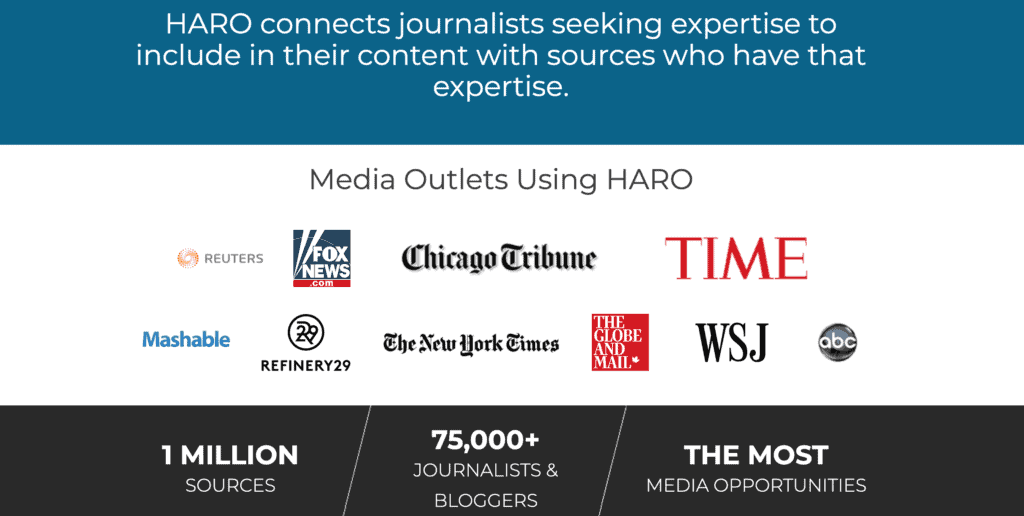
Cision’s Help-A-Reporter-Out (HARO) program helps journalists and publishers locate subject matter experts and linkable content resources.
HARO distributes daily emails from media professionals seeking to interview business leaders or showcase interesting information.
Public relations and SEO experts create HARO pitches to obtain high-authority backlinks for your website and raise its Domain Authority through HARO link building.
80. What is Web 2.0 Link Building?
Web 2.0 link building is a type of link building in which you register on websites, mainly social microblogging services, though not exclusively. Following registration, you are given a subdomain or web area where you may write and post links to your website.
Obtaining links from authors, users, and website profiles on other websites is also included in this type of link building, which is not restricted only to blogs. Examples of Web 2.0 link-building sites that have been misused include Tumblr, Reddit, Alexa, Slideshare, Medium, and Quora.
Here is the complete guide on Web 2.0 Link Building: https://marketinglad.io/how-to-use-web-2-0-for-link-building/
81. How to Learn SEO?
Learning SEO (Search Engine Optimization) can be complex and ongoing, as the rules and best practices for optimizing websites for search engines are constantly evolving.
However, there are some steps you can follow to get started:
- Familiarize yourself with the basics: Start by learning the fundamentals of SEO. This includes understanding how search engines work, what factors influence search rankings, and how to conduct keyword research. There are many online resources that can help you learn the basics, including SEO guides and tutorials.
- Analyze your website: Take a close look at its current SEO performance. Use tools like Google Analytics and Google Search Console to understand how your website performs in search results and identify areas for improvement.
- Develop an SEO strategy: Based on your analysis, create a plan for improving your website’s SEO. This might include conducting keyword research to identify high-volume, relevant keywords to target, optimizing your website’s content and structure to make it more search-friendly, and building high-quality backlinks to your website.
- Implement your strategy: Put your plan into action by updating your website and executing your link-building and content marketing efforts.
- Monitor and track your progress: Use tools like Google Analytics to track the success of your SEO efforts. This will help you understand what is working well and where you might need to improve.
Overall, learning SEO requires a combination of knowledge, analysis, strategy, and implementation.
82. What is SEO Strategy?
An SEO (Search Engine Optimization) strategy is a plan for improving a website’s visibility and ranking in search engine results pages (SERPs). A good SEO strategy takes into account various factors that can impact a website’s search engine rankings, including the target audience, competitors, and the search algorithms used by search engines.
A successful SEO strategy usually includes a combination of on-page optimization (making changes to the website itself) and off-page optimization (building high-quality backlinks from other websites).
Some common elements of an SEO strategy include:
- Keyword research: Identifying relevant and high-volume keywords to target in your website’s content and meta tags.
- On-page optimization: Optimizing the content, structure, and meta tags of your website to make it more search-friendly.
- Link building: Acquiring high-quality backlinks from other websites to improve your website’s credibility and visibility in the search results.
- Content marketing: Creating and promoting valuable and relevant content to attract natural backlinks and increase visibility in the search results.
- Social media promotion: Using social media platforms to promote your content and website to drive traffic and potentially earn backlinks.
- Technical SEO: Optimizing the technical aspects of your website, such as its site speed, mobile-friendliness, and security, to improve its visibility and ranking in the search results.
Overall, a well-crafted SEO strategy can improve your website’s visibility and credibility in search results, driving more traffic and revenue to your business.
83. How to be an SEO Content Writer?
As an SEO content writer, you will be responsible for creating engaging, informative content optimized for search engines. Here are some tips to help you get started:
- Research keywords: Before you start writing, research relevant keywords that people are using to search for information in your industry. Use these keywords in your content to help search engines understand the topic and improve your search rankings.
- Create high-quality content: Focus on writing that is well-crafted, useful, and informative, addressing your target audience’s needs. This will not only help you rank better in search engines but also improve the user experience and encourage people to spend more time on your website.
- Use headings and subheadings: to organize your content and make it easier for readers to scan and navigate. Use appropriate keywords in your headings to help search engines understand the structure and content of your pages.
- Use internal and external links: Use internal links to connect related pages on your website, and use external links to reference reputable sources and provide additional information to your readers. This can help improve the credibility of your content and increase your search rankings.
- Optimize images and videos: Use appropriate file names and alt tags to help search engines understand the content and context of these media. This can also help improve the accessibility of your website for users with disabilities.
- Monitor and analyze your results: Use tools like Google Analytics to track your content’s performance and identify areas for improvement. This will help you understand what is and isn’t working, and allow you to make necessary adjustments to your SEO strategy.
84. What is SEO Consultant?
An SEO consultant, or search engine optimization consultant, is a professional who specializes in helping businesses improve their online presence and visibility through search engine optimization (SEO).
The consultant typically works with a company to review its website and online marketing strategies, and to provide recommendations to improve its ranking on search engine results pages (SERPs). This may involve conducting keyword research, analyzing the company’s website structure and content, and making recommendations for improving the website’s technical SEO.
The consultant may also work with a company to develop and implement an SEO strategy, including creating or updating website content, building backlinks, and analyzing and tracking the company’s website performance.
In general, an SEO consultant helps businesses understand how search engines work and how to optimize their websites and online marketing efforts to improve search engine rankings and drive more targeted traffic.
85. How to Optimize a Website for SEO?
There are many factors to consider when optimizing a website for search engine optimization (SEO). Here are some general tips to help you get started:
- Conduct keyword research: Identify the keywords and phrases that are relevant to your business and that people are using to search for products or services like yours.
- On-page optimization: Include your target keywords in page titles, headings, and page content. Use header tags (H1, H2, etc.) to structure your content and help search engines understand its hierarchy.
- Improve website speed and mobile-friendliness: Make sure your website loads quickly and is easy to use on mobile devices. Both website speed and mobile friendliness are important ranking factors.
- Use internal and external links: Internal links help search engines understand your website’s structure and hierarchy, and external links reference reputable sources and provide additional information to your readers.
- Optimize images and videos: Use appropriate file names and alt tags to help search engines understand the content and context of these media. This can also help improve the accessibility of your website for users with disabilities.
- Create high-quality, original content: Focus on well-written, useful, and informative pieces that address your target audience’s needs. This will not only help you rank better in search engines but also improve the user experience and encourage people to spend more time on your website.
- Monitor and analyze your results: Use tools like Google Analytics to track your website’s performance and identify areas for improvement. This will help you understand what is and isn’t working and make the necessary adjustments to your SEO strategy.
86. What is A/B Testing in SEO?
A/B testing, also known as split testing, is a method of comparing two versions of a website or web page to determine which one performs better.
In the context of search engine optimization (SEO), A/B testing can identify changes that can improve a website’s ranking and visibility in search engine results pages (SERPs).
To conduct an A/B test, you would create two versions of a page or website with a single small difference between them. For example, you might test two different headlines or two different calls to action. You would then send traffic to both versions of the page and compare the results to see which one performs better.
A/B testing is a useful tool for SEO because it allows you to make informed decisions about your website’s changes based on data and evidence rather than relying on assumptions or your gut.
87. What is SEO Score?
An SEO score measures the quality and effectiveness of a website’s search engine optimization (SEO). It is a number or rating that reflects how well the website is optimized for search engines and how likely it is to rank well in search engine results pages (SERPs).
There are many different ways to calculate an SEO score, and different tools may use different methods and metrics. Some common factors that may be taken into account when calculating an SEO score include:
- On-page optimization: This includes factors such as appropriate keyword use, content structure and formatting, and the presence of header and alt tags.
- Off-page factors: These include the number and quality of backlinks pointing to the website, the presence of social media shares and mentions, and the website’s overall authority and credibility.
- Technical factors: These include the website’s loading speed, mobile-friendliness, and the presence of errors or technical issues that may affect its ranking.
- User experience: This includes factors such as the website’s usability and accessibility, the quality and relevance of its content, and the overall user experience when visiting the site.
An SEO score is not a ranking factor used by search engines like Google, but it can be a useful way to measure the effectiveness of your SEO efforts and identify areas for improvement.
88. How to Start The SEO Business?
Starting an SEO business can be a rewarding and lucrative way to help businesses improve their online presence and visibility through search engine optimization (SEO).
Here are some steps you can follow to get started:
- Learn about SEO: To start an SEO business, it’s crucial to understand SEO principles and best practices. This may involve taking online courses or attending workshops and seminars to learn about topics like keyword research, on-page optimization, and link building.
- Build a portfolio: As you learn about SEO, start building a portfolio of your work. This could include case studies or examples of websites that you have optimized. This will help you demonstrate your skills and experience to potential clients.
- Determine your target market: Identify the types of businesses you want to work with and consider their specific needs and challenges. This will help you tailor your services and marketing efforts to them.
- Develop a marketing plan: Create a marketing plan that outlines how you will reach and attract potential clients. This may involve creating a website, building an online presence through social media and other channels, and networking with other businesses and professionals in your industry.
- Set your rates: Determine how much you will charge for your services, taking into account your skills and experience, the cost of doing business, and the going rates for SEO services in your area.
- Get started: Once you have the necessary skills, experience, and marketing plan in place, you can start offering your SEO services to clients and building your business.
89. How to Boost SEO?
There are many ways to boost your website’s search engine optimization (SEO). Here are a few tips:
- Use relevant keywords in your website’s content, page titles, and headings. This helps search engines understand what your website is about and how it is relevant to users.
- Make sure your website is mobile-friendly and loads quickly. This is increasingly important because more and more people are using their phones to search the web.
- Use alt tags to describe images on your website. This helps search engines understand the images’ content and their relevance to users.
- Use internal linking to help search engines understand your website’s structure and how its pages relate to one another.
- Create high-quality, valuable content for your users. This helps establish your website as an authority in your industry, which can improve its search ranking.
- Obtain high-quality backlinks from other websites. This helps search engines understand that your website is trustworthy and relevant.
90. What is SEO Rich Text?
SEO-rich text is text that is optimized for search engines. It is written to improve the visibility of a website or web page in search engine results.
Several elements can make text SEO-rich:
- Relevant keywords: Using relevant keywords in your text helps search engines understand what your content is about and how it is relevant to users.
- Headings and subheadings: Using relevant keywords in headings and subheadings can break up your text, make it easier for users to read, and help search engines understand the structure and content of your page.
- Internal linking: Linking to other pages on your website can help search engines understand your site’s structure and how your pages relate to each other.
- Alt tags: Using alt tags to describe images can help search engines understand the content of the images and how they are relevant to users.
91. How to do Local SEO?
Local SEO is the process of optimizing your online presence to attract more business from local customers.
Here are some tips to help you get started with local SEO:
- Claim your Google My Business listing: If you have a physical business location, make sure you claim it. This will allow you to manage the information that appears in Google Maps and in local search results.
- Optimize your website for local keywords: Incorporate local keywords into your titles, headings, and content to help search engines understand your business’s location and context.
- Get listed in online directories: List in online directories relevant to your business and location, such as Yelp and Yellow Pages.
- Encourage customer reviews: Encourage your customers to leave reviews on your Google My Business listing and other review sites like Yelp. Positive reviews can help to improve your local search rankings and attract new customers.
- Use local structured data, such as Schema.org, to help search engines understand your business’s location and context.
- Use social media to promote your business and interact with local customers.



3 thoughts on “All SEO Questions Answered: Expert Q&A”
excellent blog .
impressive writing skills and well defined .
may I know your youtube Channel ? Do you have any youtube Channel ? please informed .
Thank you for sharing. It is very interesting and helpful.
Thank you 🙂