
On this page14
- What Is Gym SEO?
- Why Gym SEO Matters for Membership Growth
- How Gym SEO Works (Maps + Organic Rankings)
- Gym SEO Keyword Research (What People Actually Search)
- On-Page SEO for Gym Websites
- Local SEO for Gyms (Google Business Profile)
- Location Pages That Rank and Convert
- Gym SEO Content Ideas That Bring Leads
- Link Building for Gyms (Local Authority)
- Technical SEO for Gym Websites (Speed, Mobile, UX)
- Gym SEO Mistakes That Kill Rankings
- How to Measure Gym SEO Results (Leads, Calls, Tours)
- Final Thoughts
- Frequently Asked Questions
Gym SEO helps your fitness business rank for searches like “gym near me,” “personal training,” and “fitness classes” in your area. When done properly, it brings consistent leads, more tour bookings and more membership sign-ups without relying only on paid ads.
Gym SEO is one of the most effective ways to grow membership leads from Google, especially if you serve a local area. People searching for gyms usually have a strong intent.
They are ready to visit, call, or book a trial. The right SEO strategy helps your gym appear in Maps and organic results, beat nearby competitors and turn search traffic into real memberships.
What Is Gym SEO?
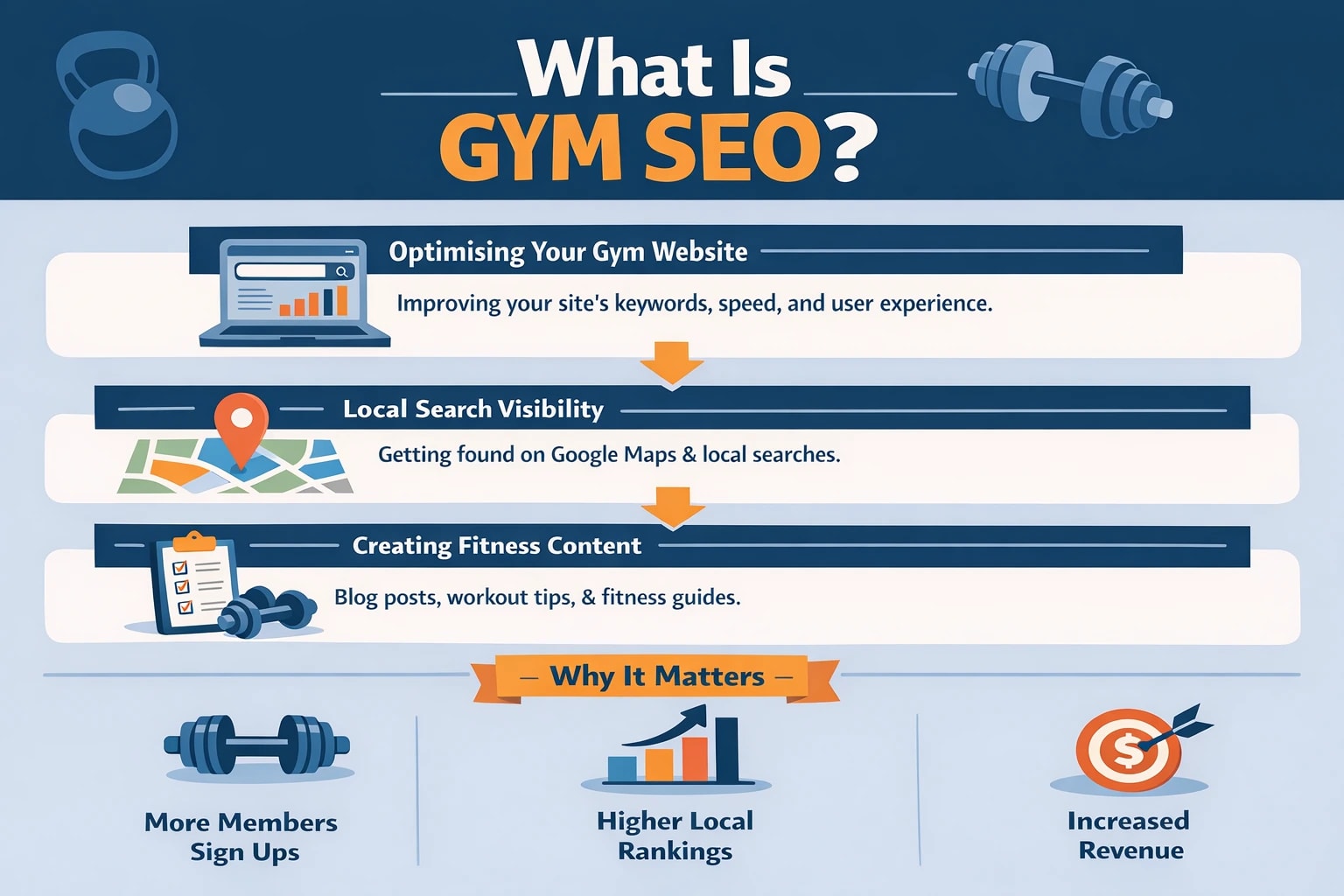
Gym SEO is the process of helping your gym show up when people in your area search on Google for things like “gym near me,” “personal trainer,” “HIIT classes,” or “strength training.” It’s how gyms consistently generate leads from local search without relying only on ads.
A strong gym SEO strategy improves both parts of Google: the Google Maps results (where most calls come from) and the regular organic listings (where people compare options, pricing and reviews).
It also involves optimising your gym website so it loads fast on mobile, has clear service pages and makes it easy for visitors to book a tour, claim a free trial, or call your front desk.
Gym SEO is not about chasing random traffic. It’s about ranking for high-intent searches that bring in paying members.
Check out our latest blog on Are Naked Links Good for SEO? Find Out
Why Gym SEO Matters for Membership Growth
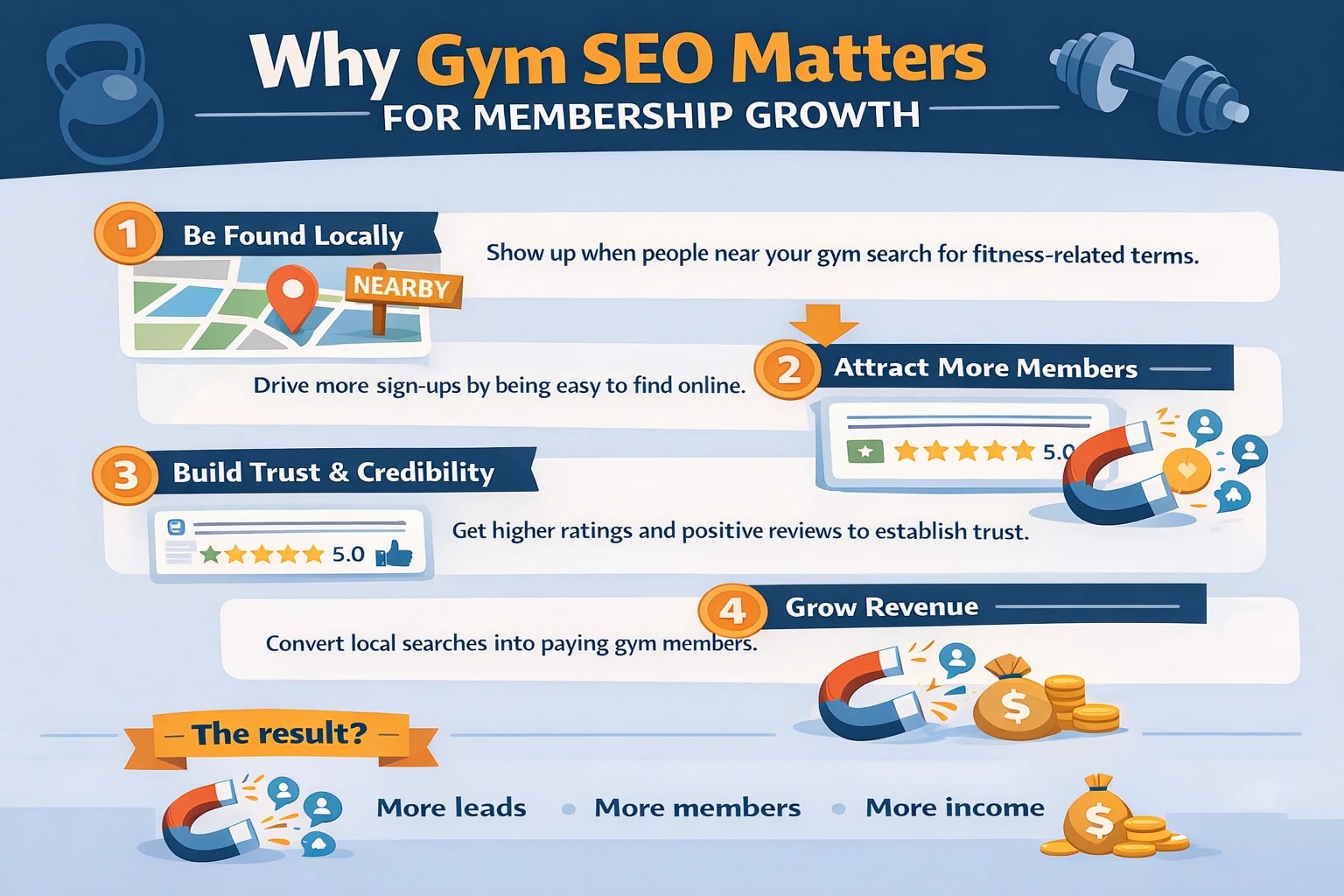
Most gym leads are local. Even big franchises rely heavily on nearby searches because people usually choose a gym based on distance, convenience and reviews.
When someone searches “gym near me,” Google typically shows the local map pack first, before regular website results. That map pack is where most calls, direction requests and tour bookings happen, especially on mobile.
Gym SEO matters because it:
- Puts your gym in front of people who are actively looking to join right now
- Reduces your cost per lead over time compared to paid ads
- Builds visibility that stays even when you stop spending on campaigns
- Improves trust through reviews, photos and strong local signals
- Helps smaller gyms compete with chains by ranking for specific services and intent-based searches
If your competitors are ranking and you are not, Google is sending them your leads every day.
Check out our latest blog on 75+ Home Improvement Guest Posting Sites (2026 Updated List)
How Gym SEO Works (Maps + Organic Rankings)
Gym SEO has two main parts and both matter if you want consistent leads. Most gyms win when they rank in Google Maps for “near me” searches and also show up in organic results when people compare options, pricing and reviews.
1) Local SEO (Google Maps)
This is what helps you appear in the 3-pack map results. It is where most gyms get the fastest calls, direction requests and tour bookings, especially on mobile.
Local SEO depends heavily on:
- Google Business Profile optimisation: Your profile needs correct categories, services and strong descriptions.
- Reviews and review velocity: Google rewards businesses that get new reviews consistently, not once a year.
- Location relevance: Your business details must match what you offer and where you serve.
- Categories and services: The wrong category can stop you from ranking for key searches.
- Photos and engagement: Real photos increase clicks, calls and trust.
- Consistent NAP citations: Your name, address and phone must match everywhere online.
2) Organic SEO (Website Rankings)
This is what helps your website rank under the map pack for searches like:
- “best gym in [city]”
- “personal training [city]”
- “HIIT classes near me”
- “women’s gym [city]”
- “strength training gym [city]”
Organic SEO is where people research. They check pricing, schedules, trainers and what makes your gym different. A strong gym SEO strategy improves both Maps and organic rankings, because they support each other.
Gym SEO Keyword Research (What People Actually Search)
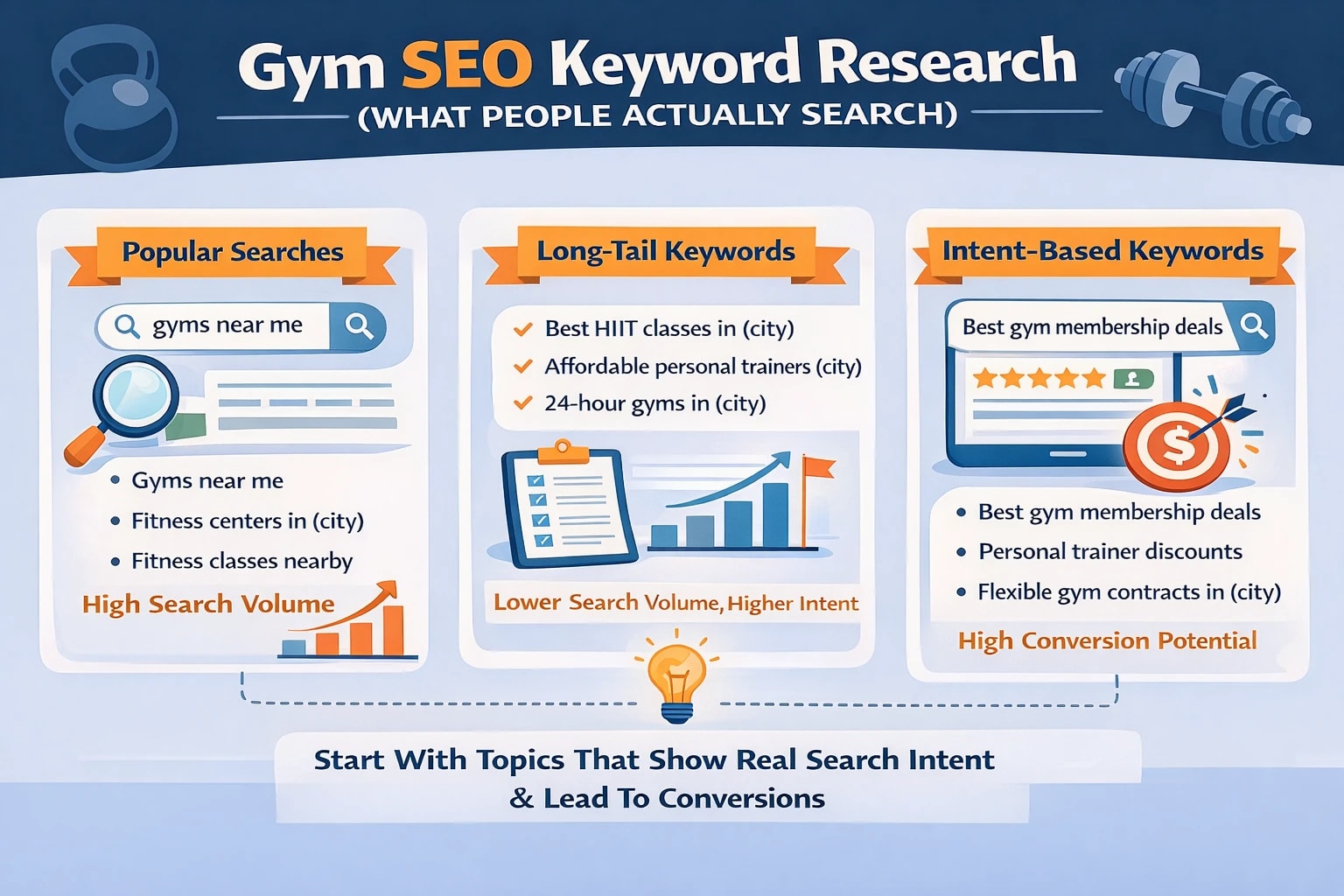
Keyword research for gyms is different from eCommerce or SaaS. Most searches are local, urgent and tied to a specific goal. People are not searching for “fitness.” They are searching for what they want next, such as a class, a trainer, a trial, or a gym close to home.
Read More On Offshore SEO Services: Scale Rankings, Traffic & Leads Faster
Here are the keyword types that convert best:
High-intent “near me” keywords
These bring fast leads because the user is ready to choose a gym.
- gym near me
- best gym near me
- 24-hour gym near me
- gym with sauna near me
Service keywords
These are strong because they match what your gym actually sells.
- personal training [city]
- strength training gym [city]
- HIIT classes [city]
- boxing gym [city]
- CrossFit gym [city]
- Pilates studio [city]
- yoga classes [city]
Membership and pricing keywords
These bring serious buyers. They are comparing and are close to joining.
- gym membership cost [city]
- gym prices [city]
- monthly gym membership [city]
- gym free trial [city]
Audience keywords
These help you attract the right type of member, not everyone.
- women’s gym [city]
- beginner gym [city]
- gym for weight loss [city]
- gym for seniors [city]
A strong gym SEO plan does not target everything. It targets the searches that match your offers, your positioning and your revenue goals.
On-Page SEO for Gym Websites
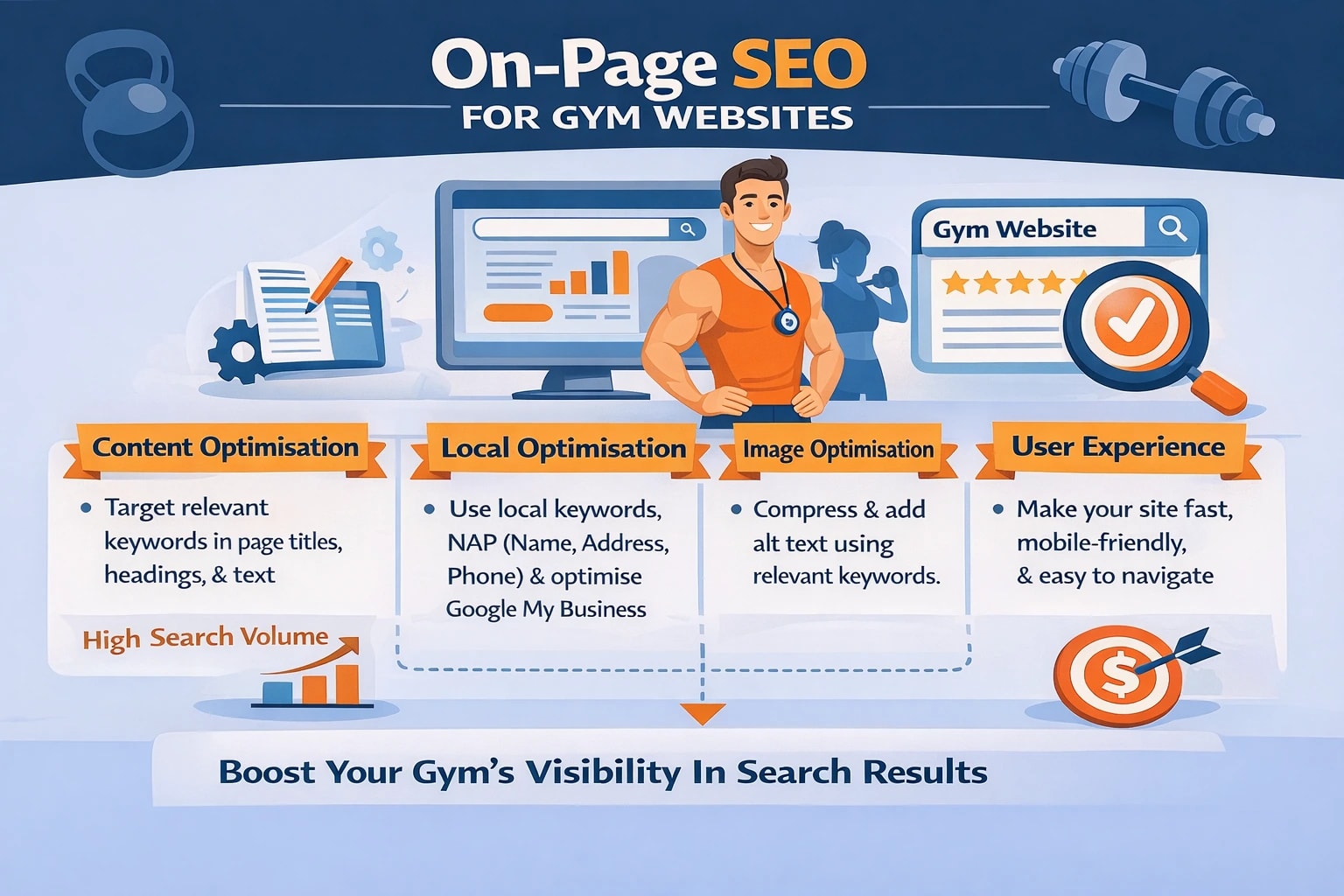
On-page SEO is where many gyms lose rankings. Most gym websites are built to look good, but they are not built to rank. They often have one generic page, vague service sections and missing details that real customers want.
Here’s what matters most:
Page structure that Google can understand
Every important service should have its own page. Google needs clear relevancevand users need clear answers.
Your site should have pages like:
- Personal Training
- Group Fitness Classes
- Strength Training
- Membership Options
- Pricing
- Class Schedule
- Contact
- About
This helps Google rank each page for its specific topic, instead of forcing one homepage to do everything.
Clear headings and intent alignment
Your pages should answer key questions fast:
- What the service is
- Who it’s for
- What results does it supports
- What makes your gym different
- How to join or book a tour
If visitors cannot understand your offer quickly, they leave and rankings suffer over time.
Strong internal linking
Internal linking helps both rankings and user flow.
Examples:
- Personal training page links to pricing and trainer bios
- Class page links to schedule and membership
- Location page links to contact and directions
This improves site structure, strengthens topical relevancevand helps your most important pages rank faster.
Local SEO for Gyms (Google Business Profile)
If you want gym SEO to work, your Google Business Profile has to be strong. For most gyms, the map pack is where the fastest leads come from. People searching “gym near me” often call directly from Google without visiting a website.
A well-optimised profile helps you rank higher, but it also increases conversions. Even if you rank, people still choose based on photos, reviewsvand trust signals.
Here’s what actually moves the needle:
Choose the right primary category
Your primary category impacts what you rank for. Most gyms should use “Gym” as the primary category.
If you are a studio, choose the closest match, such as:
- Personal Trainer
- Pilates Studio
- Yoga Studio
- Boxing Gym
The wrong category can stop you from ranking for your best keywords.
Add services and descriptions properly.
Services help Google understand what you offer. They also help you appear for searches tied to specific needs.
List real services, not vague labels. Examples:
- Strength training
- HIIT classes
- Small group training
- Weight loss coaching
- Personal training
Your description should explain what makes you different, not just repeat keywords.
Upload real photos consistently.
Photos build trust. They also increase engagement, which helps your profile perform better.
Use:
- Gym floor
- Equipment
- Class sessions
- Trainers
- Reception and entrance
- Parking and building signage
A gym with real photos almost always converts better than a gym using stock images.
Reviews are not optional.
Reviews impact both rankings and sign-ups. They also reduce hesitation when someone is comparing gyms.
Focus on:
- Consistent new reviews each month
- Replies to every review
- Keywords naturally mentioned by customers (personal training, classes, clean, friendly staff)
A gym with 30 strong, recent reviews can outperform a gym with 200 older reviews.
Location Pages That Rank and Convert
Many gyms try to rank with one homepage and a contact page. That usually fails in competitive cities. Google wants clear relevance and users want clear information.
Location pages work best when they are real and useful, not just copies with a different city name.
A strong gym SEO structure uses location pages when needed, especially if you:
- Have multiple gym locations
- Serve multiple areas
- Offer different services by location.
- Want to rank for “gym in [area]” searches
What a good gym location page includes
A strong location page should answer everything a visitor wants quickly:
- Address and directions
- Parking details
- Membership options
- Class schedule (or link)
- What makes this location different
- Local photos
- Trainer highlights
- Clear CTA (book a tour, claim free trial)
A location page should also include trust elements, like reviews, photos and real details.
What not to do
Avoid thin pages that only swap the city name. Google can detect this fast and it usually won’t rank.
If you only have one gym location, do not create 20 fake location pages. It weakens trust and can damage visibility.
Gym SEO Content Ideas That Bring Leads
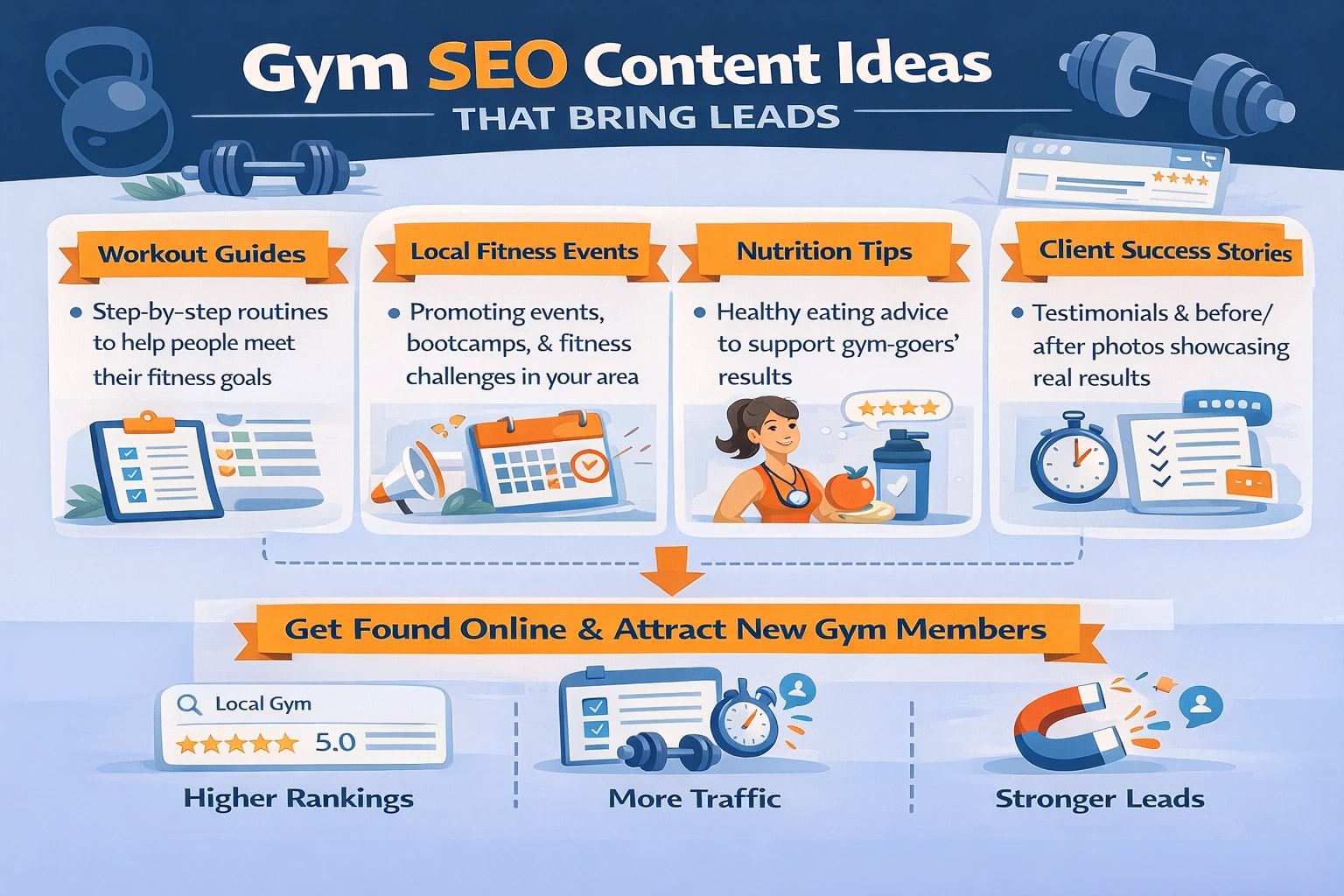
Most gyms either do no content or they post generic fitness blogs that never rank. Content only works when it targets searches that lead to memberships, tours and calls.
Gym SEO content should match real intent. That means writing about what people search for before they join a gym.
Here are content types that work:
Comparison content
These convert well because the user is close to joining and comparing options:
- “Best gyms in [city]”
- “CrossFit vs strength training for fat loss”
- “Personal training vs group classes”
These keywords often bring people who are ready to choose.
Pricing and membership intent
These searches bring serious buyers. People looking at pricing are not just browsing.
- “How much does a gym membership cost in [city]?”
- “Is personal training worth it?”
- “Gym free trial near me”
Pricing pages also rank well when written clearly, not hidden.
Beginner and anxiety searches
These have high volume and strong conversion potential because beginners often need reassurance.
- “What to do on your first day at the gym.”
- “Beginner workout plan for weight loss”
- “How to start lifting weights safely.y”
If your gym is beginner-friendly, these keywords can drive steady leads.
Local service pages that double as content
Instead of writing random blogs, build pages like:
- “Personal training for weight loss”
- “Strength training for beginners”
- “HIIT classes for busy professionals”
These pages can rank and convert at the same time because they are tied directly to your services.
Link Building for Gyms (Local Authority)
Links still matter in gym SEO, especially in competitive US cities. But gyms do not need hundreds of links. They need relevant links that build trust.
Google looks at authority as a signal that your gym is established and credible.
Link sources that actually help gyms
The best links for gyms are usually local and niche-relevant:
- Local business directories (high-quality only)
- Chamber of commerce listings
- Local sponsorship pages (sports teams, events)
- Local news mentions
- Fitness bloggers in your city
- Partner businesses (physios, chiropractors, sports stores)
Local relevance often matters more than raw “authority.”
Avoid low-quality SEO links.
If someone offers “1,000 backlinks,” avoid it. Those links usually come from spam networks and can cause ranking drops later.
A few strong links beat dozens of weak ones.
Read More On Where to Buy Sport Backlinks: Safe & Effective Guide (2026)
Technical SEO for Gym Websites (Speed, Mobile, UX)
Most gym website visitors are on mobile. If your site is slow, people leave before they book a tour. This affects both conversions and rankings.
Technical SEO improvements that matter most:
Mobile speed
Gym websites often use heavy sliders, massive images and too many scripts.
Fixes include:
- Compressing images
- Removing unnecessary animations
- Reducing third-party scripts
- Improving load time on mobile
Speed matters because gym leads are impatient. They want quick answers.
Clear navigation
Your site should make it easy to find:
- Pricing
- Location
- Schedule
- Tour booking
- Contact
If visitors cannot find pricing or a schedule, they bounce and go to the next gym.
Fix indexation and crawl issues
Common gym website problems include:
- Duplicate pages created by page builders
- Broken internal links
- Incorrect noindex tags
- Slow load times are preventing crawlers from rendering pages
Technical fixes improve stability and stop ranking drops caused by site issues.
Gym SEO Mistakes That Kill Rankings
Here are the biggest mistakes gyms make:
1) No dedicated pages for key services
A single homepage cannot rank for everything. Google needs clear topical pages.
2) Weak Google Business Profile
Missing services, outdated photos, wrong categories and inconsistent details reduce map visibility.
3) No clear CTA
If your site does not guide visitors toward booking a tour or claiming a trial, you lose leads.
4) Generic content
Fitness tips with no local intent and no clear service relevance rarely rank or convert.
5) Ignoring reviews
Reviews impact both rankings and sign-ups. Many gyms lose members because their competitors look more trustworthy.
How to Measure Gym SEO Results (Leads, Calls, Tours)
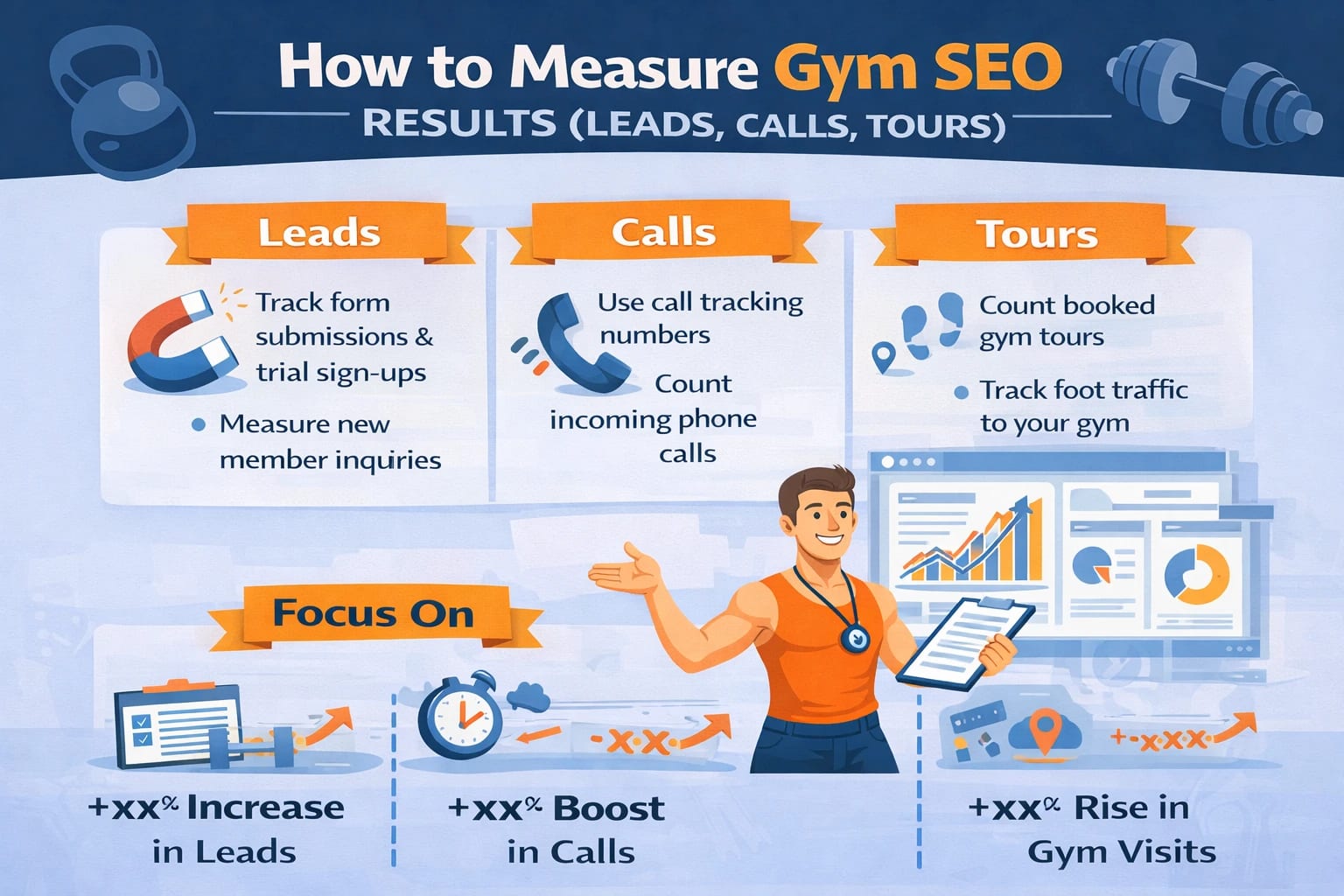
Gym SEO is not measured only by rankings. Rankings are a signal, not the goal.
Track the actions that lead to memberships:
- Google Business Profile calls
- Direction requests
- Website clicks from Maps.
- Tour bookings
- Form submissions
- Membership sign-ups
- Conversion rate by page
- Keyword groups (not just one keyword)
The goal is simple: consistent leads and membership growth.
If rankings improve but leads do not, something is missing. Usually, it’s pricing clarity, weak CTAs, or low trust signals.
You can also explore how modern AI systems cite and reference content in our guide on AI Citations.
Before we wrap up, it’s worth understanding how apple seo shows the shift toward authority-based ranking instead of traditional keyword-heavy optimization.
Final Thoughts
Gym SEO works best when your website and Google Business Profile are built around how real people search, not how gym owners describe their services. Most potential members are looking for something specific: a gym near home, a class schedule that fits their routine, pricing they can understand and reviews that make them feel confident.
The goal is not just visibility. It’s consistent calls, tour bookings, free trial requests and membership sign-ups from local users who are already ready to join. When your gym ranks in Google Maps and the first page results, you stop relying on “hope marketing” and start generating steady demand every week.
If you want long-term growth without depending only on ads, gym SEO is one of the smartest investments you can make because it keeps working even when your ad budget pauses.
Frequently Asked Questions
Gym SEO usually costs anywhere from a few hundred to a few thousand dollars per month, depending on your city, competition and goals. A small local gym will need less than a multi-location brand in a competitive market.
Most gyms start seeing noticeable progress in 3 to 6 months. Stronger results build over time as your website gains authority, content improves and your Google Business Profile earns more reviews and engagement.
To rank higher, gyms need a fully optimised Google Business Profile, consistent business details across directories, regular reviews, strong local relevance and location signals on the website. Photos and review replies also help.
Gyms should target high-intent local keywords like “gym near me,” “personal training,” “HIIT classes,” and “24-hour gym,” along with city-based terms. The best keywords match what you offer and what people are ready to book.
SEO is slower at the start, but it becomes more cost-effective long-term. Ads stop the moment you stop paying. Gym SEO keeps working and builds trust, which often leads to better-quality leads over time.