If you have searched for your business on Google and come up empty, you are not alone. Thousands of business owners type in their own company name or service and find that nothing shows up, whether in organic results, local map packs, or anywhere else on the first page. The good news is that this problem almost always has a clear cause, and most causes are fixable once you know where to look.
This guide walks through every major reason why your business may not be showing in Google, starting with the most common culprits and working through the deeper technical and authority-based issues that many business owners overlook. By the end, you will have a clear picture of what is holding your visibility back and what steps to take to change that.
Your Google Business Profile May Be the First Problem to Check
For businesses that rely on local customers, the Google Business Profile (formerly Google My Business) is often the fastest path to appearing in search results. It powers the map pack that shows up near the top of local search results, and it also drives Knowledge Panel appearances when someone searches directly for your brand name. If your profile has issues, your local visibility can disappear entirely.
Our guide to Google Website Grader: 10 Free Tools to Check Your Website can help you choose the right tool for evaluating your site’s performance, SEO, and technical health.
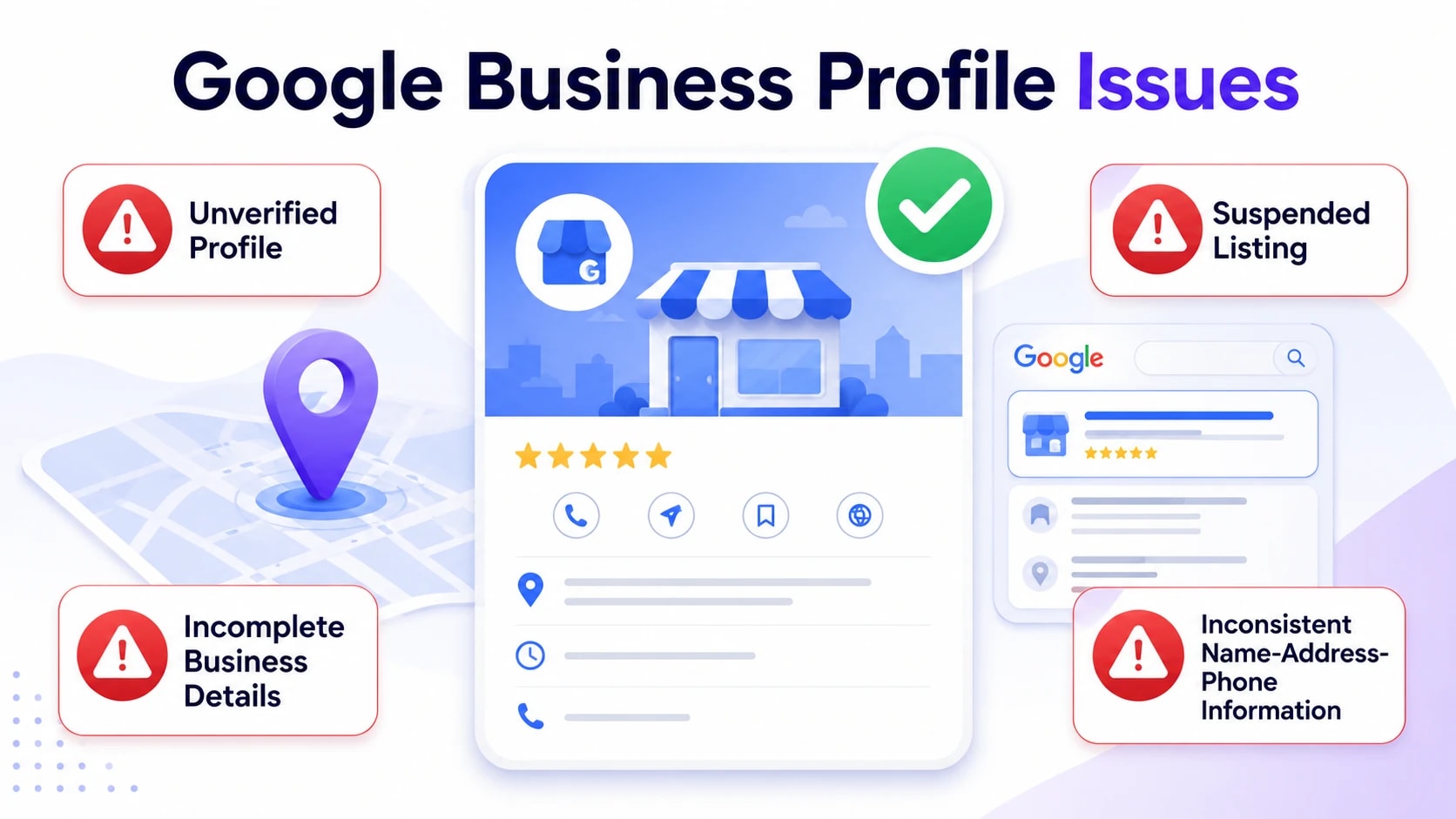
The most common Google Business Profile problems include:
Your profile is not verified. Google requires businesses to verify ownership before the listing goes live in search. If you claimed your profile but skipped the verification step, your business simply will not appear. Log into your Google Business account and check whether a verification prompt is waiting for you.
Your profile is suspended. Google suspends profiles that violate its guidelines. This can happen when your business category is mismatched, your address appears to be a virtual office or PO box, or your listing has suspicious activity flagged by Google’s systems. A suspended profile will not show in search at all.
Your profile is incomplete.Google favors listings that have complete, accurate information. Missing hours, no business description, no photos, and an uncategorized profile all reduce your chances of ranking in the local pack.
Your NAP data is inconsistent. NAP stands for Name, Address, and Phone number. If these details differ across your website, your Google Business Profile, and other directories, Google loses confidence in your information and may rank your listing lower or suppress it.
Start by auditing your Google Business Profile directly. Make sure it is verified, matches the information on your website exactly, uses the most accurate primary category available, and includes complete details. This single fix resolves the visibility problem for many local businesses.
Your Website Is Technically Blocking Google From Finding You
Even if your Google Business Profile is in perfect shape, your website itself may have technical issues that prevent Google from crawling or indexing your pages. When Google cannot access your content, your site will not appear in search results, no matter how good your content is or how many links point to it.
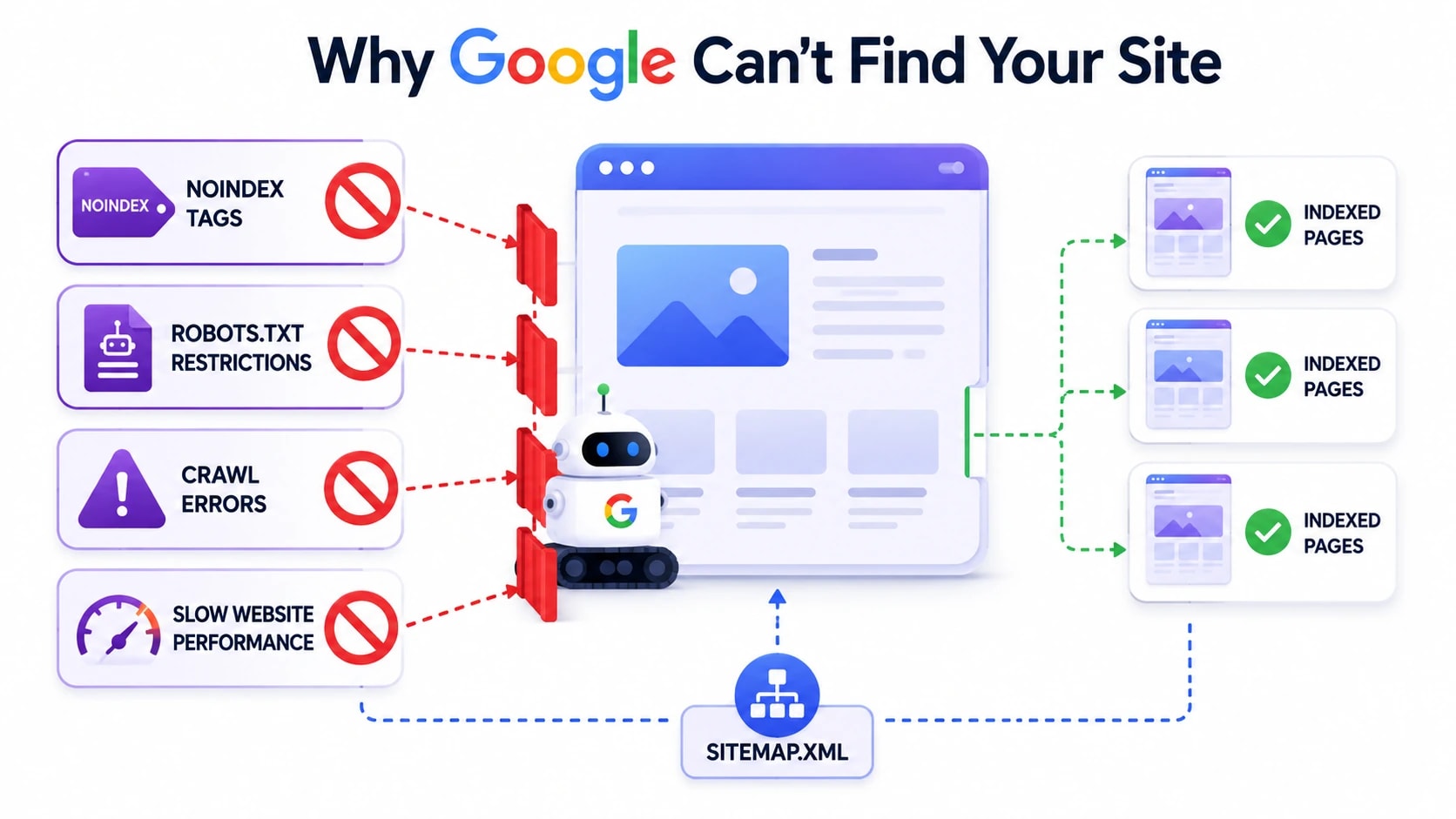
Here are the most frequent technical barriers that block Google visibility:
Noindex tags are active on key pages. A noindex meta tag or HTTP header tells Google explicitly not to include a page in its index. This setting is often turned on during website development and forgotten when the site goes live. Check your page source code or use a tool like Google Search Console to identify pages marked noindex that should be indexed.
Your robots.txt file is blocking Googlebot. The robots.txt file controls which parts of your site search engine crawlers can access. A misconfigured robots.txt can accidentally block Googlebot from crawling your entire website. You can view your robots.txt by visiting yourdomain.com/robots.txt and checking for disallow rules that cover important sections of your site.
Your site has not been submitted to Google Search Console. Google will eventually discover most websites on its own, but submitting your sitemap through Search Console speeds up the process significantly. If your site is new and has not been submitted, it may not have been indexed yet.
Crawl errors are preventing access. Broken internal links, server errors, and redirect loops can all prevent Google from properly crawling your pages. Search Console’s Coverage report highlights these errors so you can fix them systematically.
Your site loads too slowly or has poor Core Web Vitals scores. While slow speed does not block crawling outright, it can reduce the frequency and depth with which Google crawls your site, which is particularly damaging for larger websites with many pages.
Run a technical audit using Google Search Console as your starting point. It is free, pulls data directly from Google, and will surface the most urgent indexing and crawling issues affecting your site right now. Fixing these problems creates the foundation that every other SEO effort depends on.
The Role of Backlinks in Whether Google Shows Your Business
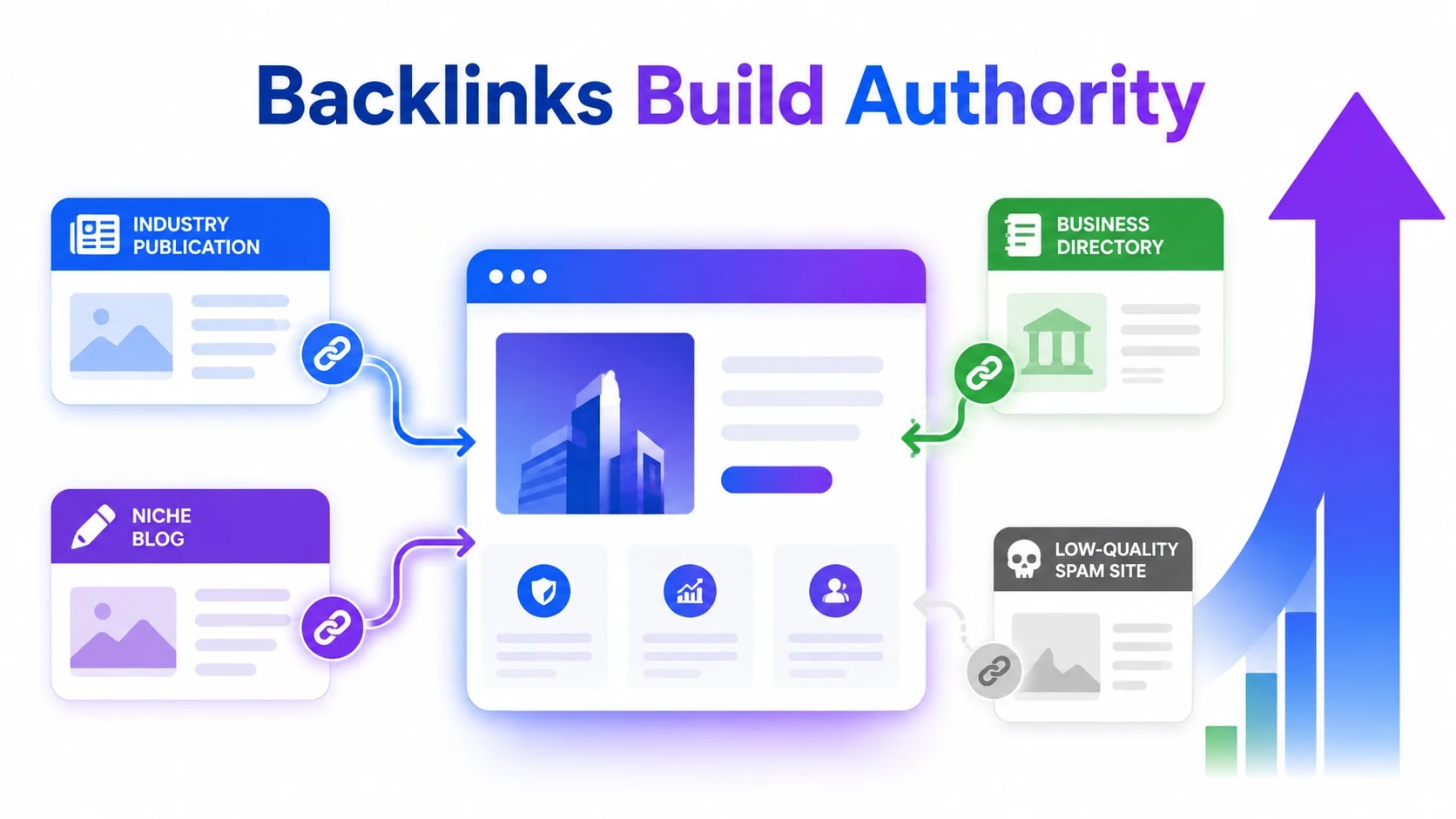
One of the most overlooked reasons a business fails to appear in Google search results is a weak or nonexistent backlink profile. Backlinks are links from other websites pointing to yours, and Google treats them as votes of confidence. When authoritative sites link to your business, Google interprets that as a signal that your site is credible and worth showing to users. Without those signals, even a technically clean website can struggle to rank, especially in competitive local or industry-specific markets.
The quality of your backlinks matters far more than the quantity. A single link from a well-respected industry publication carries significantly more weight than dozens of links from low-quality directories or spammy sites. If your competitors are earning links from local news outlets, trade associations, or reputable blogs in your niche, and your site has very few or none, Google will consistently rank their pages above yours. This is a structural disadvantage that no amount of on-page optimization alone can fully overcome.
Building a strong backlink profile takes deliberate effort. Some of the most effective approaches include:
Getting listed in industry-specific directories and local business associations
Earning coverage from local journalists or niche bloggers through digital PR
Creating genuinely useful content that other sites want to reference and link to
Partnering with complementary businesses for co-authored content or mentions
Submitting guest posts to relevant publications in your field
Backlink Type
Authority Level
Impact on Rankings
Industry publication or news site
High
Strong positive impact
Relevant niche blog
Medium
Moderate positive impact
General business directory
Low to Medium
Minor positive impact
Spammy or unrelated site
Very Low
Neutral or negative impact
Your Content May Not Match What Google’s Users Actually Search For
Even if your site is indexed and technically sound, it will not appear in search results if your content does not align with what people are actually typing into Google. This is a keyword and intent mismatch, and it is more common than most business owners realize. You might describe your services using internal jargon or industry terminology that your potential customers never use. Google ranks pages based on how well they match real search queries, so if your language does not reflect how your audience thinks and searches, your pages will simply not surface.
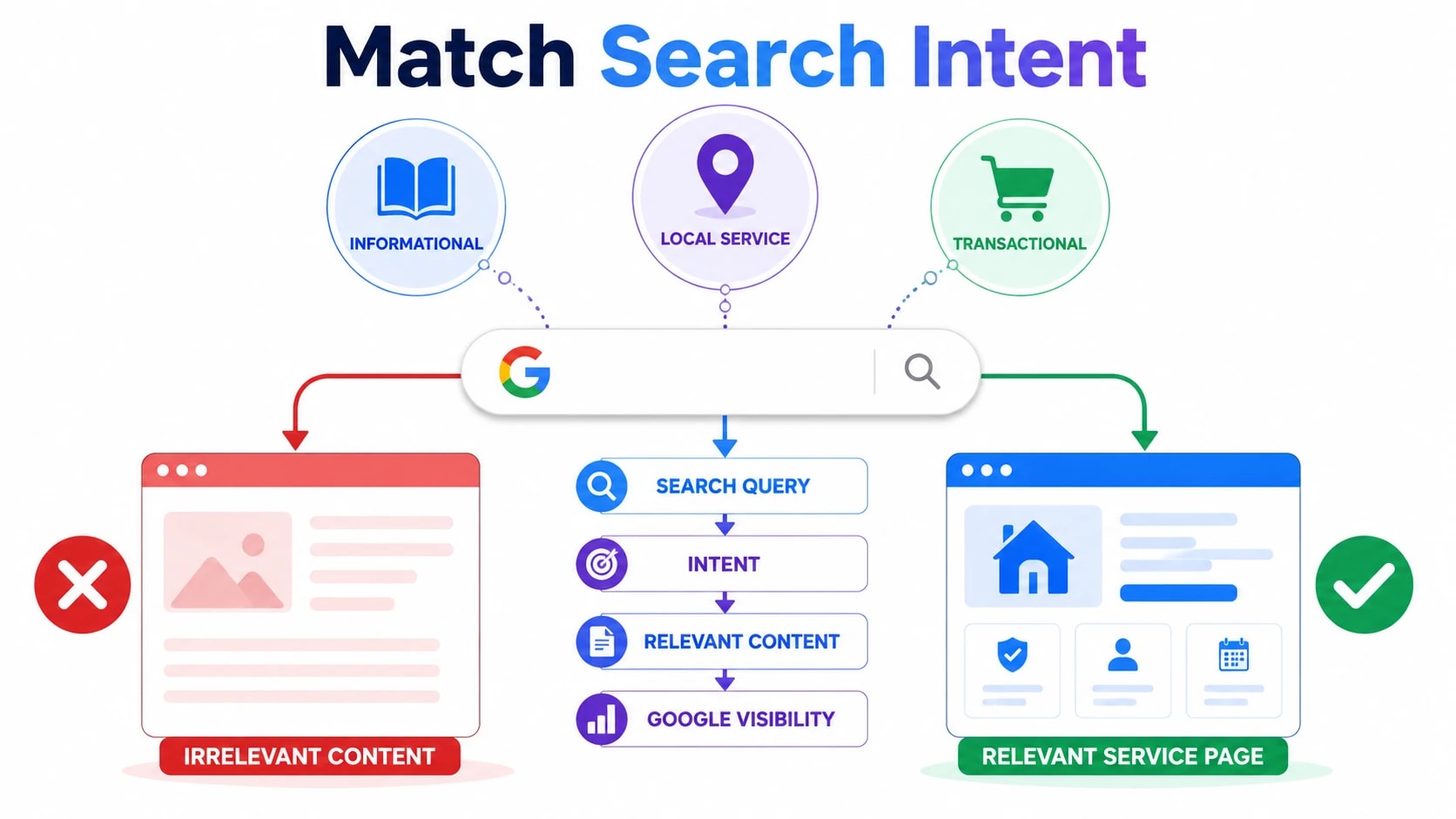
Search intent is the other critical factor. Google tries to understand not just what someone typed, but what they were trying to accomplish. If someone searches “best accountant near me,” they want a local service provider they can contact, not a blog post about accounting principles. If your page does not match the intent behind the query, Google will choose a page that does. That means every page on your site should be built around a specific query type, whether informational, navigational, or transactional, and the content should deliver exactly what that searcher expects to find.
To close the gap between your content and what users search for, consider auditing your pages with these questions in mind:
Are you using the exact phrases your customers type into Google, not just your own preferred terminology?
Does each page answer a specific question or fulfill a specific need?
Is there enough depth on each page to demonstrate expertise compared to competing results?
Are your location pages specific enough to rank for local searches, or are they generic placeholders?
Google Penalties and Manual Actions That Remove Your Business From Search
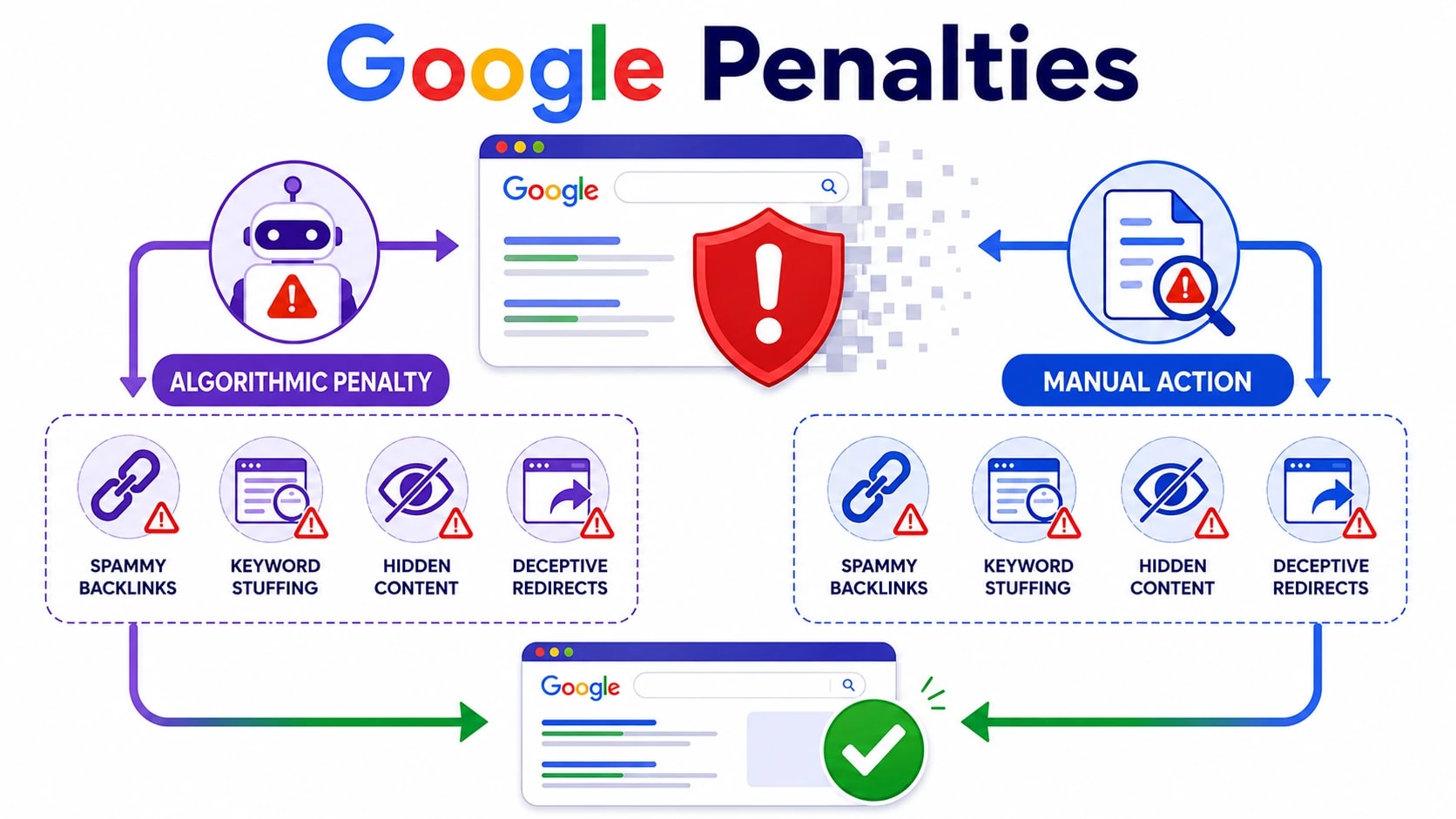
Sometimes the reason a business is not showing in Google is not a technical oversight or a content gap. It is a direct consequence of a penalty. Google applies two types of penalties: algorithmic and manual. Algorithmic penalties happen automatically when updates like Google’s Penguin or Panda systems detect patterns associated with manipulative tactics, such as keyword stuffing, unnatural links, or thin content. These do not come with a notification. Your rankings simply drop, often overnight, and recovering requires identifying and fixing the underlying issues.
Manual actions are more serious. They occur when a member of Google’s spam team reviews your site and determines it violates their guidelines. You will receive a notification in Google Search Console if a manual action has been applied to your site. Common triggers include purchased link schemes, cloaking, hidden text, and deceptive redirects. A manual action can result in specific pages, or in severe cases your entire site, being removed from search results entirely until the issue is resolved and a reconsideration request is submitted and approved.
Penalty Type
How It Happens
Where to Check
How to Fix
Algorithmic penalty
Automatic detection by Google’s systems
Traffic drops in Google Analytics
Audit and fix the triggering issue, then wait for the next algorithm update
Manual action
Human review by Google’s spam team
Google Search Console notifications
Fix the violation and submit a reconsideration request
If you suspect a penalty, the first step is to open Google Search Console and navigate to the Security and Manual Actions section. From there, you can see whether any manual actions are active on your site. For algorithmic issues, cross-reference your traffic timeline against known Google algorithm update dates. There are publicly maintained lists of major updates that can help you pinpoint when your visibility dropped and which system was responsible. Addressing these issues promptly is critical because allowing them to persist compounds the damage over time.
Your Business Is Too New for Google to Trust It Yet
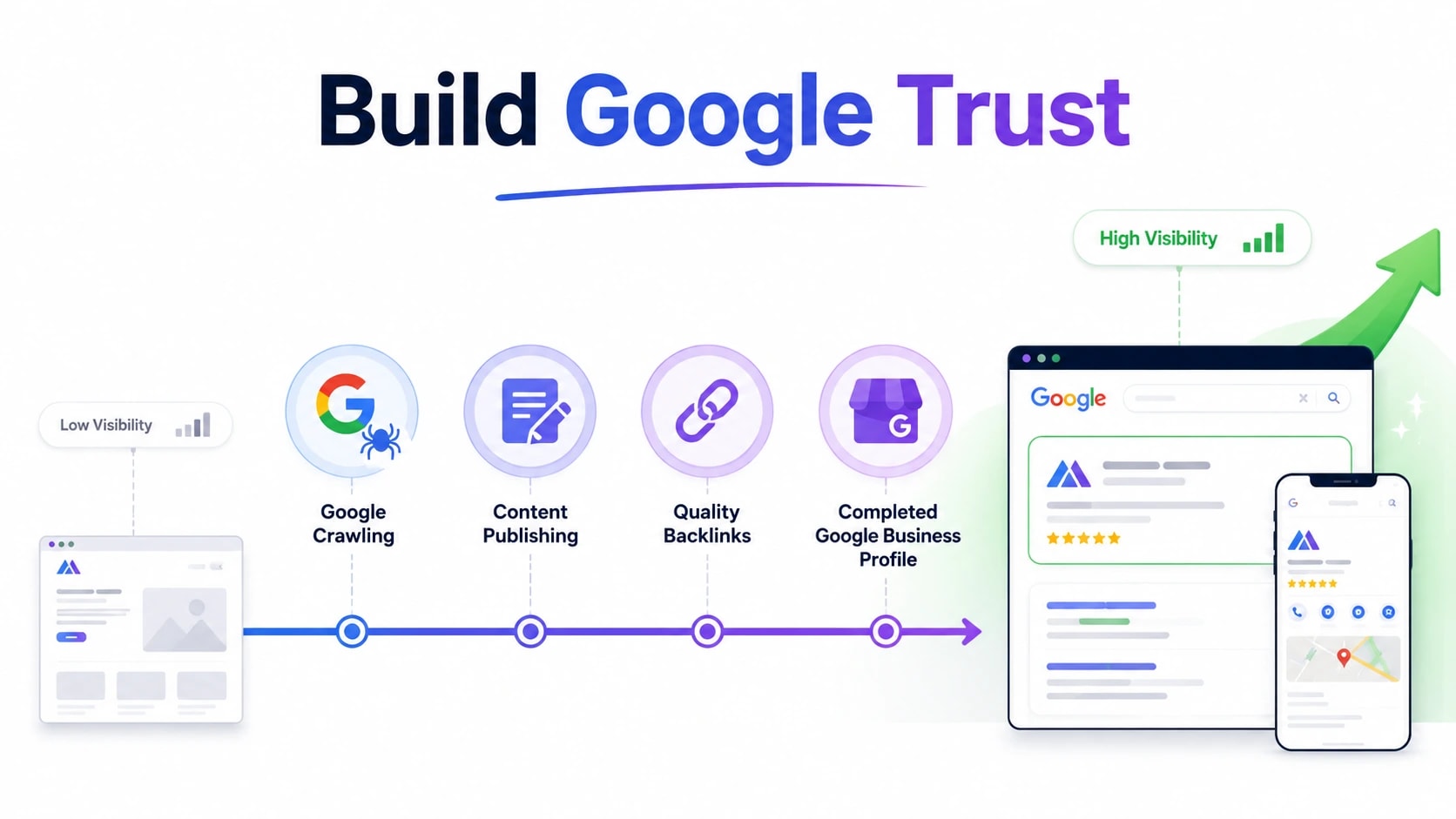
One of the most overlooked reasons a business does not show up in Google is simply age. Google takes time to crawl, index, and assign authority to new websites and business profiles. If your site launched recently, you may be doing everything right and still not ranking, because Google has not yet decided whether your business deserves a visible spot in search results.
New websites typically go through what many SEOs call a “sandbox” period, where rankings stay suppressed while Google gathers enough signals to evaluate trustworthiness. This can last anywhere from a few weeks to several months depending on your niche, competition, and how actively you are building authority.
Here is what affects how quickly Google starts showing a new business:
Crawl frequency: Google needs to discover and revisit your pages regularly before it ranks them consistently.
Backlink profile: Sites with even a handful of quality backlinks from trusted sources tend to get indexed and ranked faster than those with none.
Content volume: Publishing multiple relevant pages gives Google more signals about what your business does and who it serves.
Google Search Console activity: Submitting your sitemap and requesting indexing through Search Console speeds up the initial discovery process.
Google Business Profile completeness: A fully filled-out profile with photos, categories, and a verified address helps Google surface your local listing sooner.
Patience is necessary, but it should be paired with action. Use the early months to build content, earn backlinks, and collectreviews so that when Google does begin ranking your business, it has every reason to place you prominently.
Local SEO Factors That Determine Whether Google Shows Your Business Nearby
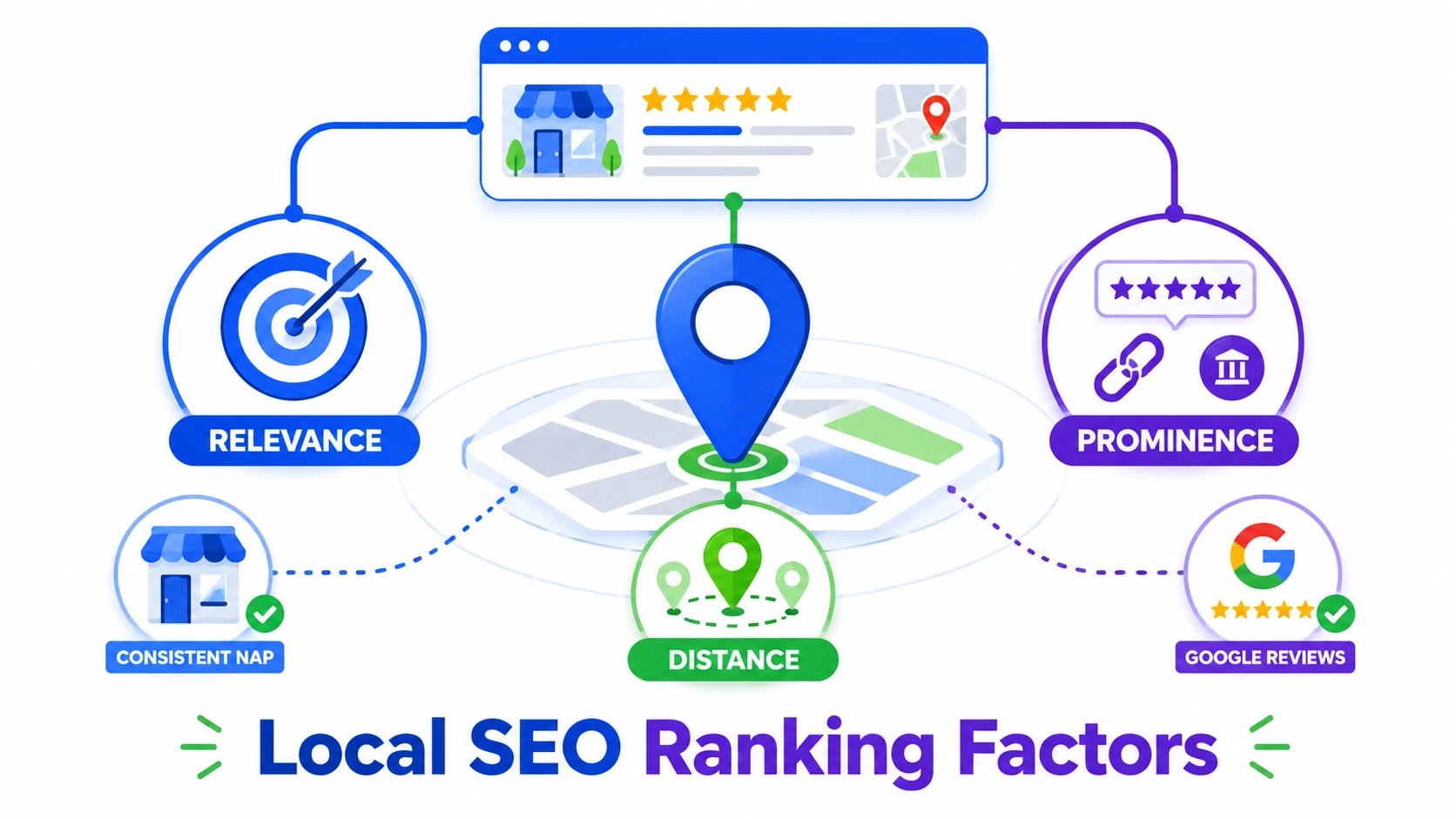
If your goal is to appear in local search results or the Google Maps pack, the rules are slightly different from standard organic SEO. Google uses a combination of relevance, distance, and prominence to decide which local businesses to display. Missing any one of these three factors can keep your business invisible to nearby searchers even when your website is otherwise healthy.
Local SEO is not just about having a Google Business Profile. It involves consistent signals across your entire online presence that confirm your location, your services, and your credibility within a specific geographic area.
Local SEO Factor
What Google Looks At
Impact on Visibility
Relevance
How well your profile and website match the search query
High
Distance
Physical proximity of your business to the searcher
High
Prominence
Reviews, backlinks, citations, and overall online authority
High
NAP Consistency
Name, address, and phone number matching across all directories
Medium to High
Review Volume and Rating
Number and quality of Google reviews
Medium to High
To strengthen your local presence, focus on these specific actions:
Audit every online directory listing to confirm your name, address, and phone number are identical across all platforms.
Actively request reviews from satisfied customers and respond to every review, positive or negative.
Add location-specific pages to your website if you serve multiple areas.
Build local backlinks from community websites, local news outlets, and regional directories.
Use your primary service category and secondary categories accurately in your Google Business Profile.
How Competition and Search Intent Affect Your Google Visibility
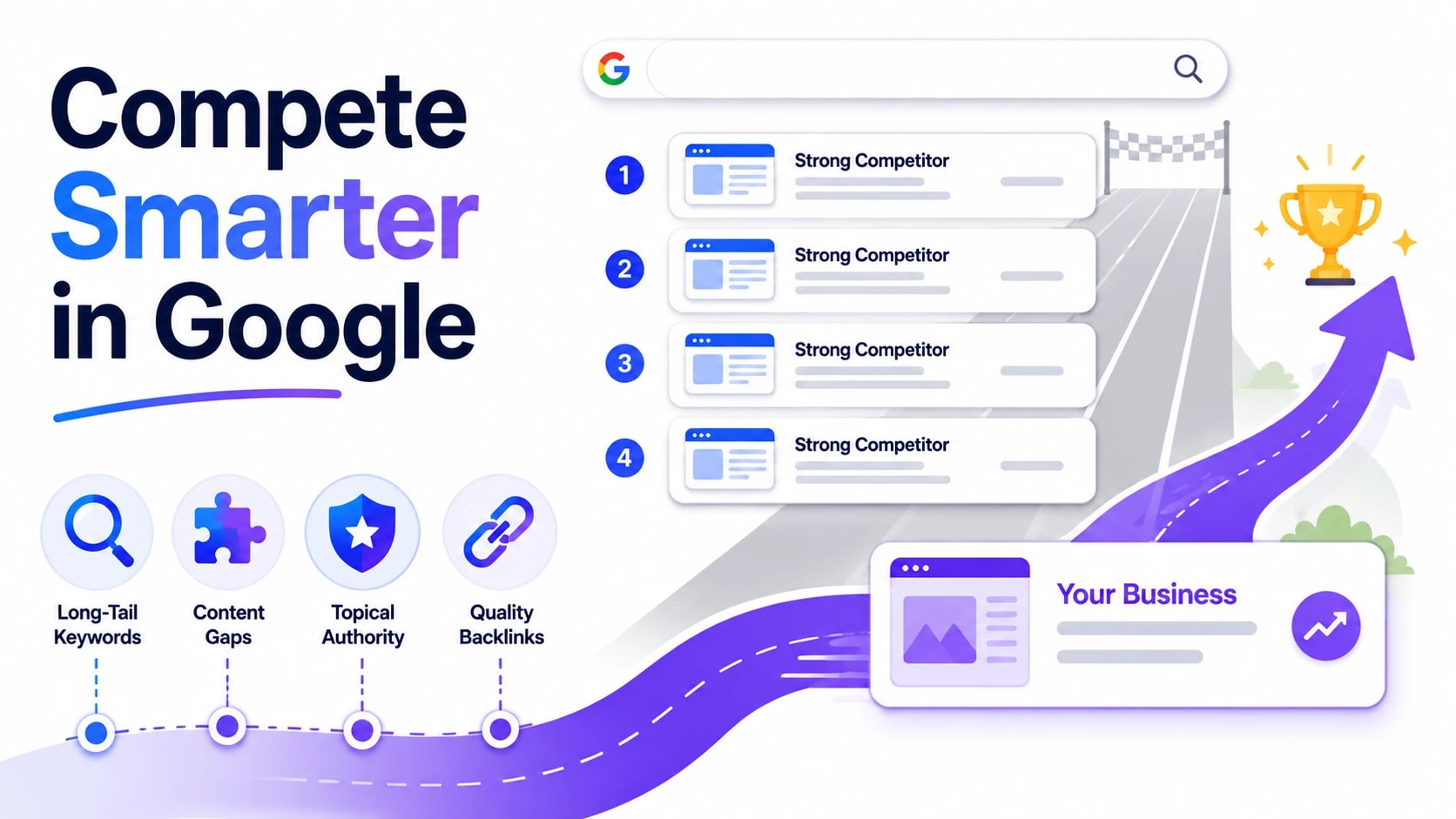
Even when your technical setup is clean, your content is relevant, and your profile is verified, you may still not show up in Google if you are targeting search terms that stronger competitors already dominate. Google has a limited number of top positions to offer, and in competitive industries, established businesses with years of authority tend to occupy most of them.
Understanding search intent is equally important. Google does not just match keywords, it tries to serve the exact type of result a user wants at that moment. If someone searches “best accountant near me,” Google wants to show local business listings. If someone searches “how to choose an accountant,” Google wants to show informational blog content. Publishing the wrong type of content for the intent behind a keyword means you will not rank even if your page is well-written.
Here is how to position your business more strategically against competition:
Target long-tail keywords: Phrases with three or more words tend to have lower competition and clearer intent, making them far easier for newer or smaller businesses to rank for.
Analyze what is already ranking: Search your target keywords and study the format, length, and type of content Google currently rewards for those terms.
Identify content gaps: Find questions your competitors have not answered well and create thorough, accurate pages around those specific topics.
Build topical authority: Publishing a cluster of related content around your core service area signals to Google that your site is a reliable source on that subject.
Earn backlinks from relevant sources: A single link from a respected industry website can shift your rankings more than dozens of lower-quality links, which is why strategic link building remains one of the most direct ways to compete in crowded search results.
Competing on broad, high-volume keywords immediately is rarely realistic. Building visibility through targeted content and authoritative backlinks creates a foundation that grows over time and becomes increasingly difficult for competitors to displace.
Conclusion
There is rarely a single reason why a business does not show up in Google. In most cases, it is a combination of factors working against each other, whether that is an unverified profile, missing backlinks, technical errors blocking crawlers, content that does not match search intent, or simply a need for more time to build authority. The good news is that every one of these issues is fixable once you know where to look. Start with a structured audit of your Google Business Profile and your website’s technical health, then work outward to address content quality, local citations, and your backlink profile.
If you want faster results in competitive search results, earning backlinks from authoritative and relevant websites is one of the most effective steps you can take. That is exactly where a specialist service like Marketing Lad can help, connecting your business with the high-quality links that signal trust and authority to Google. Take action on the issues identified in this guide, stay consistent with your improvements, and your business will become far more visible to the customers already searching for what you offer.
Frequently Asked Questions
How long does it take for a new business to show up on Google?
Most new websites take anywhere from three to six months to rank consistently in Google search results. Google Business Profiles can appear faster, often within a few weeks of verification, but local map pack rankings still depend on building reviews, citations, and backlinks over time.
Why is my Google Business Profile not showing up even though it is verified?
A verified profile can still be suppressed if it lacks reviews, has incomplete information, uses an inaccurate business category, or faces a suspended status from a guideline violation. Check your profile for completeness, confirm your categories are accurate, and ensure your address matches your other online listings exactly.
Can I fix a Google penalty myself or do I need professional help?
Manual penalties can be resolved yourself by identifying the issue through Google Search Console, making the required corrections, and submitting a reconsideration request. Algorithmic penalties require ongoing improvements to content and backlink quality. Complex cases involving link schemes or major technical violations often benefit from professional guidance.
Do backlinks really make a difference in whether my business appears in Google?
Yes, backlinks remain one of the strongest ranking signals Google uses. Links from trusted, relevant websites tell Google that your business is credible and worth showing to searchers. Without any backlinks, it is extremely difficult to rank for competitive terms, especially against established businesses that have been earning links for years.
What is the fastest way to get my business to show up on Google?
The fastest steps are verifying and completing your Google Business Profile, submitting your sitemap through Google Search Console, fixing any crawl-blocking errors on your website, and earning at least a few quality backlinks from relevant sources. Combining all of these actions at once produces results significantly faster than addressing them one at a time.
Tags:#5 Best Free Link Building Tools to Help You Build Backlinks#Google Business Profile#Google visibility#local seo
Shahid Shahmiri is a digital marketer who helps online businesses grow with smart marketing tactics that improve sales and leads. He is passionate and driven to grow businesses online and is responsible for analyzing marketing, SEO, growth and managing promotional and media channels.