
On this page8
- Website Development Cost Ranges by Type
- Key Factors That Determine Your Website Development Cost
- Freelancer vs. Agency vs. In-House: Cost and Tradeoffs
- Hidden Costs Most Marketing Managers Overlook
- How to Evaluate Website Development Quotes
- Where to Invest Your Web Development Budget for Maximum ROI
- Conclusion
- Frequently Asked Questions
Table of Contents
Understanding how much website development costs is one of the first and most important steps before launching any online project. Prices can range from a few hundred dollars to well over six figures, depending on your goals, the complexity of your site, and who builds it. This guide gives you a clear, honest breakdown of what to expect so you can make informed decisions from the start.
Whether you are a small business owner building your first website or an established company planning a full redesign, the cost question comes up early and for good reason. Budgeting incorrectly can stall a project, limit your marketing efforts, or force costly revisions down the line. Website development is also directly tied to your broader digital strategy, including how well your site performs in search engines and how effectively it can attract backlinks that drive organic authority over time.
The numbers in this guide reflect real-world pricing across multiple project types and development approaches. Costs are presented in USD and represent general market averages. Your actual investment will depend on a combination of factors we will cover in detail throughout this article.
Website Development Cost Ranges by Type
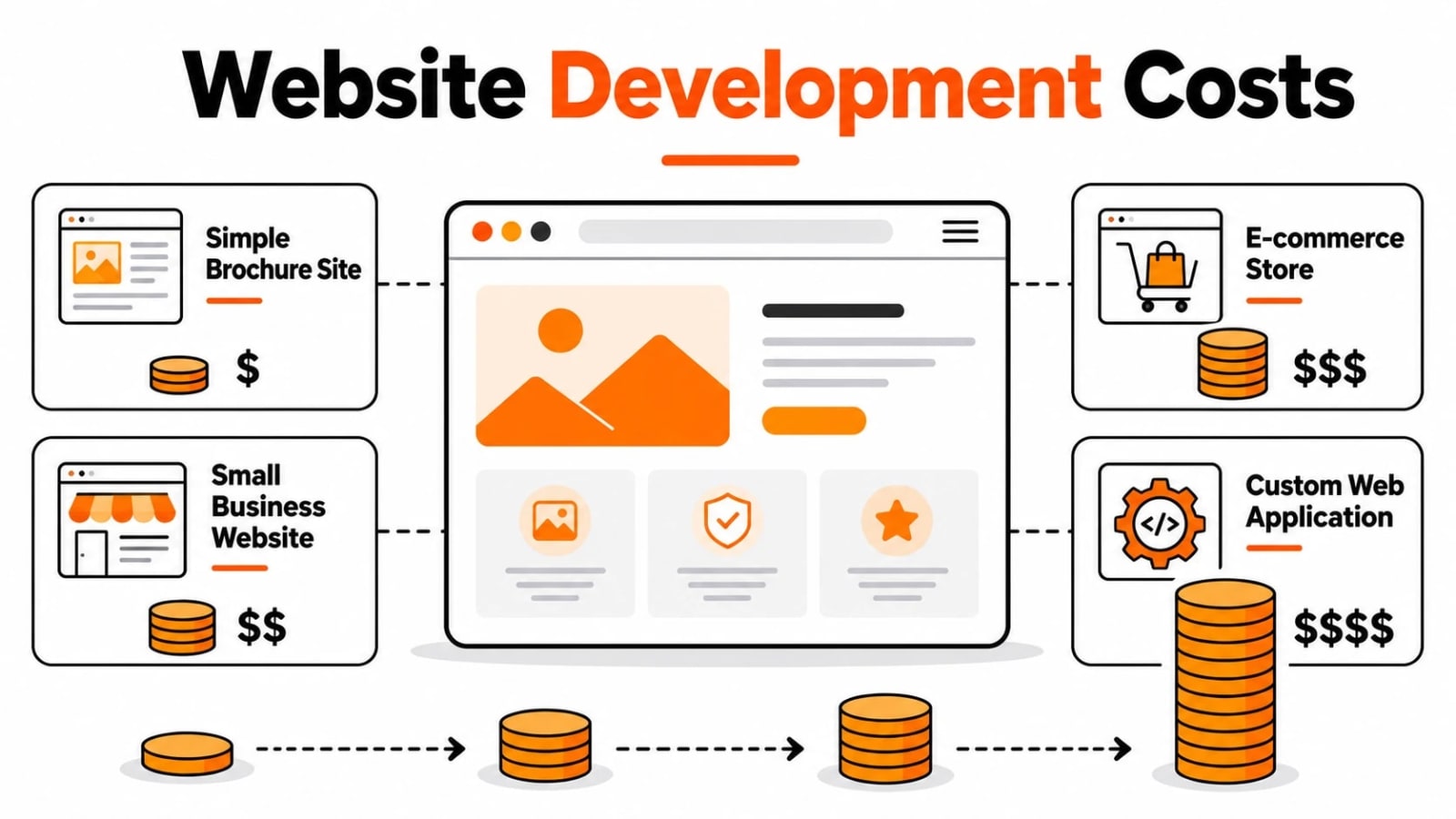
Not all websites are built the same way, and the type of site you need is the single biggest factor in determining your starting budget. Below is a clear breakdown of typical cost ranges by website category.
Simple Brochure or Personal Website
A basic informational site with five to ten pages, a contact form, and standard design typically costs between $500 and $5,000. These are best suited for freelancers, local service providers, or individuals who need an online presence without complex functionality. Many of these sites are built using website builders or simple content management systems, which keeps costs manageable.
Small Business Website
A professionally designed small business website with custom branding, blog functionality, SEO-ready structure, and basic integrations generally ranges from $5,000 to $20,000. This tier involves more planning, custom design work, and often a small development team. Sites in this range are built to grow and can support content marketing and link-building campaigns effectively.
E-Commerce Website
Online stores require significantly more development work due to product catalog management, payment processing, inventory systems, and security requirements. A mid-range e-commerce site typically costs between $10,000 and $75,000, while enterprise-level stores can exceed $150,000 or more depending on custom functionality and third-party integrations.
Custom Web Application or Enterprise Site
Fully custom web applications, membership platforms, SaaS products, or large enterprise websites sit at the top of the pricing spectrum. These projects commonly range from $50,000 to $500,000 or more. They require dedicated development teams, extended timelines, and ongoing technical maintenance. Companies at this level often invest simultaneously in content and link-building infrastructure to maximize their return on development spend.
Key Factors That Determine Your Website Development Cost
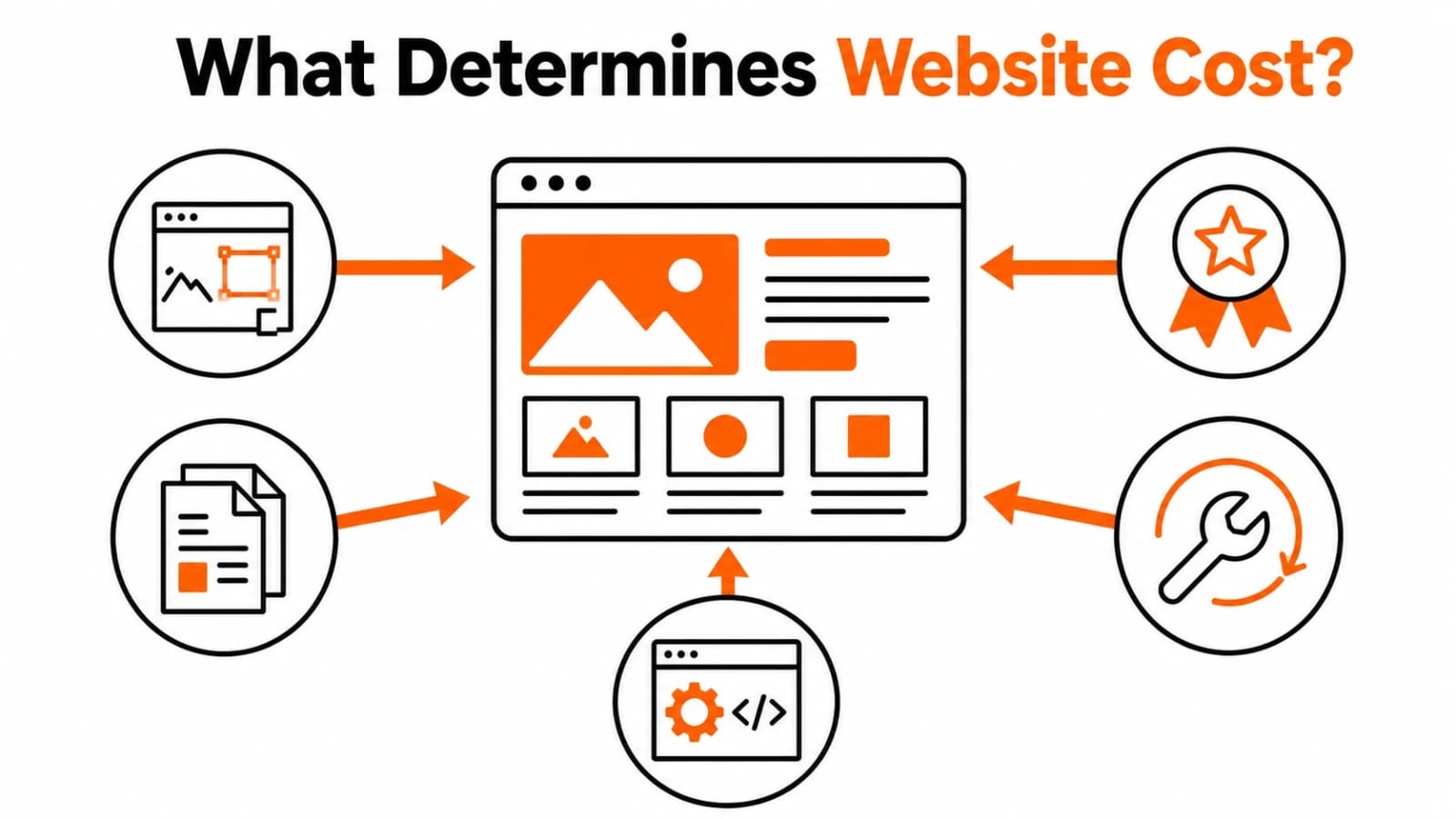
Beyond the type of website, several specific variables will push your budget higher or lower. Understanding these factors helps you prioritize what matters most and identify where you can be flexible.
Design Complexity
Custom design work costs more than template-based builds. If you need a unique visual identity, branded UI components, custom illustrations, or animation, expect to add anywhere from $2,000 to $20,000 to your base cost. Template-based designs can significantly reduce this line item, though they offer less differentiation in competitive markets. Teams that need a steady flow of on-brand visuals after launch can also keep costs down with a repeatable AI workflow design for banners, product images, and social assets.
Number of Pages and Features
Every additional page, feature, or integration adds development time. A site with a blog, booking system, live chat, CRM integration, and multi-language support will cost considerably more than a five-page static site. It is worth mapping out your full feature list before requesting quotes so developers can give you accurate estimates rather than low-ball numbers that grow later.
Who Builds Your Website
Your choice of developer or agency has one of the most direct impacts on cost. There are three primary options, each with distinct trade-offs.
Freelancers: Typically charge $25 to $150 per hour depending on experience and location. Best for smaller projects with clear scopes.
Boutique agencies: Usually charge $75 to $200 per hour and bring broader expertise including strategy, design, and development under one roof.
Large agencies: Rates can exceed $250 per hour and are best suited for enterprise projects requiring dedicated teams and long-term support contracts.
Content Creation
Many website quotes cover design and development but not content. If you need copywriting, photography, or video production, budget an additional $1,000 to $10,000 depending on the volume and quality required. Well-written, optimized content also plays a direct role in your site’s ability to rank organically and attract editorial backlinks from authoritative sources.
Ongoing Maintenance and Hosting
Website development is not a one-time expense. Hosting costs range from $10 per month for basic shared hosting to $500 or more per month for dedicated or managed cloud hosting. Ongoing maintenance, security updates, and performance optimization typically add $50 to $500 per month depending on your site’s complexity. Factoring these recurring costs into your total budget from the beginning prevents surprises after launch.
Freelancer vs. Agency vs. In-House: Cost and Tradeoffs
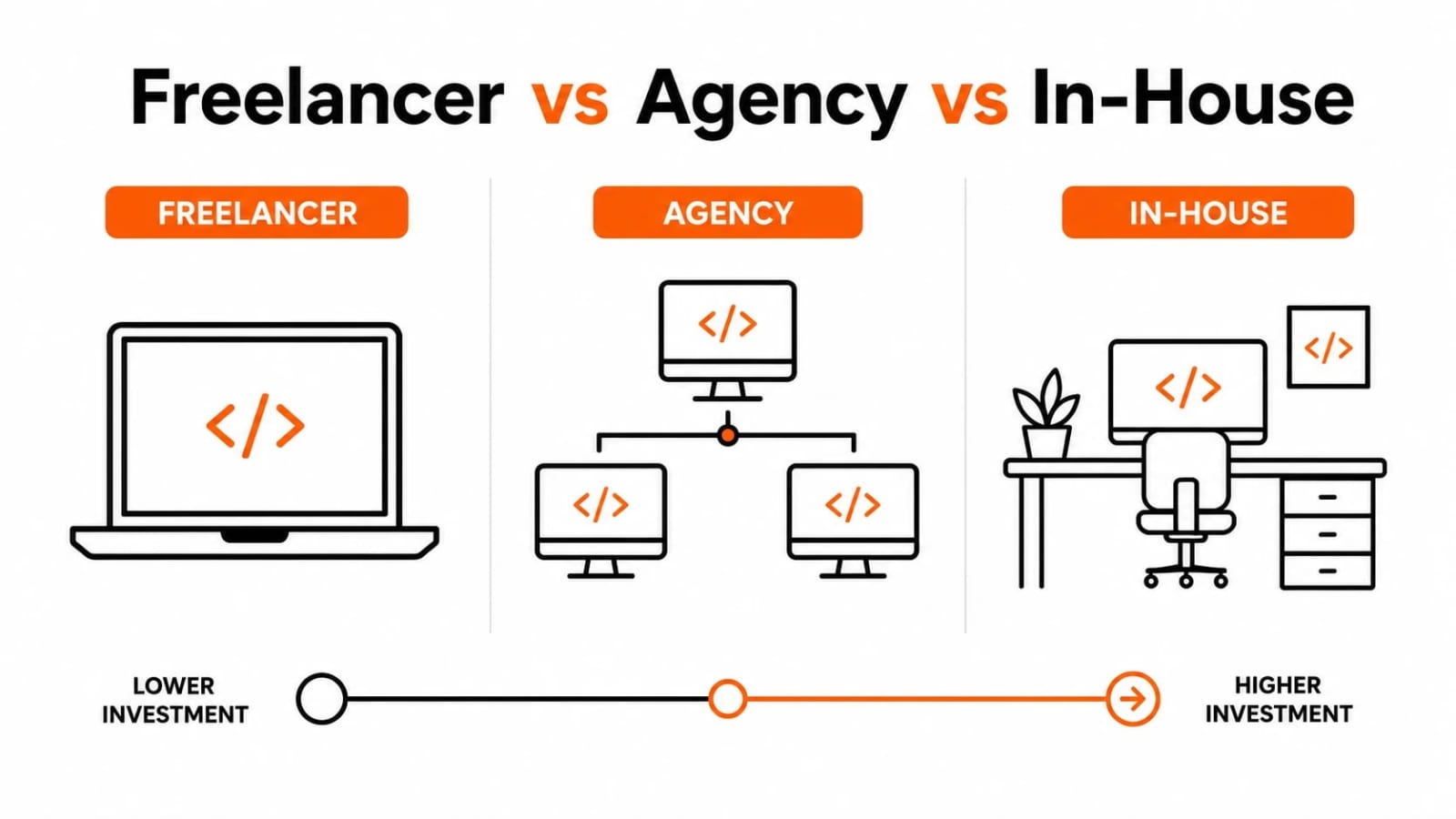
Choosing who builds your website is just as important as deciding what to build. Each option comes with a different price point, communication style, and risk profile. Freelancers typically charge between $25 and $150 per hour depending on their location and skill level, making them an attractive option for startups and small businesses with limited budgets. Agencies, on the other hand, usually bill between $100 and $300 per hour and bring a full team of designers, developers, and project managers to the table. In-house developers command annual salaries ranging from $70,000 to $130,000, plus benefits, equipment, and onboarding costs that push the true figure considerably higher.
The right choice depends heavily on your project scope, timeline, and long-term needs. Freelancers work well for straightforward builds, quick turnarounds, or budget-conscious projects where you can manage the coordination yourself. Agencies offer accountability, structured workflows, and the ability to scale across multiple disciplines without you managing individual contributors. In-house teams make sense only when your organization has ongoing, high-volume development needs that justify the overhead of a full-time salary.
Option | Typical Cost | Best For | Main Risk |
|---|---|---|---|
Freelancer | $25-$150/hr | Small projects, tight budgets | Availability, single point of failure |
Agency | $100-$300/hr | Mid to large-scale projects | Higher upfront cost |
In-House | $70K-$130K/year | Ongoing, volume-heavy development | Fixed cost regardless of workload |
One factor many marketing managers underestimate is coordination cost. When you hire a freelancer, you become the project manager by default. You review deliverables, chase timelines, and mediate between a developer, a designer, and a copywriter who may all be different people. Agencies bundle that management into their fee, which explains much of the price difference. Neither model is inherently better, but you should factor in your own time when comparing quotes.
Hidden Costs Most Marketing Managers Overlook
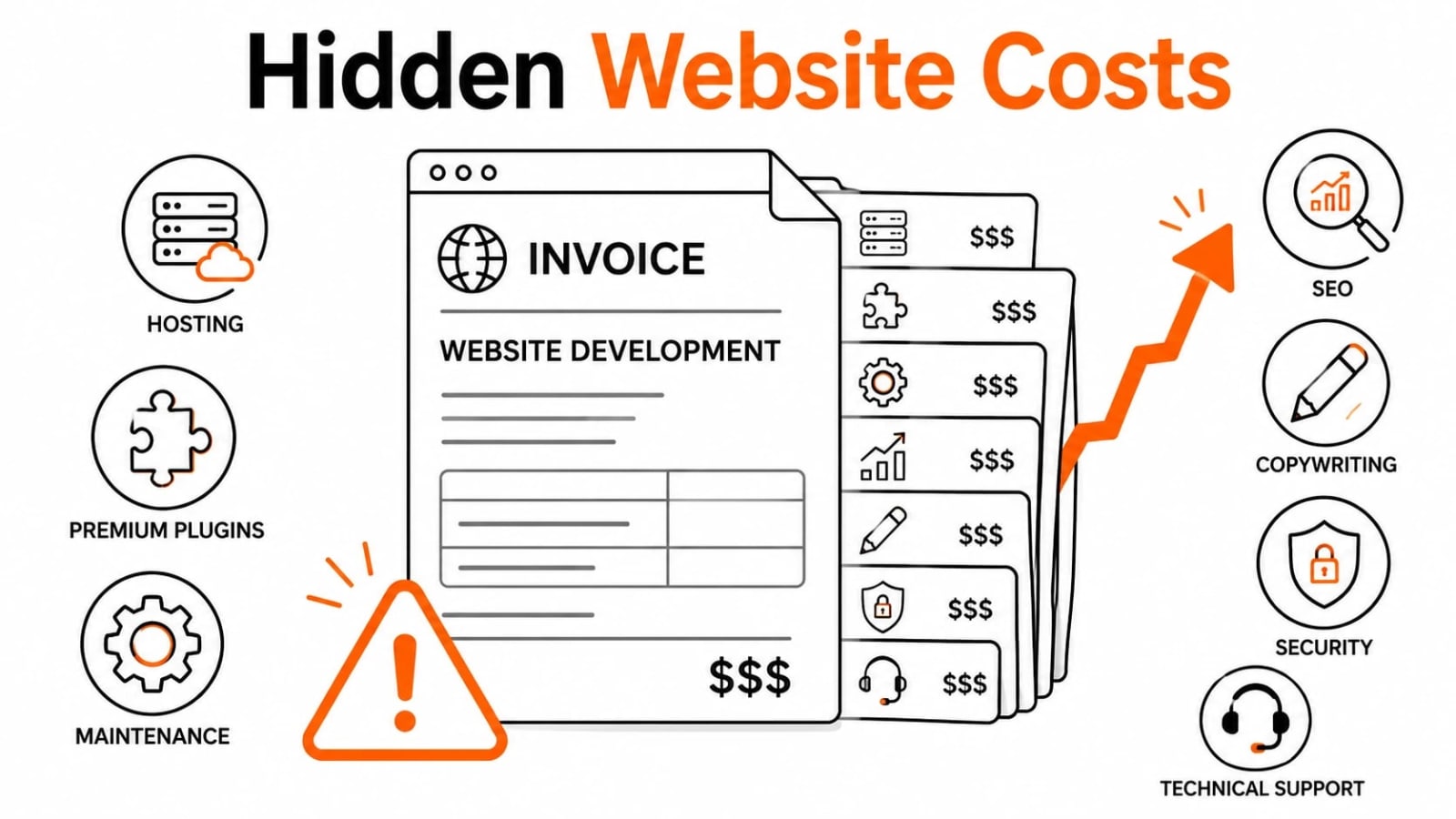
The number on a development proposal rarely reflects what you will actually spend. A $15,000 website quote can quietly become a $22,000 project once you account for elements that were never included in the original scope. Domain registration runs $10 to $50 per year, but premium domain names can cost thousands. Hosting fees range from $5 per month for shared plans to over $500 per month for dedicated servers or enterprise cloud infrastructure. SSL certificates, which are non-negotiable for any site handling user data, add another $0 to $300 annually depending on the type you need.
Beyond infrastructure, there are recurring costs tied directly to functionality. Premium plugins and third-party integrations often carry annual license fees. A single marketing automation plugin, a booking system, or an advanced SEO tool can cost anywhere from $99 to $999 per year each. Add in stock photography, custom icon libraries, video hosting, and translation services for multilingual sites, and the numbers compound quickly. Content migration from your old site is another expense that rarely appears in quotes, yet it can consume 20 to 40 hours of developer time on a mid-size project.
Ongoing maintenance: Most sites need $500 to $2,500 per year in updates, security patches, and plugin management.
Performance optimization: Speed audits and technical fixes after launch often cost $500 to $3,000 depending on complexity.
SEO and link building: A well-built site still needs organic visibility, and investing in quality backlinks through a specialist is a recurring budget line.
Copywriting: Professional web copy for a 20-page site typically runs $2,000 to $8,000 and is rarely included in development quotes.
Training: If your team needs to manage the CMS, budget for onboarding sessions, which can cost $200 to $1,000 depending on platform complexity.
How to Evaluate Website Development Quotes
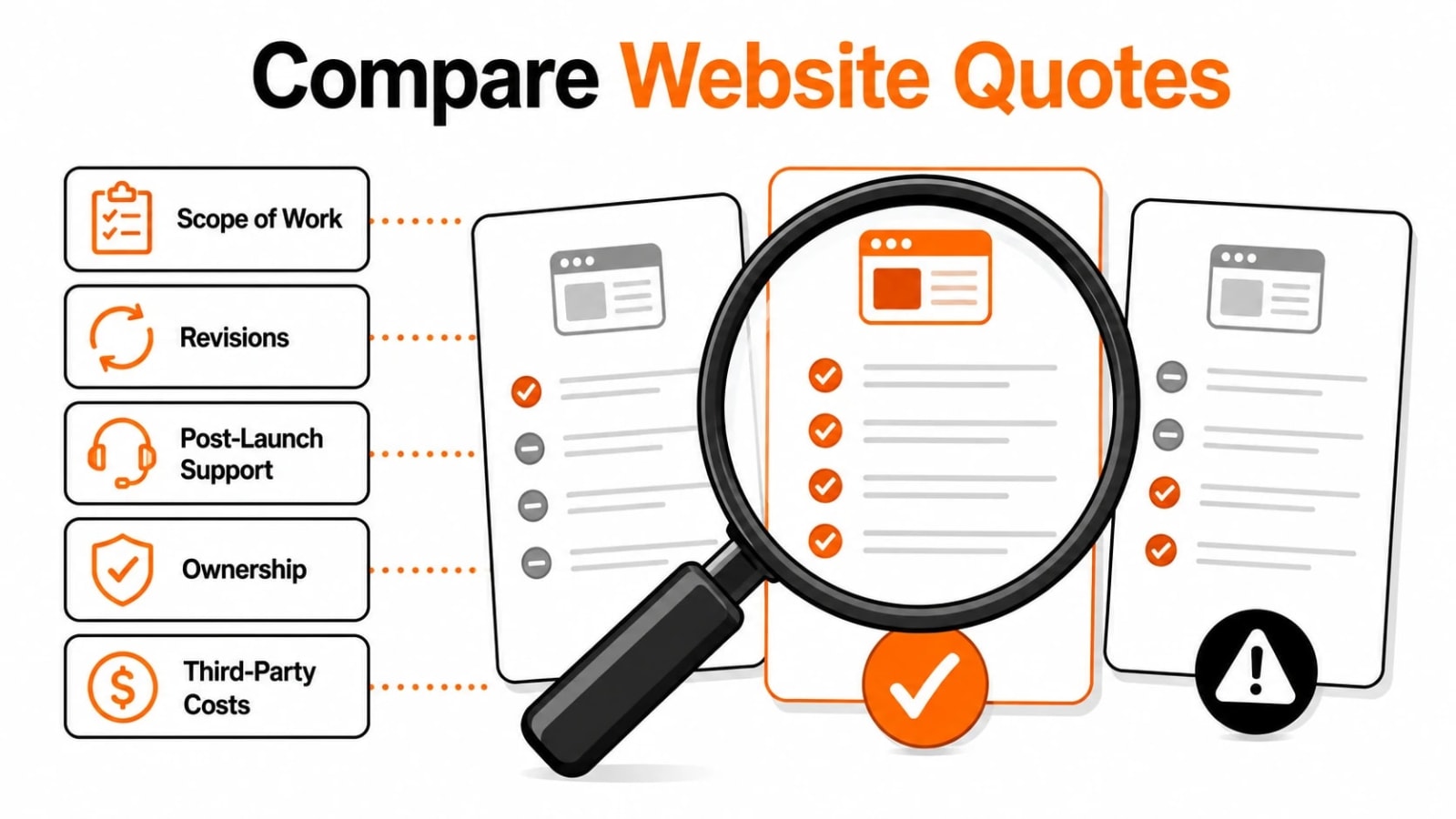
Receiving multiple quotes for a website project can feel clarifying, but it often creates more confusion than it resolves. A $6,000 quote and a $24,000 quote for the same brief are not necessarily describing the same deliverable. The first thing to check is whether each quote includes a detailed scope of work rather than a vague line item like “website design and development.” A credible quote will break down hours by phase, such as discovery, wireframing, design, development, testing, and launch support. If a quote does not show that level of detail, ask for it before comparing prices.
Pay close attention to what happens after launch. Many lower-cost proposals exclude post-launch support entirely, meaning any bugs discovered after go-live become a separate billable engagement. Higher-quality proposals typically include a 30- to 90-day warranty period covering defects and functional issues at no additional charge. You should also confirm whether the quote covers browser and device testing, accessibility compliance checks, and basic on-page SEO setup, because these steps add meaningful hours that some developers leave out to keep their headline number competitive.
Quote Element | What to Look For | Red Flag |
|---|---|---|
Scope of work | Phase-by-phase breakdown with hour estimates | Single lump-sum line item |
Revision policy | Defined number of revision rounds per phase | Unlimited revisions with no definition |
Post-launch support | 30 to 90 day defect warranty included | No mention of post-launch coverage |
Ownership and access | Full transfer of code, files, and credentials | Agency retains hosting or CMS control |
Third-party costs | Itemized list of plugins, licenses, and tools | Costs bundled without explanation |
Finally, evaluate the communication style during the quoting process itself. Developers who ask detailed questions about your goals, audience, and existing tech stack before submitting a number are demonstrating professional diligence. Those who fire back a figure within hours of a brief call are likely working from assumptions. The discovery process is part of the value you are paying for, and a vendor who skips it early is likely to cut corners later in the project as well.
Where to Invest Your Web Development Budget for Maximum ROI
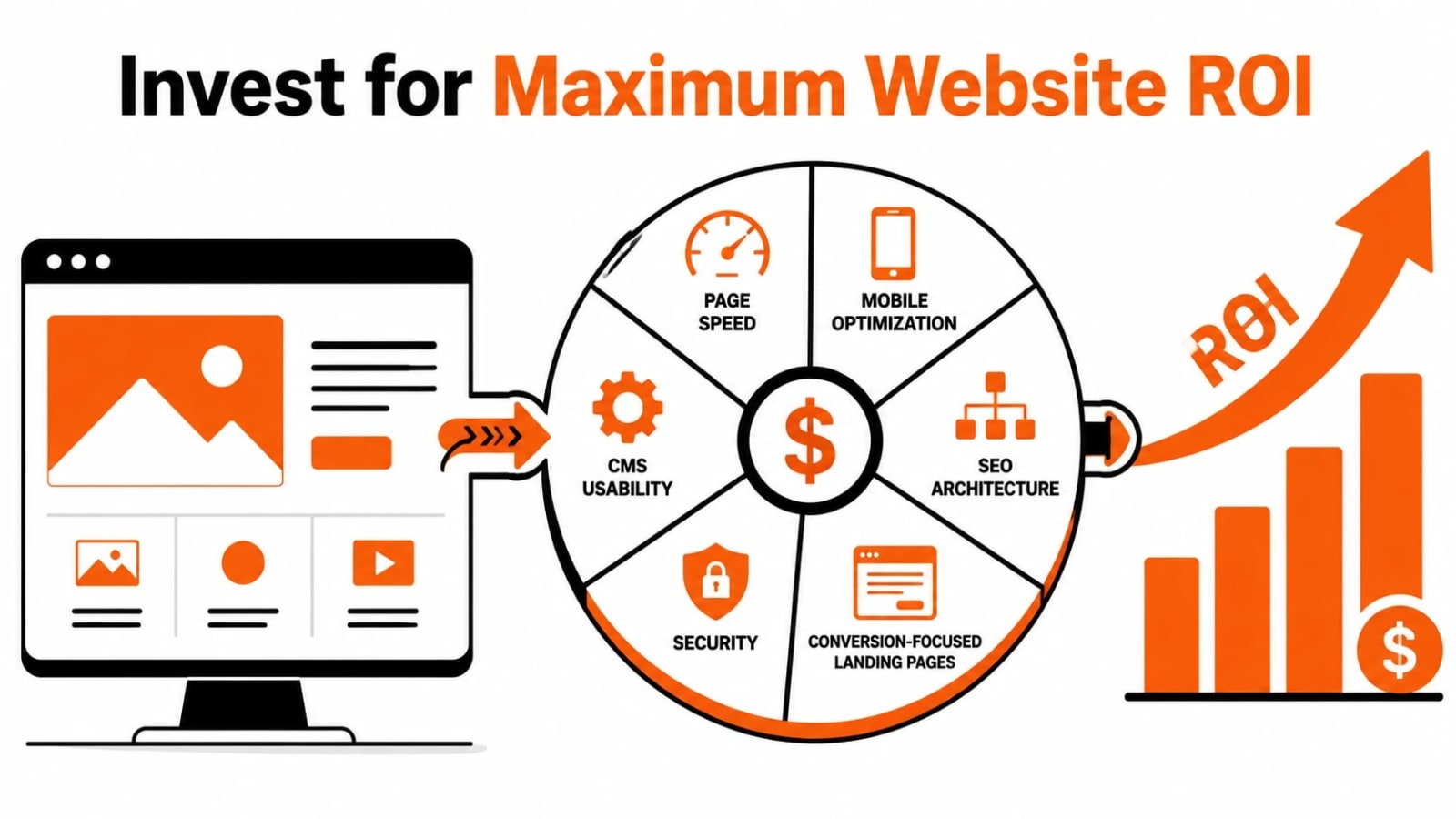
Not every dollar you spend on web development returns equal value. Some investments directly drive revenue, while others are cosmetic upgrades that look impressive but move few needles. If your budget is limited, knowing where to concentrate your spend can mean the difference between a site that pays for itself and one that quietly drains resources.
The highest-returning investments tend to share a common trait: they reduce friction between a visitor and a conversion. That means fast load times, clear navigation, mobile optimization, and trust signals all deserve priority over flashy animations or elaborate custom illustrations.
Here is where most marketing managers should focus their web development dollars:
Core Web Vitals and page speed: Google uses speed as a ranking signal, and users abandon pages that take longer than three seconds to load. Spending on performance optimization directly affects both organic traffic and conversion rate.
Mobile-first design and responsiveness: More than 60 percent of web traffic comes from mobile devices. A site that works poorly on phones loses both rankings and customers simultaneously.
Conversion-focused landing pages: Custom landing pages built around specific campaigns or audience segments consistently outperform generic homepages. The development cost is modest compared to the lift in lead quality.
On-site SEO architecture: Clean URL structures, proper heading hierarchies, schema markup, and internal linking are built into the code. Getting these right from the start avoids expensive retrofits later.
Security and SSL: A site without HTTPS or with known vulnerabilities signals distrust to both users and search engines. This is non-negotiable budget spend.
CMS usability: If your marketing team cannot update content without developer help, you will pay for every small change indefinitely. Investing in a well-configured CMS upfront saves ongoing costs.
The table below shows how to prioritize common budget allocations based on their typical impact on ROI:
Investment Area | Typical Cost Range | ROI Impact | Priority Level |
|---|---|---|---|
Page Speed Optimization | $500 to $3,000 | High | Must-Have |
Mobile Responsiveness | Included or $1,000 to $4,000 | Very High | Must-Have |
SEO Architecture Setup | $800 to $5,000 | High | Must-Have |
Custom Landing Pages | $1,000 to $6,000 | High | High Priority |
CMS Configuration | $500 to $2,500 | Medium to High | High Priority |
Custom Animations or Illustrations | $2,000 to $10,000+ | Low to Medium | Nice-to-Have |
Advanced UI Micro-interactions | $3,000 to $15,000+ | Low | Defer Until Later |
One area that is often undervalued during development is SEO-ready content architecture. When your developer builds clean, crawlable page structures from the start, your investment in content marketing and link building compounds faster. A technically sound site gives every backlink you earn more power, which is why the technical foundation and your ongoing authority-building efforts work best together.
Conclusion
Website development costs span an enormous range, from a few hundred dollars for a basic template site to well over $200,000 for a custom enterprise platform. The number that matters for your business depends on your goals, your audience, your technical requirements, and how well you plan before writing a single check.
Rushing into a build without a clear scope, or choosing a provider purely on the lowest quote, tends to cost significantly more in the long run through revisions, missed deadlines, and ongoing maintenance debt. Spend time defining what success looks like, ask providers specific questions, and treat your website as a long-term business asset rather than a one-time project.
The smartest approach is to prioritize investments that directly reduce friction for your visitors and support your marketing goals, then build outward from that core. Whether you are launching a new site or rebuilding an existing one, knowing what drives costs and where ROI lives puts you in a far stronger negotiating position. If you are also investing in content and organic visibility, pairing that with a strong link-building strategy through a resource like Marketing Lad ensures your technically sound site earns the authority it deserves in search results.
Check out our latest blog on Link Building and SEO for Forex That Actually Works
Frequently Asked Questions
How much does a basic business website cost to develop?
A basic business website typically costs between $2,000 and $10,000 when built by a freelancer or small agency. Template-based builds on platforms like WordPress can fall below $2,000, while custom designs with more pages and functionality push toward the higher end of that range.
Is it cheaper to hire a freelancer or an agency for web development?
Freelancers are generally cheaper, often charging 30 to 50 percent less than agencies for comparable work. However, agencies offer project management, multiple skill sets, and accountability. For complex builds or ongoing support needs, an agency often delivers better value despite the higher upfront cost.
What ongoing costs should I expect after my website launches?
Expect to budget for hosting ($10 to $500 per month), domain renewal ($10 to $50 per year), plugin or software licenses, security monitoring, and periodic content or design updates. Maintenance retainers with developers typically run $200 to $1,500 per month depending on the complexity of your site.
How long does it take to develop a website?
A simple brochure site can launch in two to four weeks. A mid-range business site with custom design usually takes six to twelve weeks. E-commerce platforms and enterprise builds can take four to twelve months depending on the feature set, integrations required, and how quickly stakeholders provide feedback and approvals.
Can I build a professional website on a tight budget?
Yes, but trade-offs apply. Using a quality theme, limiting custom features, and working with a skilled freelancer can produce a professional result for $1,500 to $5,000. Focus your budget on speed, mobile responsiveness, and SEO structure first, then add design enhancements as revenue grows.